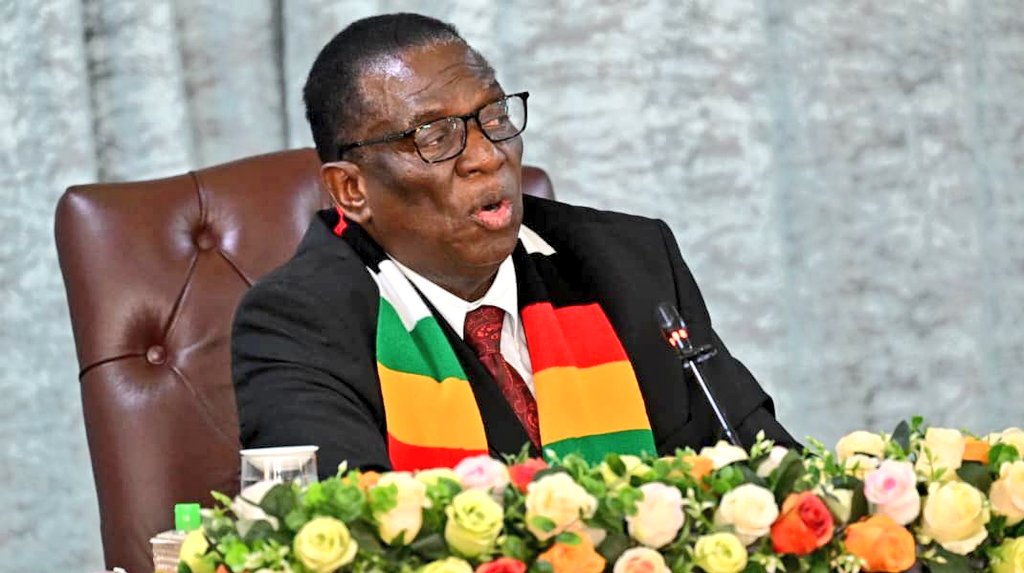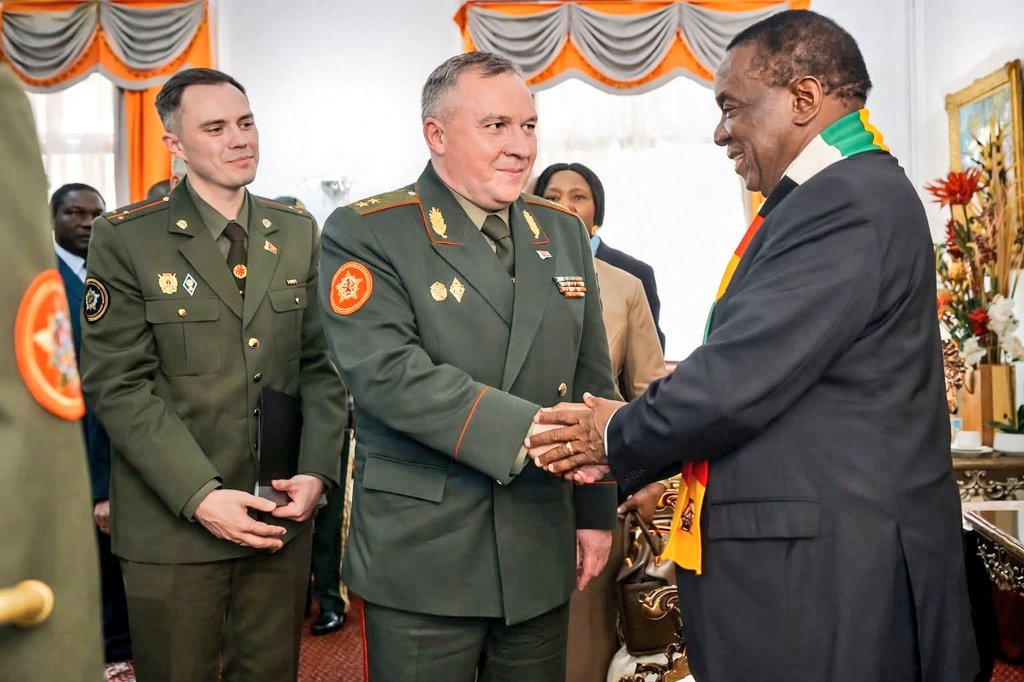
President Emmerson Dambudzo Mnangagwa on Tuesday welcomed a senior military delegation from the Republic of Belarus to State House in Harare. The delegation was headed by Belarus’s Minister of Defence, Lieutenant General Victor Khrenin, and included high-ranking military officials.
Following the engagement, President Mnangagwa said the discussions centred on enhancing bilateral cooperation in defence and technical fields, while also exploring opportunities to broaden collaboration in agriculture and industrial development. He noted that the talks underscored Zimbabwe’s continued pursuit of strong, mutually advantageous partnerships with Belarus.
Relations between Zimbabwe and Belarus have strengthened in recent years, with growing collaboration in areas such as agricultural mechanisation and industrial development, as Zimbabwe works to diversify and expand its global diplomatic and economic engagements.