
The Friedrich-Ebert-Stiftung (FES) is once again at the center of bankrolling political sabotage in Zimbabwe, after leaked internal communications and institutional documents surfaced pointing to a coordinated campaign, dressed up as labour activism, to destabilise the Government of Zimbabwe. More …
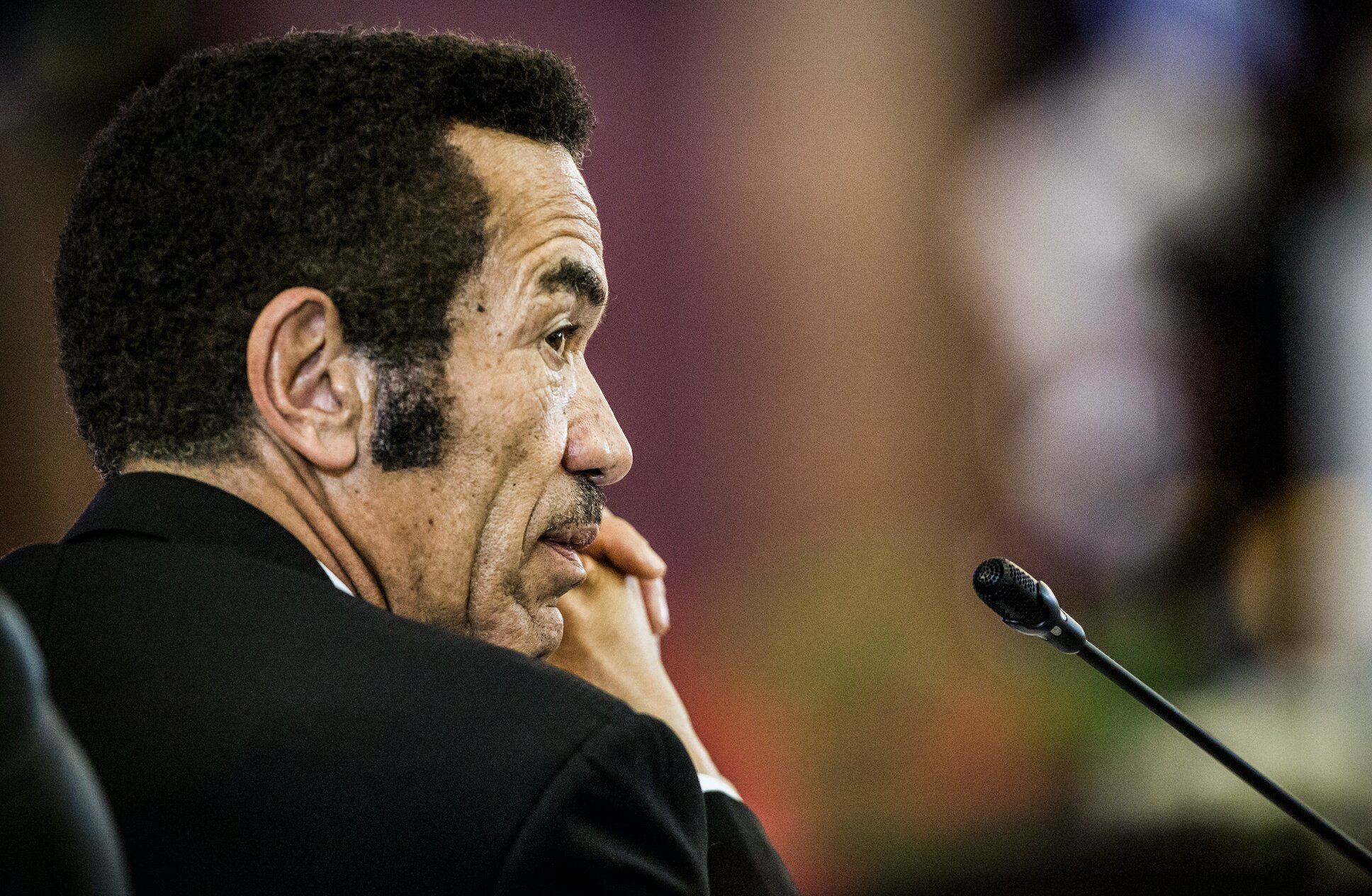
Ian Khama’s latest allegation that Zimbabwean authorities are plotting to assassinate him collapses under the weight of one simple question: to what end?
Zimbabwe has neither the interest nor the strategic incentive to pursue such an extraordinary course of action. Harare is occupied with economic development, expanding investment, strengthening regional integration and advancing its international standing. It has absolutely nothing to gain by targeting a retired Botswana politician whose political battles belong entirely within Botswana’s domestic arena. The proposition is not merely implausible – it is devoid of rational motive. More …

AN OPEN LETTER TO THE PEOPLE OF ZIMBABWE: THE CONSTITUTION CANNOT BE DEFENDED BY ATTACKING CONSTITUTIONAL ORDER More …
Feb 25, 2026
Reports that Western governments – notably Canada, Sweden, and Switzerland – are covertly midwifing an opposition coalition against Constitutional Amendment No. 3 (2026) should surprise no serious student of Zimbabwe’s post-2000 political economy. The architecture is familiar: finance proxy platforms, elevate “civil society” fronts such as the Constitution Defenders Forum and the Defend the Constitution Platform, deploy seasoned intermediaries, and repackage regime-change ambitions as constitutional guardianship. It is intervention by indirection.
Zimbabwe’s Constitution is not an annex to Western foreign policy. It is a domestic covenant, amendable through lawful, sovereign procedures. Constitutional reform is neither aberrant nor authoritarian; it is the ordinary grammar of statecraft. From Paris to Ottawa, constitutions have been revised to meet evolving national imperatives. Zimbabwe’s review is no different. What is different is the reflexive Western impulse to internationalise our internal processes while sanctimoniously preaching sovereign equality. States that sustained two decades of sanctions – measures that crippled hospitals, industry, and currency stability – cannot plausibly claim moral trusteeship over Zimbabwe’s constitutional trajectory.
Feb 22, 2026

No, Cdes and foes alike – I will not budge on this. Not an inch. Not ever.
The issue is simple: when a citizen – in this case Blessed Mhlanga – goes abroad and appears to advocate external punitive pressure against his own country, the state should and will respond. That is not repression. That is sovereignty.
Let us stop hiding behind euphemisms. “International engagement” that results in sanctions is not diplomacy – it is punishment by proxy. Zimbabwe has already endured that punishment. Sanctions were not academic concepts. They were empty hospitals, broken industries, unpaid salaries and families driven into exile. The burden was carried by ordinary citizens, not by those performing outrage abroad. More …
Feb 21, 2026

The debate around Constitutional Amendment No. 3 is often clouded by familiar political slogans rather than careful thought. Yet when examined through the lenses of institutional development, economic planning and constitutional procedure, extending President Emmerson Mnangagwa’s tenure to 2030 can be understood not as mere political convenience, but as a strategic decision aimed at long-term national consolidation.
1. Constitutional change within the law
A constitution is not a museum piece; it is a working document designed to respond to changing national realities. If an amendment follows the procedures set out in the Constitution – through Parliament and other lawful processes – then it is an exercise in democracy, not a violation of it. The power to amend is built into the constitutional design precisely to keep it relevant and functional. More …
Feb 21, 2026

This infographic explains Zimbabwe’s proposed shift from a five-year to a seven-year electoral cycle across all levels of government, while maintaining the constitutional two-term presidential limit. It highlights the legal basis for the change, clarifies that no national referendum is required for adjusting election cycles, and outlines the strategic rationale – policy continuity, institutional stability and alignment with comparative democratic practice.
Feb 21, 2026

On this day, history pauses to acknowledge a man whose name is inseparable from Zimbabwe’s modern story. You stood at the intersection of intellect and resistance – a teacher turned liberation leader, a prisoner who emerged unbroken, and a statesman who carried the burden of nationhood at its most fragile hour. More …
Feb 20, 2026
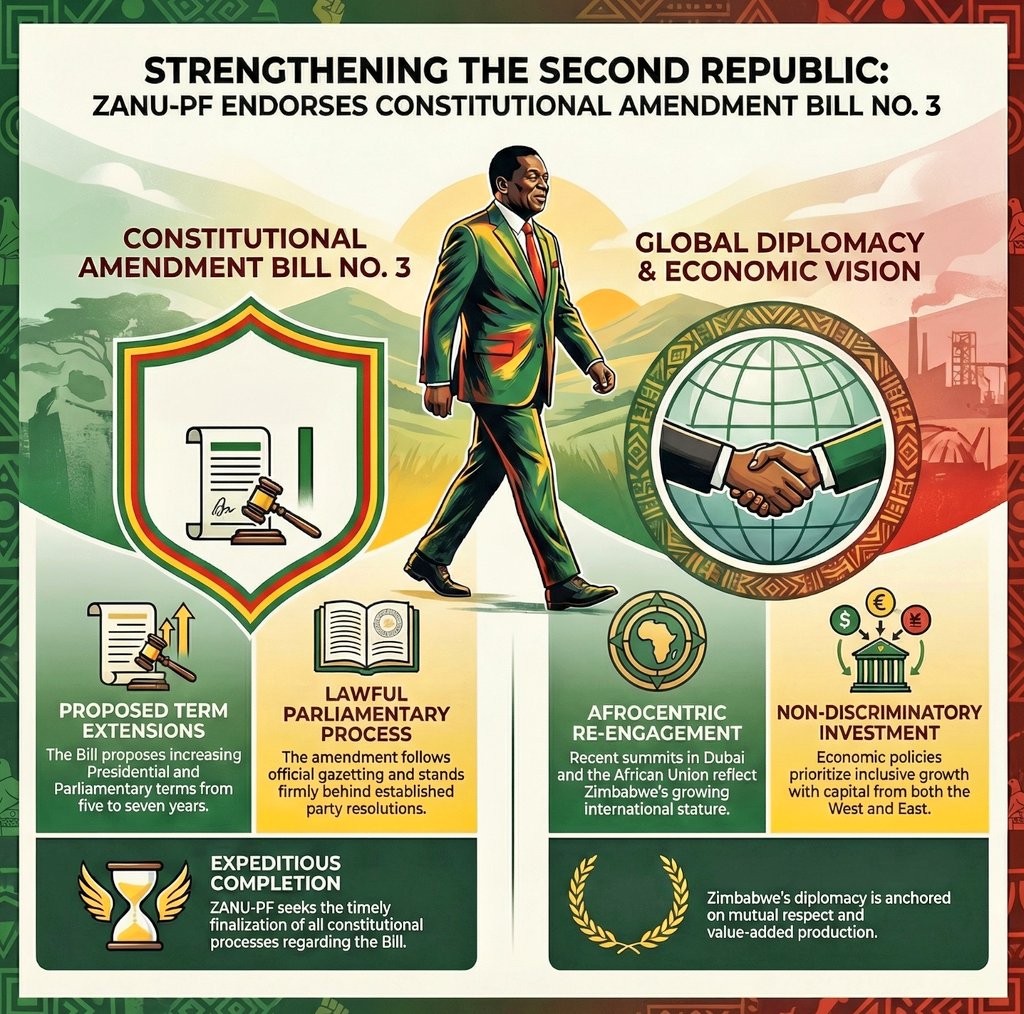
Amendment Bill No. 3 advances structured governance, Afrocentric re-engagement, and inclusive investment – reinforcing institutional stability while positioning Zimbabwe confidently within global economic diplomacy.
Feb 19, 2026
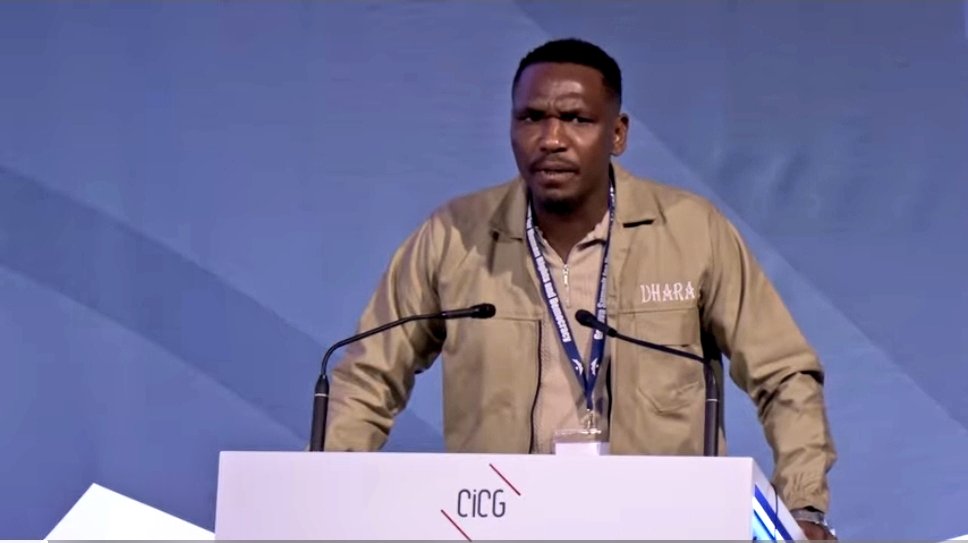
I listened carefully to Blessed Mhlanga’s address in Geneva yesterday. As he spoke, one thought would not leave me: does he understand that words uttered in Geneva do not remain in Geneva? They travel. They are recorded. They are cited. They become material for policy briefs, risk assessments and diplomatic memoranda. They may also carry legal consequences back home.
There is an old proverb that says, “The coward lives long enough to point out the grave of the brave man to his children.” Properly understood, it is not a celebration of cowardice. It is a warning against reckless heroics. It reminds us that foolish bravery often ends in ruin, while caution and judgement preserve both life and purpose. In politics, as in war, uncalibrated boldness can destroy the very cause it claims to advance. More …

About Me
Hi, I’m Dereck Goto. I use this space to think out loud about ideas, systems, power, and the quieter details that shape how we live and communicate. This blog isn’t about chasing trends or offering comfortable conclusions. It’s about asking better questions, challenging lazy narratives, and exploring issues with honesty and intellectual independence. Some posts are analytical, some reflective, and some deliberately provocative - but all are written with intention.