

The debate around Constitutional Amendment No. 3 is often clouded by familiar political slogans rather than careful thought. Yet when examined through the lenses of institutional development, economic planning and constitutional procedure, extending President Emmerson Mnangagwa’s tenure to 2030 can be understood not as mere political convenience, but as a strategic decision aimed at long-term national consolidation.
1. Constitutional change within the law
A constitution is not a museum piece; it is a working document designed to respond to changing national realities. If an amendment follows the procedures set out in the Constitution – through Parliament and other lawful processes – then it is an exercise in democracy, not a violation of it. The power to amend is built into the constitutional design precisely to keep it relevant and functional.
2. Stability and the developmental state
Modern economic history shows that rapid transformation often depends on sustained leadership. The developmental models of Singapore, South Korea and China were underpinned by long-term policy consistency. Zimbabwe’s Vision 2030 aims at structural transformation, industrialisation and value addition. Such ambitions require policy continuity and a stable executive direction that matches the scale and complexity of these goals.
3. Economic certainty and investor confidence
Investment flows to environments where policy direction is predictable. Large infrastructure projects, lithium beneficiation and long-term trade partnerships operate on planning cycles that stretch over many years. Aligning political timelines with these economic cycles can reassure investors that policies will not shift abruptly midway through implementation.
4. Strengthening institutions before transition
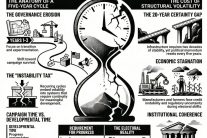
Frequent leadership changes can disrupt young institutions before they become fully established. Extending the current mandate could allow key national entities – including strategic state-owned enterprises and sovereign investment structures – to mature and stabilise. A stronger institutional base ensures that any future transition occurs from a position of resilience rather than fragility.
5. Creating space for difficult reforms
Short electoral cycles often encourage short-term populism. A longer horizon may provide room for structural reforms that require patience and political courage. This could shift the national focus from constant campaigning to measurable delivery under the National Development Strategy framework.
6. Legitimacy through legal process
Legitimacy in any sovereign state rests on adherence to its own laws. If an amendment is debated and enacted in line with Zimbabwe’s constitutional provisions, its authority derives from that lawful process. In that sense, it reflects national sovereignty and constitutional order.
“VIVA 2030” is therefore not simply a slogan, but an argument for continuity in pursuit of stability-led growth. Viewed through the requirements of long-term development planning, extending leadership to 2030 can be framed as a calculated effort to safeguard policy consistency and advance Zimbabwe’s modernisation agenda.






















































Post a comment