
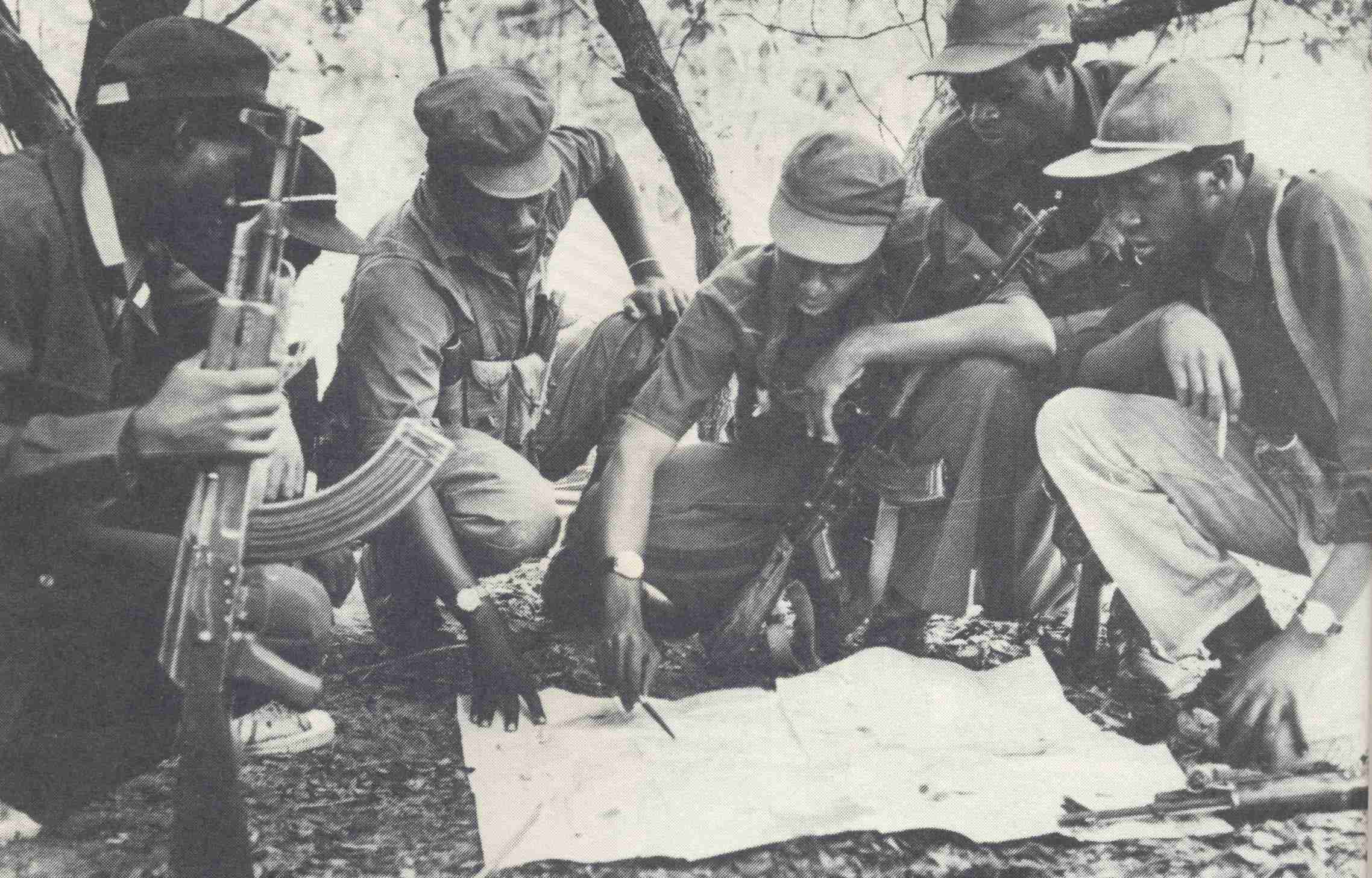
I have been closely following a compelling oral-history series on Zimbabwe’s War of Liberation (the Second Chimurenga), hosted by Robert Tapfumaneyi on ZimNews Beat TV’s YouTube channel ( https://youtube.com/playlist?list=PLBQumZCiCU8r2TUrcCvY3jBuw8xuMnYJY ). What initially appears to be a collection of veteran testimonies gradually unfolds into something far more unsettling and intellectually demanding: a mirror held up not only to the liberation struggle itself, but to how the nation has chosen to remember, narrate, and politically curate that struggle.
A striking and recurring theme in these interviews is the sharp distinction veterans draw between the nationalists – the political leadership – and the fighters – the men and women who carried the war on their backs, in forests, camps, and battlefields. Interview after interview reveals a persistent sense of dislocation: a gulf between what was imagined, promised, or morally implied by the liberation struggle and the lived realities many war veterans inhabit today. Hardly an episode goes by without an interviewee breaking down in tears on camera. This raises a difficult but unavoidable question: when a liberation war ends, whose victory is it meant to be? And how long can a revolutionary promise survive if those who bore its greatest cost feel estranged from its outcomes?
Yet what is perhaps more intellectually provocative is the realisation that this mistrust did not emerge after independence. It was already present within the liberation struggle itself. The popular tendency is to imagine the Second Chimurenga as a morally unified enterprise, temporarily disrupted by post-independence politics. The testimonies challenge this comfort. They suggest instead that ideological fractures, organisational rivalries, and mutual suspicions were structural features of the struggle, not historical accidents that appeared later.
One interviewee goes further, tracing the roots of the post-independence violence in Matabeleland and the Midlands – commonly referred to as Gukurahundi – back to tensions during the ZIPA era in Tanzania. At camps such as Mgagao and Morogoro, efforts by the Frontline States to unify ZANLA, ZIPRA, and FROLIZ under ZIPA exposed unresolved contradictions rather than healing them. If this reading is correct, then Gukurahundi cannot be understood purely as a post-1980 deviation. It must also be examined as a delayed eruption of conflicts that the liberation movement itself never fully resolved.
This leads us to questions that are uncomfortable precisely because they are necessary. Has there been a conscious or unconscious effort to reframe the history of the liberation war to fit the political needs of successive moments? Do we, as a nation, benefit from narrating our past as a linear march of unity, heroism, and moral clarity when the historical record – particularly the voices of fighters themselves – points to complexity, contestation, and internal struggle? And what is lost when inconvenient episodes are softened, deferred, or silenced altogether?
History, properly understood, is not a public-relations exercise. It is a discipline of honesty. Nations that selectively remember their past may achieve short-term political comfort, but they incur long-term intellectual and moral debt. The testimonies in this series force us to ask whether Zimbabwe is still carrying that debt. Can reconciliation be achieved without confronting origins? Can dignity for veterans be restored without first acknowledging the full truth of what they fought within, not just what they fought against? And perhaps most fundamentally: are we prepared to let our liberation history be a site of inquiry rather than a shrine of slogans?
These are not questions meant to weaken the liberation legacy. On the contrary, they are the questions that determine whether that legacy matures into wisdom – or calcifies into myth.


































Post a comment