I recently read Munyaradzi Hoto’s analysis on X about the demise of Tongaat Hulett. It sent me down a rabbit hole of court filings, business reports, creditor positioning, and the kind of corporate manoeuvring that could easily produce a blockbuster documentary. Yet for all the South Africa-centred drama, the most sobering realisation came later: Tongaat Hulett’s Zimbabwe operation in the Lowveld is not a minor subsidiary caught in someone else’s storm. It is a major node in the entire matrix. And once you see that, it becomes difficult to avoid the obvious conclusion – our government must ensure this asset becomes Zimbabwean-controlled going forward, through a lawful, market-based transaction anchored by Mutapa Investment Fund. More …
[RE-POST (Xinhua)]
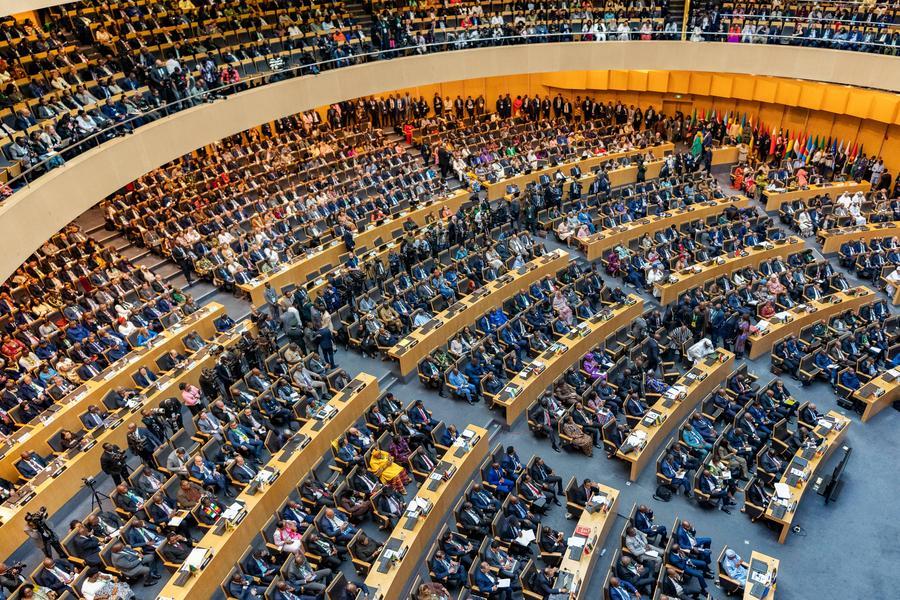
Chinese President Xi Jinping’s congratulatory message to the 39th African Union (AU) Summit held in Ethiopia is believed to demonstrate China’s firm support for Africa’s independent development.
In his message, Xi announced that China will fully implement zero-tariff treatment for 53 African countries having diplomatic relations with China starting from May 1, 2026. He also highlighted efforts to upgrade the “green channel” for African exports. More …
There are moments in a nation’s life when the argument is not chiefly about personalities, slogans, or the theatre of the day – but about time itself: how it is organised, how it is protected, and how it is converted into national capability. Constitutional Amendment No. 3 of 2026 belongs in that register. It is best read not as a narrow political adjustment, but as an attempt to redefine how Zimbabwe structures constitutional time in pursuit of stability, coherence, and developmental momentum.
Modern constitutional democracies often treat elections as sacred civic rituals – an unquestioned rhythm that promises renewal, accountability, and legitimacy. The five-year cycle, in particular, has become an inherited orthodoxy, largely drawn from Western parliamentary traditions, and carried across borders as though it were a universal formula. Yet a sobering question lingers beneath the ceremony: does the tempo of frequent elections reliably deepen development, or can it – in certain institutional environments – fracture it into permanent motion without durable progress? More …
Today, I attended NetOne’s Online Media Engagement Session at Manna Resort with a simple conviction: in today’s Zimbabwe, whoever understands digital influence understands the direction of the nation.
What unfolded was not a routine corporate breakfast. It was a strategic convergence of infrastructure and influence.
Standing in for NetOne’s Chief Executive Officer, Cde Raphael Mushanawani, the event convener and NetOne Head of Public Relations, Cde Richard Mahomva, framed the conversation with refreshing clarity. He described data as “the fuel and commodity we possess” – a resource not merely to be sold, but to be deployed intelligently. It was a subtle but powerful shift in tone. Telecoms are no longer passive carriers of information; they are architects of possibility. More …
The oft-repeated claim that Mutapa Investment Fund is a “US$15 billion fund” cab be deeply misinterpreted and risks manufacturing fiscal myths where none should exist.
That figure reflects the valuation of underlying investee companies – approximately US$16 billion gross and about US$15 billion at fair value as of 31 December 2024. It does not represent US$15 billion in cash, nor does it denote a liquid pool of capital available for deployment. There is no war chest, no discretionary balance waiting to be “bet.” More …
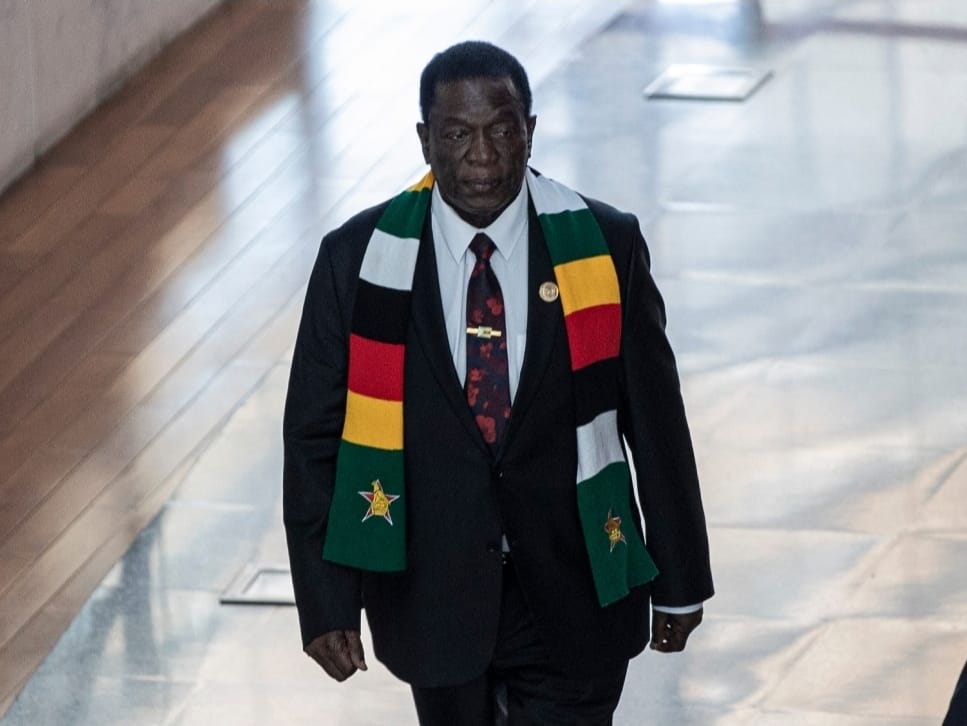
Performance legitimacy – the validation of political authority through tangible socio-economic outcomes – offers a clear framework for understanding the growing momentum within ZANUPF provinces to extend President Emmerson Mnangagwa’s tenure to 2030. Rather than a procedural manoeuvre, this push reflects a judgement that continuity best serves Zimbabwe’s current developmental trajectory. More …
Six hundred megawatts added to the national grid. A record-breaking 46.7 tonnes of gold delivered to the state coffers. 560 000 tonnes of wheat harvested, securing national self-sufficiency. Three hundred million dollars poured into modernising the Beitbridge border corridor. A month-on-month inflation rate tamed to just 0.2 per cent. Over two billion dollars in annual diaspora capital flowing directly into the economy.
These are not campaign slogans. They are the cold, hard integers of a Zimbabwe that has stopped waiting for permission to succeed. For two decades, the global narrative on Zimbabwe has been a single, catastrophic script: crisis, collapse, and the inevitable end. But if you put down the newspaper and look at the concrete being poured, a different, inconvenient truth emerges. While critics predict the funeral, the Second Republic under President Emmerson Mnangagwa has been quietly engaged in the unglamorous, gritty business of statecraft. We are witnessing a calculated retreat from the theatre of politics into the engine room of economics – a shift that prioritises control over applause. More …
There is a reason why the narrative in Western capitals has gone quiet. For twenty-five years, the “experts” in London and Washington have been waiting for us to starve. They looked at the Fast Track Land Reform Programme and saw only the destruction of colonial property rights. They obsessed over the tractor count of 1998 while ignoring the human revolution of 2000. But while they were busy drafting sanctions and writing obituaries for our economy, Zimbabwe was quietly building something they never anticipated: the world’s first decentralised, climate-resilient agrarian model. The “breadbasket” didn’t burn. It evolved.
The myth of the Rhodesian “golden age” is finally dead, buried by data they can no longer suppress. When the blistering El Niño droughts of the last decade hit Southern Africa, the corporate farming giants of our neighbours – heavily leveraged and reliant on energy-intensive overhead irrigation – buckled under the dual weight of debt and power deficits. But in Zimbabwe? The newly resettled A1 and A2 farmers held the line. More …
Zimbabwe’s current development moment cannot be understood through isolated statistics or sectoral announcements. It must be read as a single, coherent political economy narrative in which macroeconomic stabilisation is deliberately being converted into structural transformation across multiple fronts of national life. From the standpoint of fiscal and monetary economics, the recording of US$16,2 billion in foreign currency receipts in 2025 – the highest figure in Zimbabwe’s history and nearly three times the 2017 level – is not merely an accounting milestone. It is a credibility signal. From the perspective of development politics, the more consequential question is how the State is now choosing to deploy that credibility in 2026. More …
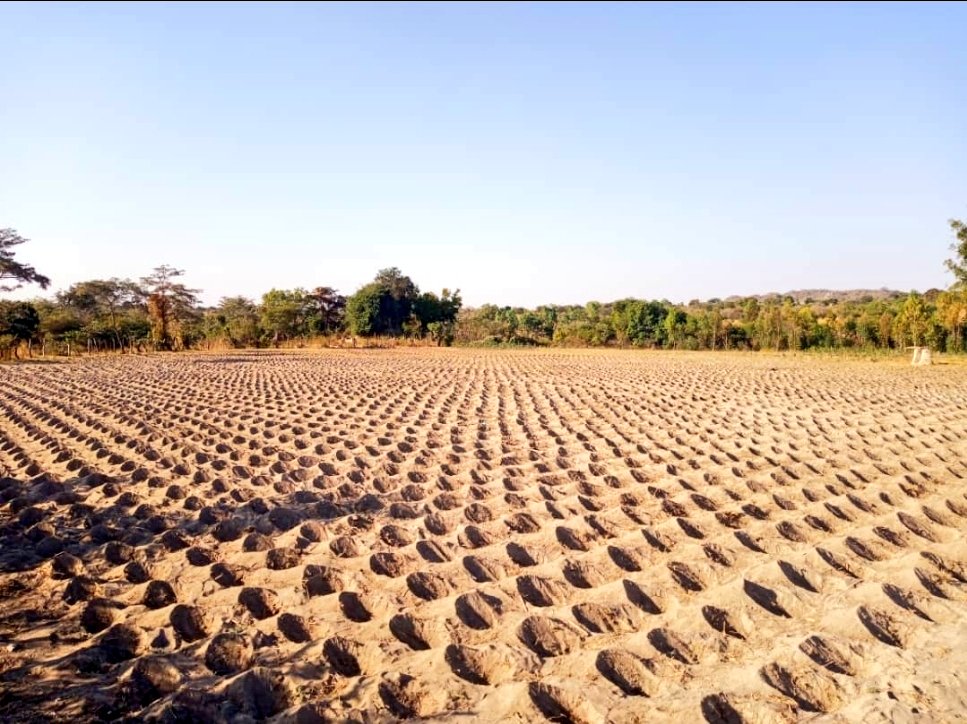
Zimbabwe’s decision to decentralise land title deed processing to the provinces is a long-overdue reform with the potential to fundamentally reset the country’s agricultural economy. By bringing land administration closer to farmers, the Government is not only reducing bureaucracy and delays, but also addressing the central constraint that has limited post-land reform productivity: insecure and non-bankable tenure. This is devolution with substance, not slogans. More …