The Youth Engine Behind China’s Rise – And the Lessons We Should Not Miss

There are moments when a nation’s grand strategy reveals itself in an ordinary room, through ordinary competence. I recently attended a seminar that brought together heads of key media from Belt and Road countries. The agenda was serious, the participants were senior, and the expectations were high. Yet what stood out was not protocol, microphones, or banners. It was the coordination.

The event was run by multiple young Chinese nationals – highly educated, openly aspirational, and strikingly composed. They handled logistics, sequencing, time discipline, and stakeholder management with an efficiency that required minimal supervision. The confidence was not loud. It was structured. The competence was not performative. It was practical. In that small, human scene, one could glimpse a larger truth: China’s international stature is not sustained only by policy documents and speeches. It is sustained by a deep pipeline of capable young people who execute.
More …


Zimbabwe Is No Longer Guessing

As the sun rises on 2026, Zimbabwe stands at a vantage point that few observers predicted a decade ago. The country is no longer merely recovering, no longer suspended in a narrative of exception or apology. What is emerging instead is a state learning in public, adjusting in motion, and ascending with an unusual mix of restraint and confidence. The launch of the National Development Strategy 2 is not a bureaucratic sequel to NDS1, but the codification of a distinct model of statecraft and economic resilience that future scholars may well describe as a Zimbabwean or Harare-centred consensus.

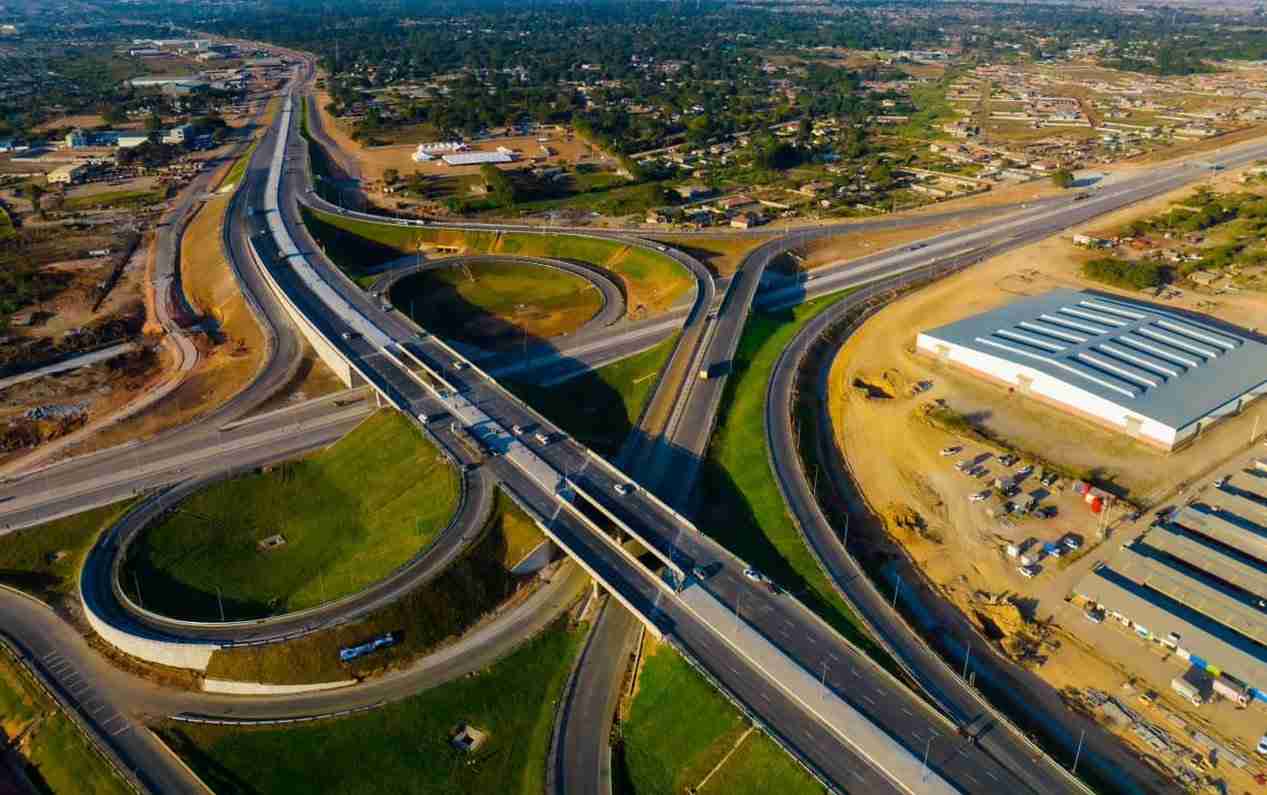
To understand where Zimbabwe is going, one must first appreciate the architectural feat of the last five years. NDS1 was never designed to inspire romance. It was the era of the hard hat rather than the headline, a stabilisation phase defined by concrete, discipline, and endurance. It was a period of fixing fiscal leaks, rebuilding arterial roads, restoring agricultural self-sufficiency, and proving to a sceptical world that the Zimbabwean state could still plan, execute, and feed its people under pressure. In political terms, it was a defensive masterclass – holding the line against sanctions, pandemic shocks, and capital starvation while quietly reconstructing domestic capacity. NDS1 functioned less as a development manifesto than as a stabilisation engine disguised as one. More …

Zimbabwe Institutionalises Its Skills Capital with New National Databases

Professor Paul Mavima, Minister of Skills Audit and Development, on 30 December 2025 launched the Retired Expert Skills Database and the Diaspora Skills Database – a calibrated policy intervention correcting a long-standing structural gap in Zimbabwe’s development framework: the absence of a central mechanism to identify, organise, and deploy national expertise at scale.

For decades, Zimbabwe has produced professionals of international calibre across government, industry, academia, and multilateral institutions. Yet this capability remained fragmented and underutilised. The new databases convert dispersed skills from latent potential into a strategic national asset, enabling evidence-based deployment to priority sectors, strengthening service delivery, accelerating innovation, and lifting national productivity. More …

Mocking the Rebuild, Forgetting the Fire

There is a peculiar ritual in Zimbabwe’s digital space – predictable; almost mechanical. You post a rebuilt road, a new clinic wing, a dam wall rising, or power units being restored – and someone arrives, right on cue, with the same sneer disguised as a question: “Where were you when the infrastructure you’re rebuilding today was collapsing?” It is not asked to understand, but to score points.

That question only sounds clever if we pretend infrastructure collapses for entertainment – as if highways, waterworks, hospitals, rail, and power stations simply wake up one morning and decide to die. A serious answer requires adult economics, not comment-section theatrics on Facebook and X. More …

If We Named Years Like We Used To, 2025 Would Be Gore rekuSimukira

There was a time when Zimbabwe did not merely pass through years – it named them.

A year carried intent. Direction. Instruction.

1978 was not just another page on the calendar; it was Gore reVanhu, the year the liberation struggle placed its faith squarely in the masses. 1980 was not simply Independence; it was Gore reMasimba kuVanhu, the year power returned to its rightful owners. 1982 became Gore reShanduko, the year of people-driven transformation. These names were not decorative poetry. They were historical assignments. They told the nation what the moment demanded of it.

Somewhere along the way, that tradition faded. We replaced meaning with matrices, resolve with reports, poetry with policy frameworks. Time became technical. Neutral. Unnamed. More …

Zimbabwean Diaspora’s Role in National Growth

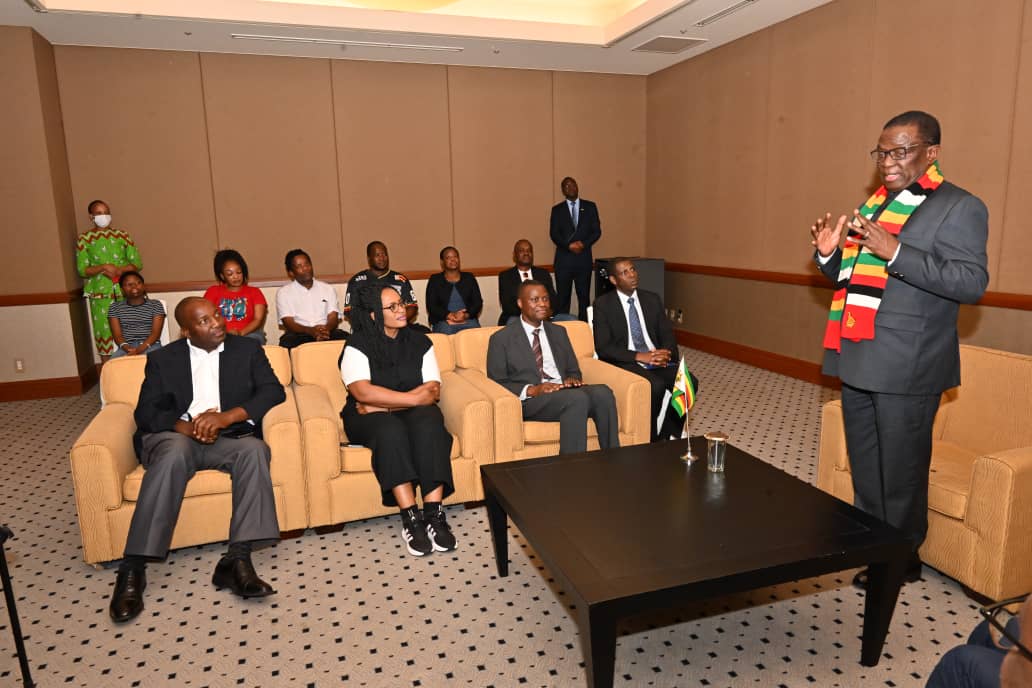
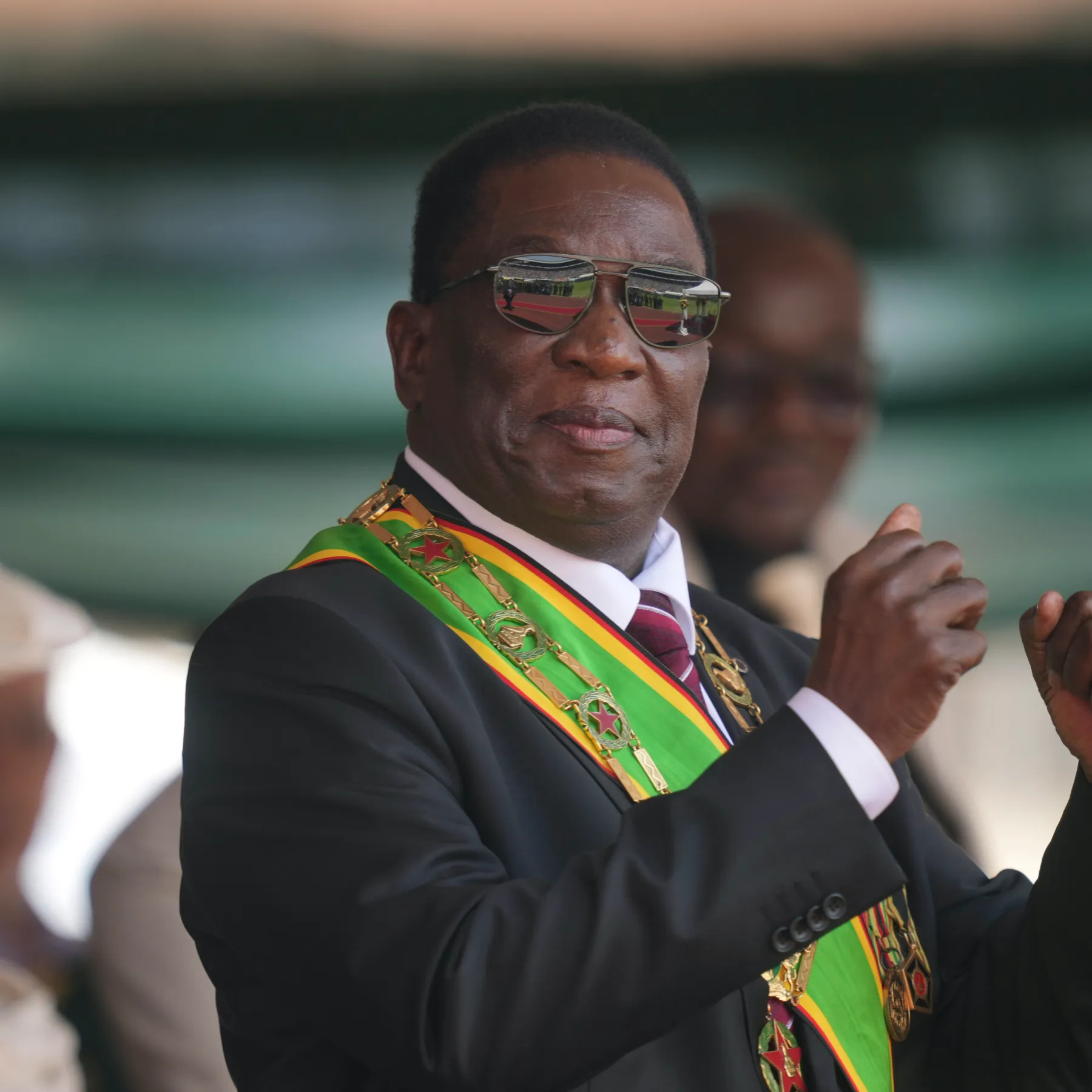
As 2025 draws to a close, President Emmerson Dambudzo Mnangagwa has delivered his Christmas and New Year message. In it, I noticed something subtle yet unmistakable. He spoke directly to Zimbabweans at home and in the diaspora. That single choice of words, directed at the diaspora, mattered. It was not a ceremonial flourish or a seasonal courtesy, but a clear signal that the Zimbabwean diaspora is no longer a distant audience observing events from afar. It is a central actor in the country’s economic story.

For too long, the diaspora has been described – and at times has described itself – in emotional terms: distance, longing, displacement, the hope of eventual return. That narrative is tired. More importantly, it is incomplete. The real story is economic, measurable, and already unfolding. In just the first nine months of 2025, remittances rose by more than 12 percent to US$2.1 billion, with annual inflows projected to exceed US$2.7 billion. At that scale, diaspora inflows are not supplementary. They stabilise households, support foreign-currency availability, and quietly keep the wheels of the economy turning.
More …

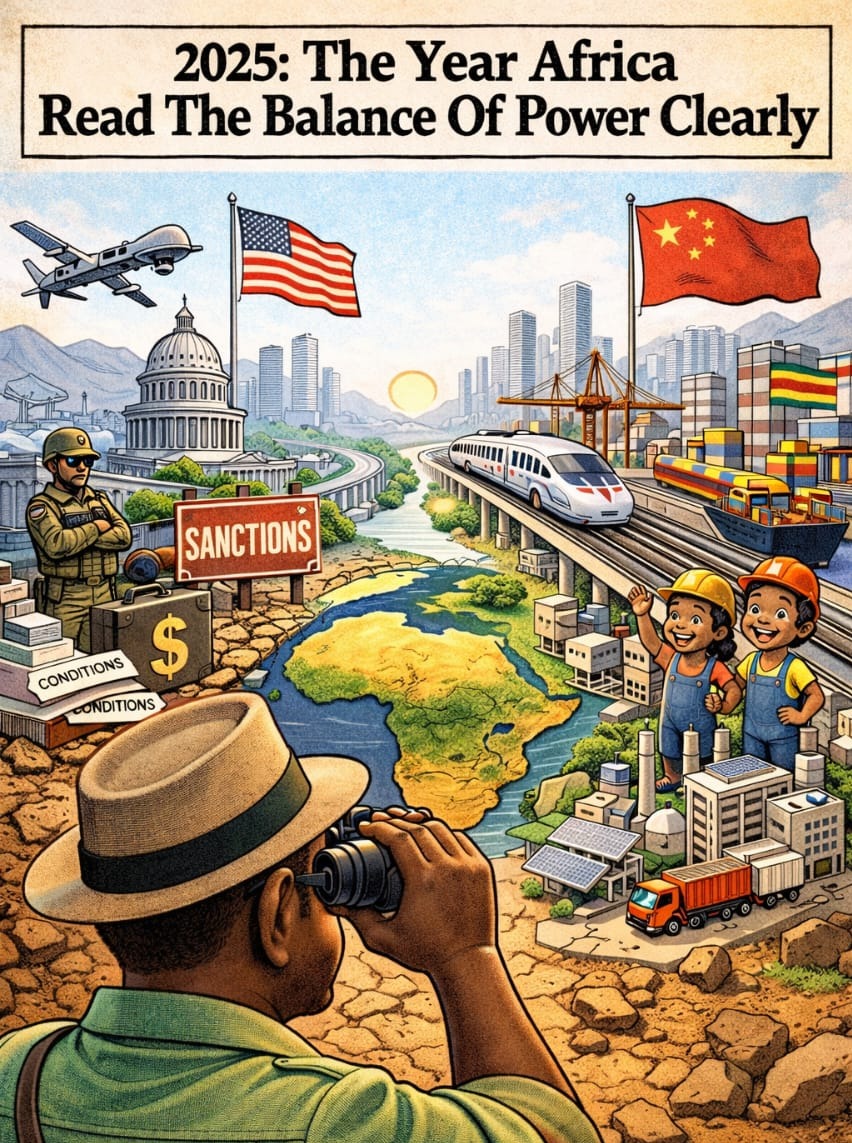
2025: The Year Africa Read the Balance of Power Clearly

As 2025 draws to a close, one conclusion stands with increasing clarity: the global centre of gravity has shifted, not through rupture or spectacle, but through the steady accumulation of deliberate choices made across the Global South. Africa, in particular, has spent this year doing something both quiet and consequential – comparing partners by outcomes rather than promises. In that comparison, the contrast between U.S. and Chinese foreign policy has hardened into a practical judgment about relevance.

This was the year multipolarity ceased to be theoretical. It became operational.

For much of the post-Cold War era, U.S. engagement with Africa rested on a familiar architecture: aid conditionality; security cooperation; values-driven diplomacy. In 2025, that architecture showed unmistakable strain. Policy remained episodic, filtered through domestic political cycles, and increasingly securitised. Engagement was reactive – responding to instability, coups, or geopolitical anxiety – rather than anchored in long-term economic transformation. Trade initiatives lacked scale. Infrastructure financing remained tentative. Sanctions continued to substitute for strategy. More …

Zimbabwe’s 2025 Year-End Audit: Receipts, Not Noise

At the close of 2025, Zimbabweans find themselves at a vantage point that demands a moment of quiet, honest reflection. To truly understand the state of the nation, one must ignore the transient noise of social media and instead look at the receipts – the tangible, measurable evidence of a country in transition. These are not the kind of receipts that fade; they are the kind you can drive on, harvest from, and calculate in the hard language of macroeconomics. This is the year-end audit of a nation that, despite immense external pressure, has chosen the revolutionary act of building over the convenient act of complaining. The story of 2025 is a narrative that holds even when you remove party colors and demand evidence, because the strongest defense of the Second Republic is found in independent corroboration. More …

From Silk to Steel: Sino-Zimbabwean Solidarity

The archaeological silence of the Great Zimbabwe monument has long been broken by a profound discovery: fragments of Chinese porcelain embedded within its ancient stone walls. This ceramic record is not merely a relic of antiquity but a material archive of a sophisticated maritime interchange that predates modern diplomacy by centuries. Today, this historical synergy has evolved into a robust strategic partnership that defines the vanguard of South-South cooperation.

A Civilisational Dialogue

The presence of these artefacts serves as a definitive rebuttal to historical narratives of African isolation. Instead, they position the Great Zimbabwe Empire as a pivotal node in a global network of commerce and culture. Reflecting on this enduring legacy, the Chinese Ambassador to Zimbabwe, Zhou Ding, recently underscored the depth of this connection:

“The discovery of Chinese porcelain at Great Zimbabwe also serves as significant archaeological evidence of deep historical ties between China and Africa. These artefacts highlight Great Zimbabwe’s role as a sophisticated African civilization engaged in long-distance trade and offer a concrete record of the dynamic interactions between China and Zimbabwe centuries ago.” More …

How 2025 Broke Zimbabwe’s “Twitter Economics”

When historians eventually analyse the structural evolution of Zimbabwe, 2025 will likely be recorded as the definitive point of inflection. It was the year the specific gravity of reality finally crushed the buoyancy of digital hysteria. It was the year the economic debate did not merely break down, but was rendered obsolete by a government that simply performed beyond the capacity of its detractors to comprehend. For the better part of a decade, we have suffered a plague of “Twitter Economics” – a phenomenon where political sentiment masquerades as financial literacy. But in 2025, the Second Republic didn’t just govern; it outpaced the rhetoric, executing its mandate with such granular focus that attacking the economy as a proxy for political warfare became a futile, intellectually bankrupt exercise.

Throughout the year, we witnessed the peak of undisciplined commentary: a landscape where Zimbabwe was plagued by a surplus of opinions and a deficit of data. On social media, every movement of the exchange rate was weaponised: treated not as a standard market variable but as a portent of Armageddon. The digital opposition complex operated on a simple, flawed heuristic: if the government does it, it must be failing. They painted a picture of a nation in freefall, predicting a return to 2008 with repetitive monotony. However, economics is a science of measurement, not a contest of feelings. When one stripped away the vitriol and looked at the ZIMSTAT ledgers, the collapse narrative disintegrated against a wall of hard data. More …