I recently read Munyaradzi Hoto’s analysis on X about the demise of Tongaat Hulett. It sent me down a rabbit hole of court filings, business reports, creditor positioning, and the kind of corporate manoeuvring that could easily produce a blockbuster documentary. Yet for all the South Africa-centred drama, the most sobering realisation came later: Tongaat Hulett’s Zimbabwe operation in the Lowveld is not a minor subsidiary caught in someone else’s storm. It is a major node in the entire matrix. And once you see that, it becomes difficult to avoid the obvious conclusion – our government must ensure this asset becomes Zimbabwean-controlled going forward, through a lawful, market-based transaction anchored by Mutapa Investment Fund. More …
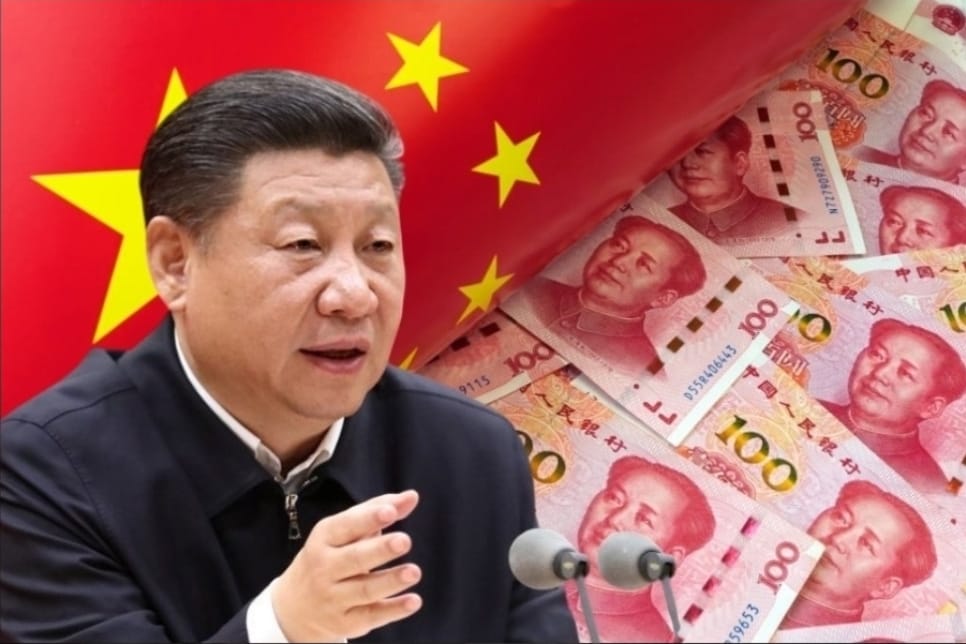
In excerpts published on January 31, 2026, in Qiushi (the official theoretical journal and news magazine of the Central Committee of the Communist Party of China), President Xi Jinping articulated with clarity a long-gestating ambition: transforming the renminbi (RMB) into a strong currency capable of functioning as a global reserve. It constituted a deliberate policy signal rather than a symbolic gesture, a disciplined declaration aligned with the realities of a fragmenting international financial order.
China has pursued RMB internationalisation for more than a decade. What has changed is coherence. Xi’s framework defines a financial powerhouse through mutually reinforcing pillars: a strong currency, a strong central bank in the form of the People’s Bank of China, resilient financial institutions, international financial centres, rigorous supervision, and elite financial talent. This is institutional design, not improvisation. More …
The oft-repeated claim that Mutapa Investment Fund is a “US$15 billion fund” cab be deeply misinterpreted and risks manufacturing fiscal myths where none should exist.
That figure reflects the valuation of underlying investee companies – approximately US$16 billion gross and about US$15 billion at fair value as of 31 December 2024. It does not represent US$15 billion in cash, nor does it denote a liquid pool of capital available for deployment. There is no war chest, no discretionary balance waiting to be “bet.” More …
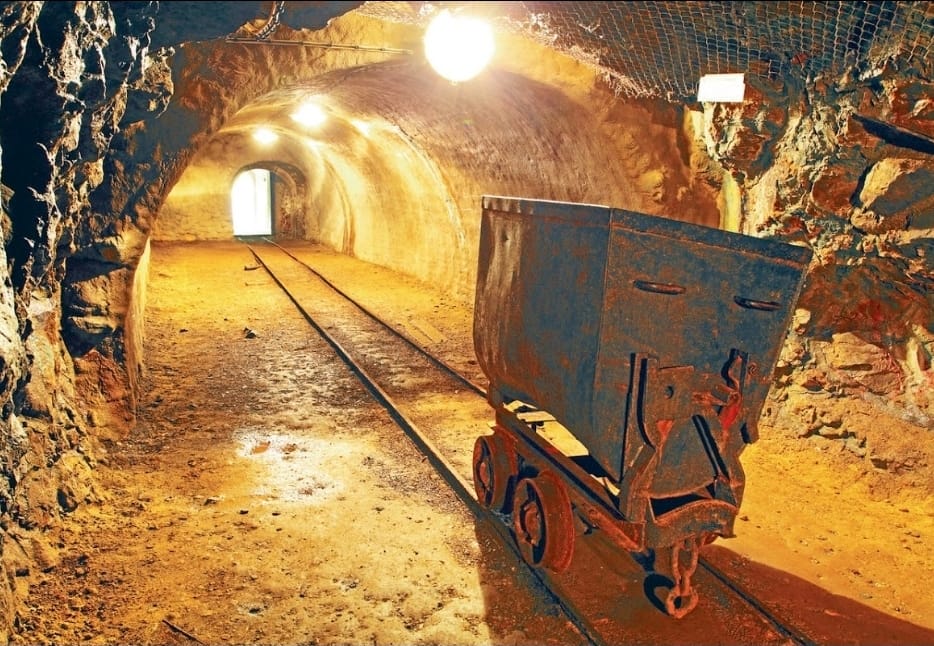
Growing up in areas bordering Midlands and Mashonaland West, one name always stood out to me in Gokwe North – Copper Queen. To my young mind, it felt like an oddity. An unmistakably English name sitting in a landscape rich with powerful Shona place names – Nembudziya, Gandavaroyi, Gandavacheche, Mudzongwe, Tiki, Madzivazvido, Chinyenyetu, Kuwirirana. These names carried texture, history, and meaning. Copper Queen felt different – foreign, curious, intriguing.
What I did not understand then was that Copper Queen was already more than a mine. It had crossed an invisible line – from extraction point to lived geography. The name did not remain confined to a shaft or a claim. It became a reference point, a farming area, a way people located themselves. Nearby, there was also Copper King, another copper site in the same mineralised zone. But Copper King never made that transition. It remained a technical marker – present in records and reports, but largely absent from everyday belonging. More …
Six hundred megawatts added to the national grid. A record-breaking 46.7 tonnes of gold delivered to the state coffers. 560 000 tonnes of wheat harvested, securing national self-sufficiency. Three hundred million dollars poured into modernising the Beitbridge border corridor. A month-on-month inflation rate tamed to just 0.2 per cent. Over two billion dollars in annual diaspora capital flowing directly into the economy.
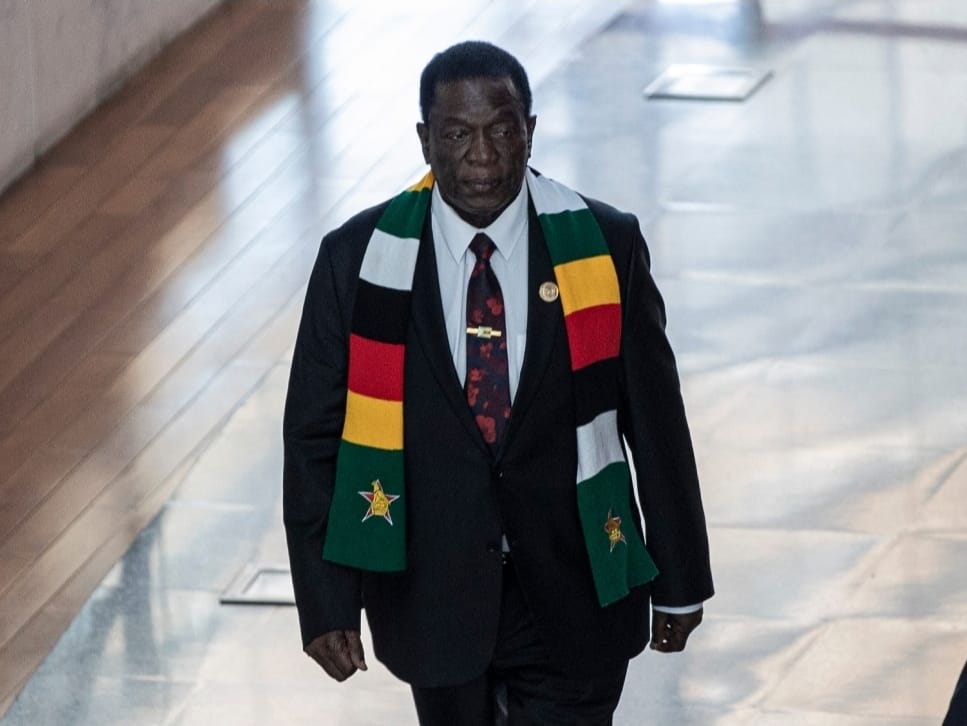
These are not campaign slogans. They are the cold, hard integers of a Zimbabwe that has stopped waiting for permission to succeed. For two decades, the global narrative on Zimbabwe has been a single, catastrophic script: crisis, collapse, and the inevitable end. But if you put down the newspaper and look at the concrete being poured, a different, inconvenient truth emerges. While critics predict the funeral, the Second Republic under President Emmerson Mnangagwa has been quietly engaged in the unglamorous, gritty business of statecraft. We are witnessing a calculated retreat from the theatre of politics into the engine room of economics – a shift that prioritises control over applause. More …
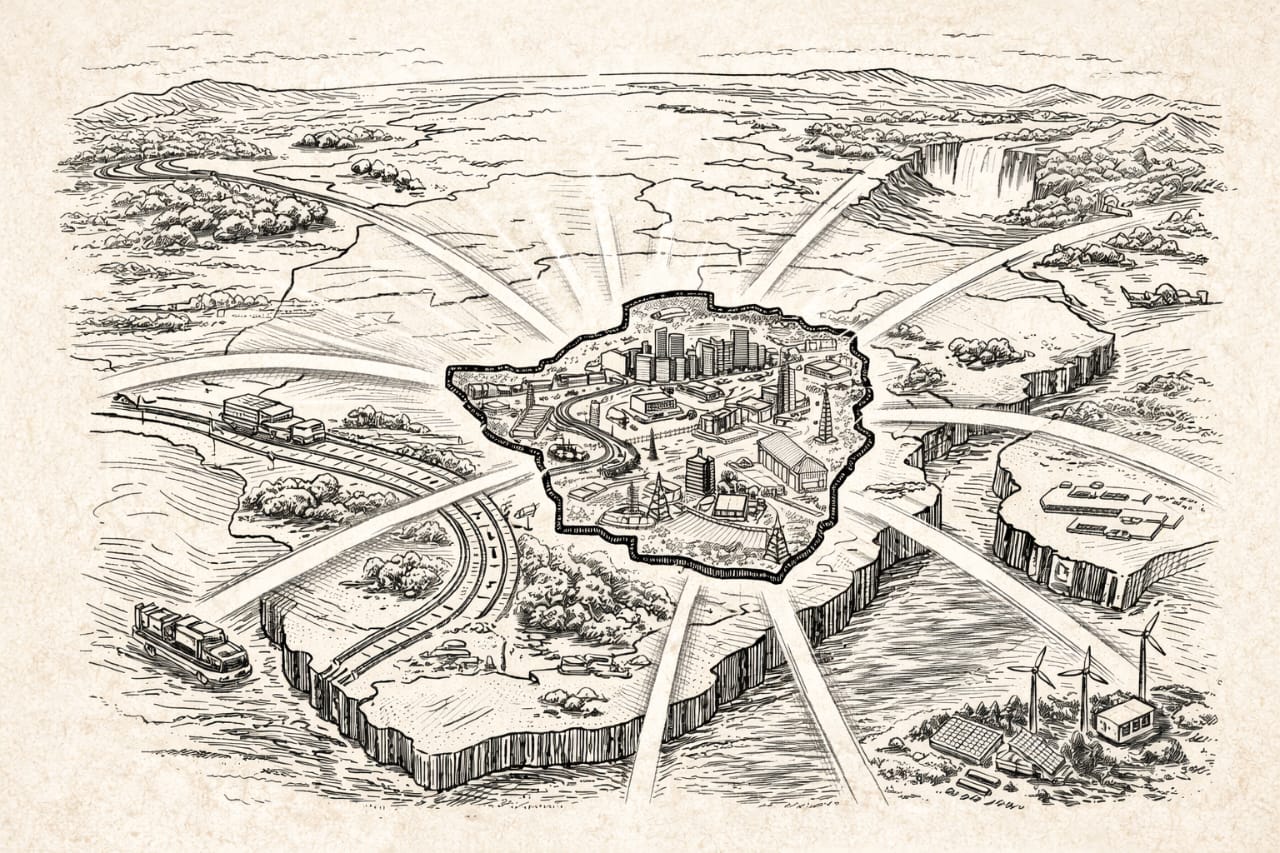
As we navigate the early months of 2026, the narrative surrounding Zimbabwe is undergoing a profound transformation. For years, the conversation was dominated by the language of recovery; today, it is defined by the acceleration of intent. Having successfully concluded the first phase of the National Development Strategy (NDS1) and now aggressively implementing NDS2, Harare is no longer looking inward. It is looking outward, positioning itself as the logistical, industrial, and ecological pivot – the true nexus – of the Southern African Development Community (SADC).
To understand this shift, one must look past the headlines to the structural realities. Zimbabwe’s geography is its most powerful latent asset. Situated at the intersection of the North-South and East-West corridors, the nation acts as the region’s natural circulatory system. What has changed is the intentionality behind this position.
More …
Zimbabwe’s current development moment cannot be understood through isolated statistics or sectoral announcements. It must be read as a single, coherent political economy narrative in which macroeconomic stabilisation is deliberately being converted into structural transformation across multiple fronts of national life. From the standpoint of fiscal and monetary economics, the recording of US$16,2 billion in foreign currency receipts in 2025 – the highest figure in Zimbabwe’s history and nearly three times the 2017 level – is not merely an accounting milestone. It is a credibility signal. From the perspective of development politics, the more consequential question is how the State is now choosing to deploy that credibility in 2026. More …
The reaction to Professor Gift Mugano is neither an economic disagreement nor a serious political debate; it is a textbook case of cognitive dissonance masquerading as outrage. For years, opposition figures, including Fadzayi Mahere and LynnStacia, elevated Professor Mugano to near-canonical status, not because scholarship was sacred, but because his views confirmed their priors. His authority was celebrated, circulated, and weaponised. More …
As the sun rises on 2026, Zimbabwe stands at a vantage point that few observers predicted a decade ago. The country is no longer merely recovering, no longer suspended in a narrative of exception or apology. What is emerging instead is a state learning in public, adjusting in motion, and ascending with an unusual mix of restraint and confidence. The launch of the National Development Strategy 2 is not a bureaucratic sequel to NDS1, but the codification of a distinct model of statecraft and economic resilience that future scholars may well describe as a Zimbabwean or Harare-centred consensus.
To understand where Zimbabwe is going, one must first appreciate the architectural feat of the last five years. NDS1 was never designed to inspire romance. It was the era of the hard hat rather than the headline, a stabilisation phase defined by concrete, discipline, and endurance. It was a period of fixing fiscal leaks, rebuilding arterial roads, restoring agricultural self-sufficiency, and proving to a sceptical world that the Zimbabwean state could still plan, execute, and feed its people under pressure. In political terms, it was a defensive masterclass – holding the line against sanctions, pandemic shocks, and capital starvation while quietly reconstructing domestic capacity. NDS1 functioned less as a development manifesto than as a stabilisation engine disguised as one. More …
A combination of firming gold prices and a rise in foreign-currency holdings has bolstered confidence in the ZiG, reinforcing its exchange value.
Data published by the central bank shows the unit trading at US$25.98, its strongest level since early January.
Introduced in April 2024, the ZiG has shown notable resilience. Over the course of 2025, it has weakened by just 0.7 percent against the United States dollar, a performance that contrasts sharply with past episodes of currency volatility.
This relative stability is underpinned by hard backing. The ZiG is anchored by physical reserves of about 2.5 tonnes of gold, complemented by roughly US$100 million in foreign-exchange assets, a structure that has helped sustain market confidence in Zimbabwe’s evolving monetary framework.
Taken together, these indicators signal renewed national confidence and a cautiously optimistic promise as the country positions itself for 2026, with currency stability increasingly viewed as a platform for broader economic planning and growth.