Mocking the Rebuild, Forgetting the Fire

There is a peculiar ritual in Zimbabwe’s digital space – predictable; almost mechanical. You post a rebuilt road, a new clinic wing, a dam wall rising, or power units being restored – and someone arrives, right on cue, with the same sneer disguised as a question: “Where were you when the infrastructure you’re rebuilding today was collapsing?” It is not asked to understand, but to score points.

That question only sounds clever if we pretend infrastructure collapses for entertainment – as if highways, waterworks, hospitals, rail, and power stations simply wake up one morning and decide to die. A serious answer requires adult economics, not comment-section theatrics on Facebook and X. More …

Zimbabwean Diaspora’s Role in National Growth

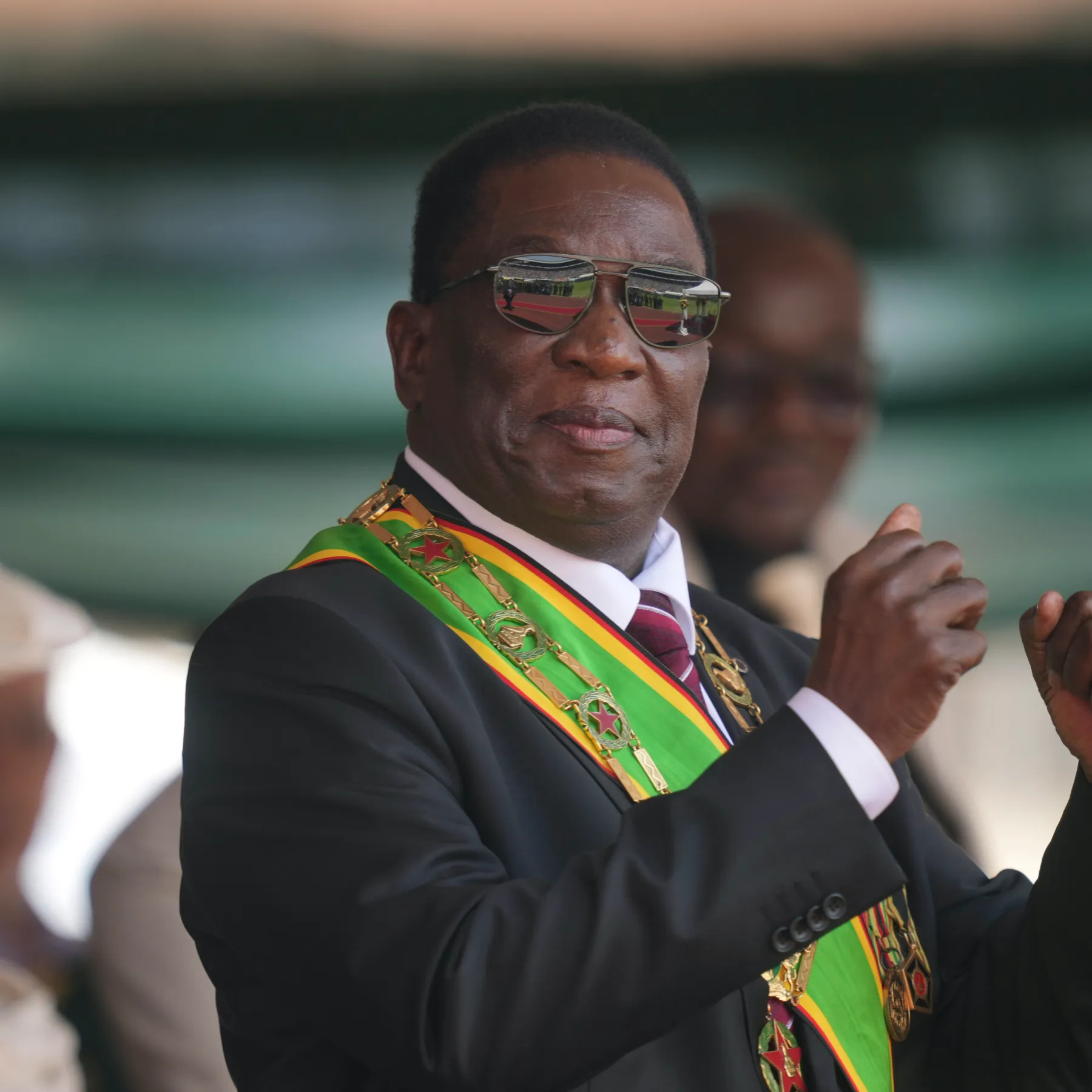
As 2025 draws to a close, President Emmerson Dambudzo Mnangagwa has delivered his Christmas and New Year message. In it, I noticed something subtle yet unmistakable. He spoke directly to Zimbabweans at home and in the diaspora. That single choice of words, directed at the diaspora, mattered. It was not a ceremonial flourish or a seasonal courtesy, but a clear signal that the Zimbabwean diaspora is no longer a distant audience observing events from afar. It is a central actor in the country’s economic story.

For too long, the diaspora has been described – and at times has described itself – in emotional terms: distance, longing, displacement, the hope of eventual return. That narrative is tired. More importantly, it is incomplete. The real story is economic, measurable, and already unfolding. In just the first nine months of 2025, remittances rose by more than 12 percent to US$2.1 billion, with annual inflows projected to exceed US$2.7 billion. At that scale, diaspora inflows are not supplementary. They stabilise households, support foreign-currency availability, and quietly keep the wheels of the economy turning.
More …

Zimbabwe’s 2025 Year-End Audit: Receipts, Not Noise

At the close of 2025, Zimbabweans find themselves at a vantage point that demands a moment of quiet, honest reflection. To truly understand the state of the nation, one must ignore the transient noise of social media and instead look at the receipts – the tangible, measurable evidence of a country in transition. These are not the kind of receipts that fade; they are the kind you can drive on, harvest from, and calculate in the hard language of macroeconomics. This is the year-end audit of a nation that, despite immense external pressure, has chosen the revolutionary act of building over the convenient act of complaining. The story of 2025 is a narrative that holds even when you remove party colors and demand evidence, because the strongest defense of the Second Republic is found in independent corroboration. More …

How 2025 Broke Zimbabwe’s “Twitter Economics”

When historians eventually analyse the structural evolution of Zimbabwe, 2025 will likely be recorded as the definitive point of inflection. It was the year the specific gravity of reality finally crushed the buoyancy of digital hysteria. It was the year the economic debate did not merely break down, but was rendered obsolete by a government that simply performed beyond the capacity of its detractors to comprehend. For the better part of a decade, we have suffered a plague of “Twitter Economics” – a phenomenon where political sentiment masquerades as financial literacy. But in 2025, the Second Republic didn’t just govern; it outpaced the rhetoric, executing its mandate with such granular focus that attacking the economy as a proxy for political warfare became a futile, intellectually bankrupt exercise.

Throughout the year, we witnessed the peak of undisciplined commentary: a landscape where Zimbabwe was plagued by a surplus of opinions and a deficit of data. On social media, every movement of the exchange rate was weaponised: treated not as a standard market variable but as a portent of Armageddon. The digital opposition complex operated on a simple, flawed heuristic: if the government does it, it must be failing. They painted a picture of a nation in freefall, predicting a return to 2008 with repetitive monotony. However, economics is a science of measurement, not a contest of feelings. When one stripped away the vitriol and looked at the ZIMSTAT ledgers, the collapse narrative disintegrated against a wall of hard data. More …

Trading on Parole – ZIMRA’s 30-Day Leash on the Economy

ZIMRA’s proposal to introduce a monthly renewable Tax Clearance Certificate (ITF 263) from January 2026 is being sold as modern, dynamic compliance. In reality, it is regulatory overreach that confuses bureaucratic control with sound fiscal policy and risks choking the very economy it seeks to tax.

From an economic perspective, the flaw is clear. Development economics warns of the compliance cost hypothesis: when the cost of obeying the law rises too high, rational actors exit the formal system. Shifting clearance from an annual or quarterly cycle to a monthly one is not a marginal tweak; it hyper-inflates compliance costs. Large corporates absorb this through compliance teams. Micro and small enterprises, which dominate Zimbabwe’s economy, cannot. Time spent navigating TaRMS, reconciling filings, and chasing monthly clearances is time stolen from production and trade – a deadweight loss to GDP.
More …

A Nation Forged in Gold by the Second Republic’s Empowerment Agenda

Zimbabwe’s mining sector has once again demonstrated the transformative power of the Second Republic. With two months still remaining in 2025, the nation has already surpassed its annual gold production target – an extraordinary milestone made possible by the deliberate, technically sound, and economically astute policies of President Dr Emmerson Dambudzo Mnangagwa.

Recent figures from Fidelity Gold Refinery show that Zimbabwe produced 41.8 tonnes of gold in the first ten months of 2025, a 29 percent leap from last year’s performance, and already above the 40-tonne national target. Even more striking is the structural shift the President engineered: artisanal and small-scale miners now account for 74 percent of national gold output, delivering over 30 tonnes, up from 20 tonnes last year. This is empirical evidence of what smart formalisation, targeted incentives, and gold mobilisation policies can achieve when anchored in coherent governance. More …

Evidence Over Outrage – Prof. Mugano and the Mutapa Fund Debate.

World-renowned Economics Professor Gift Mugano has set himself apart by rising above the toxic, performative politics that have long clouded Zimbabwe’s public discourse. His openness about once drifting into oppositional activism – and his clear acknowledgement that such behaviour is ultimately unpatriotic – reflects rare intellectual honesty. For that alone, he has earned deep respect, and his critiques going forward deserve to be heard as serious, reasoned contributions.

What separates him from his loudest detractors is straightforward: he applies his mind, while others rely on shallow outrage and empty slogans. His evidence-driven support for the Mutapa Investment Fund has sparked genuine national debate precisely because it is rooted in analysis, not emotion. More …

Afreximbank Applauds Progress on Harare African Trade Centre

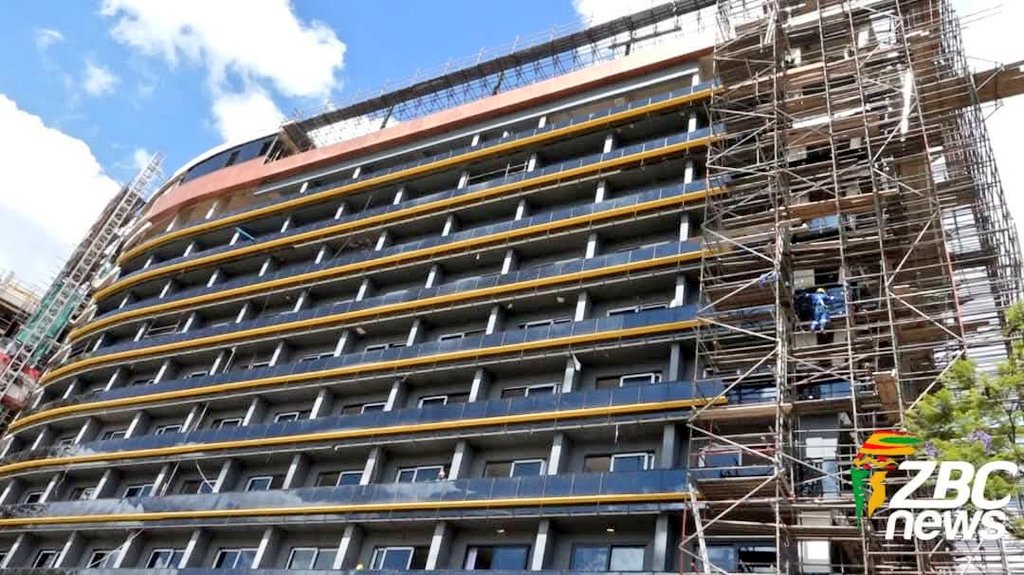
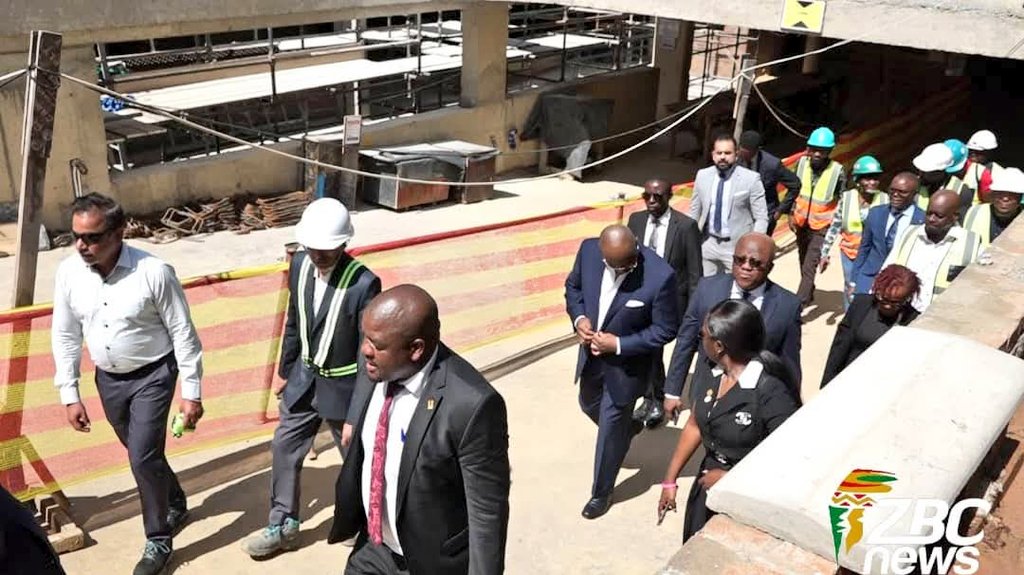
A high-level delegation from the African Export-Import Bank has applauded the remarkable progress on the new African Trade Centre rising in central Harare, a flagship project expected to open its doors early next year.

The complex, strategically positioned along Herbert Chitepo Avenue and Seventh Street, is being built through an investment of more than US$80 million wholly provided by Afreximbank. The development stands as a powerful endorsement of Zimbabwe’s economic direction and the confidence international partners continue to place in the country under President E.D. Mnangagwa’s leadership. More …

More Than a Road – The Economic Power of Infrastructure

Did You Know?

The rehabilitation of the Bulawayo-Victoria Falls Road is doing far more than upgrading a highway. It is reshaping local economies and strengthening communities. More than 800 people are now employed on the project, with over 80 percent drawn directly from the surrounding areas – meaning families are earning, local shops are thriving, and whole communities are being economically stimulated.

But the real story is bigger.

Across the world, nations that take infrastructure seriously unlock prosperity far beyond the construction site. China’s leadership, for example, transformed its economy through massive investments in highways and high-speed rail, creating supply-chain efficiency, stimulating tourism, and opening up rural areas to national markets. The United States did the same in the 1950s with the Interstate Highway System – a bold national investment that later became the backbone of America’s industrial dominance. More …

NDS2 – From Aspiration to Measurable Transformation.

NDS2 signals a decisive shift from broad aspiration to targeted, results-driven national transformation. It tightens the focus on productivity, infrastructure renewal, and macroeconomic stability while deepening the “leave no one and no place behind” ethos that has defined the Second Republic’s development philosophy. What makes NDS2 significant is its insistence on measurable outcomes – stronger value chains, accelerated industrialisation, modernised public services, and expanded social protection – all anchored in a disciplined implementation framework. If executed with the same momentum seen in recent national projects, NDS2 has the potential to consolidate economic recovery and position Zimbabwe firmly on the path toward Vision 2030.