
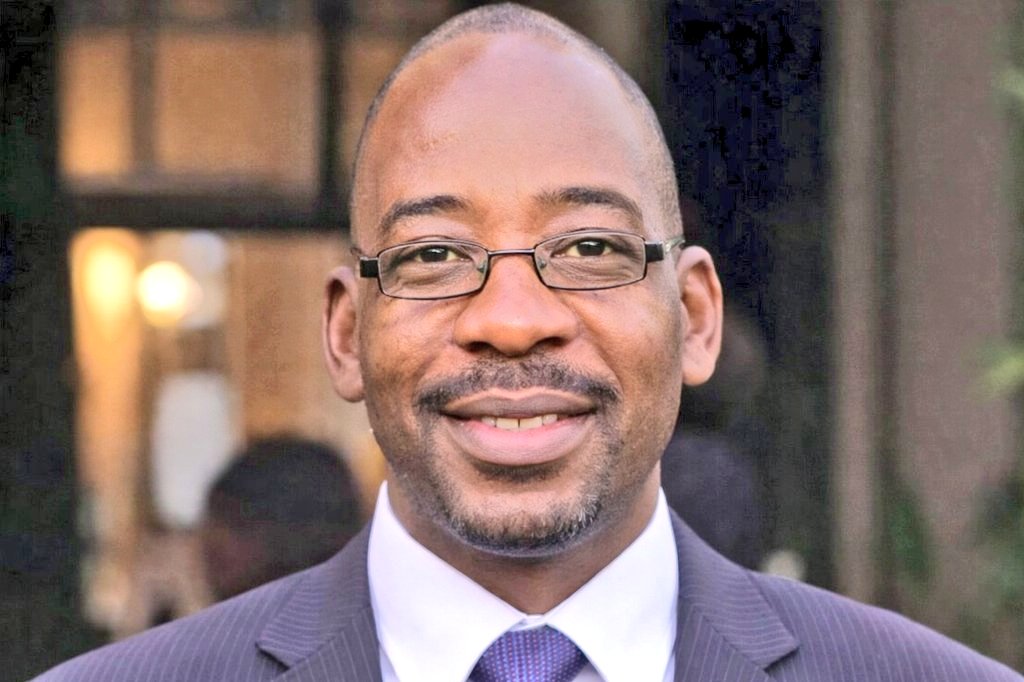
Nelson Chamisa’s latest re-emergence is not a comeback but a ritual repetition. His interview with the South African Broadcasting Corporation merely reaffirmed what has long been evident to serious observers of Zimbabwean politics. He speaks fluently of “structures, systems, and institutions” while embodying their negation. Across every political formation he has led, Chamisa has governed by personal decree rather than constitutional process. These movements did not collapse solely due to external pressure; they disintegrated because authority was never delegated, never contested, and never renewed.
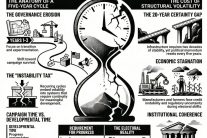
The consequence has been a lost decade of opposition development. This is not because Zimbabwe lacks intellectual or organisational talent, but because that talent has been systematically expelled, discouraged, or rendered redundant. After each electoral cycle, the same choreography unfolds – purges, abrupt dissolutions, and ideological resets marketed as “renewal.” In practice, these episodes function as rolling institutional amnesia. Lawyers, economists, organisers, diplomats, and administrators – those capable of building durable political machinery – are either marginalised or pushed out entirely. Chamisa does not merely inherit institutional weakness; he reproduces it, ensuring that every cycle begins poorer in experience than the last.
This reality invites a darker, though increasingly plausible, hypothesis. Have Chamisa’s serial failures, by disposition if not by design, become ZANUPF’s most reliable insurance policy? A fragmented opposition is useful to incumbents; a hollowed-out one is invaluable. Nowhere is this more evident than in Chamisa’s systematic elimination of the opposition’s intellectual and strategic backbone.
By sidelining figures such as Tendai Biti, Thokozani Khupe, Douglas Mwonzora, Morgan Komichi, and more recently Jameson Timba and Charlton Hwende, Chamisa presided over a deliberate excision of institutional memory. These were not mere personalities; they were repositories of constitutional practice, statecraft, and organisational discipline. Replacing them with politically agile but institutionally thin figures such as Ostallos Siziba and Fadzayi Mahere has produced a leadership layer that is loyal but lightweight – fluent in social media and gobbledygook, barren in systems.
The contrast with ZANUPF is instructive. For all the criticism it attracts, ZANUPF has demonstrated continuity across generations. It respects its veterans, some politically active since the 1960s, and anchors authority in structured organs such as the Politburo and Council of Elders. Institutional memory is preserved rather than purged. Authority is layered, not personalised. Leaders rise, fall, and retire, but the organisation endures because it understands a foundational truth of political longevity – movements survive by remembering, not by endlessly starting over.
The comparison with Lovemore Madhuku is equally revealing. Madhuku is combative and electorally marginal, yet his politics are structurally disciplined. His organisations possess constitutions, congresses, and defined leadership pathways. Both men lose elections, but Madhuku’s institutions persist. Chamisa excels at hashtags and theatre while leaving behind organisational ruins. One builds structures capable of surviving their founder; the other builds vehicles that collapse the moment the driver exits.
Chamisa’s own language exposes the pathology. He speaks of “my project,” “my movement,” “my plan.” This possessive reflex is fatal to democratic growth. Authority that is claimed rather than conferred must be defended through purges and perpetual suspicion – hence the obsession with infiltration narratives and the serial sidelining of peers. Zimbabwe does not suffer from a shortage of opposition energy. It suffers from an opposition leadership deficit rooted in personalism, opacity, and unresolved questions of integrity. Until leadership submits to rules it cannot override, and until financial and organisational accountability replace improvisation, Chamisa will remain what he has become – not a challenger to solid ZANUPF power, but its most reliable crowd-control foil.










































Post a comment