

The Friedrich-Ebert-Stiftung (FES) is once again at the center of bankrolling political sabotage in Zimbabwe, after leaked internal communications and institutional documents surfaced pointing to a coordinated campaign, dressed up as labour activism, to destabilise the Government of Zimbabwe. More …
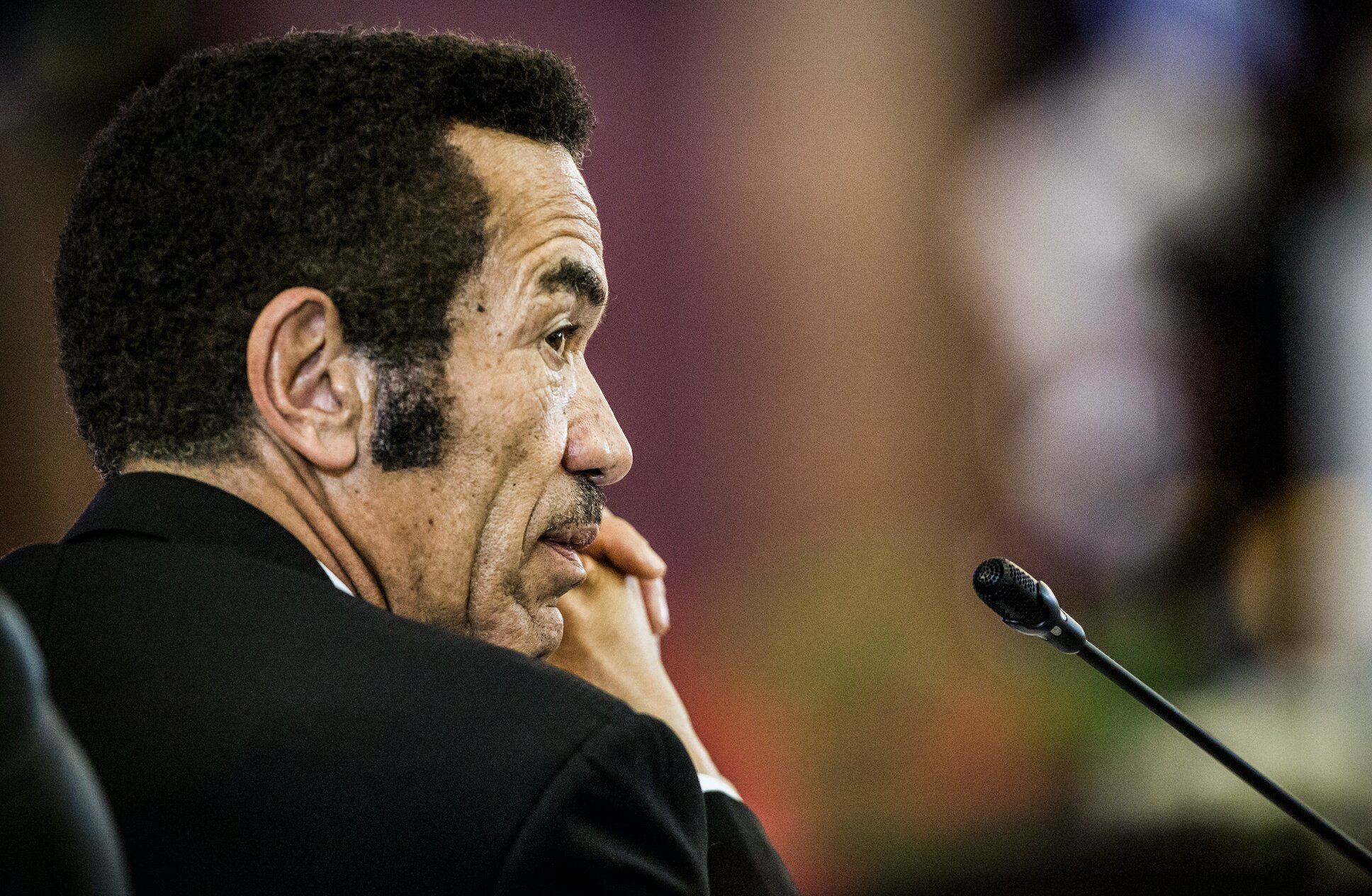
Ian Khama’s latest allegation that Zimbabwean authorities are plotting to assassinate him collapses under the weight of one simple question: to what end?
Zimbabwe has neither the interest nor the strategic incentive to pursue such an extraordinary course of action. Harare is occupied with economic development, expanding investment, strengthening regional integration and advancing its international standing. It has absolutely nothing to gain by targeting a retired Botswana politician whose political battles belong entirely within Botswana’s domestic arena. The proposition is not merely implausible – it is devoid of rational motive. More …

AN OPEN LETTER TO THE PEOPLE OF ZIMBABWE: THE CONSTITUTION CANNOT BE DEFENDED BY ATTACKING CONSTITUTIONAL ORDER More …

Air Zimbabwe will restore direct flights between Harare and London by end of July, reviving a route dormant for 14 years, Information, Publicity and Broadcasting Services Minister Zhemu Soda has announced.
Briefing the nation after Cabinet, Minister Soda said the national carrier will fly the route using a leased Airbus A330-300 from Spain’s Plus Ultra, fitted with 302 seats – 30 business class and 272 economy. More …
Feb 25, 2026
Reports that Western governments – notably Canada, Sweden, and Switzerland – are covertly midwifing an opposition coalition against Constitutional Amendment No. 3 (2026) should surprise no serious student of Zimbabwe’s post-2000 political economy. The architecture is familiar: finance proxy platforms, elevate “civil society” fronts such as the Constitution Defenders Forum and the Defend the Constitution Platform, deploy seasoned intermediaries, and repackage regime-change ambitions as constitutional guardianship. It is intervention by indirection.
Zimbabwe’s Constitution is not an annex to Western foreign policy. It is a domestic covenant, amendable through lawful, sovereign procedures. Constitutional reform is neither aberrant nor authoritarian; it is the ordinary grammar of statecraft. From Paris to Ottawa, constitutions have been revised to meet evolving national imperatives. Zimbabwe’s review is no different. What is different is the reflexive Western impulse to internationalise our internal processes while sanctimoniously preaching sovereign equality. States that sustained two decades of sanctions – measures that crippled hospitals, industry, and currency stability – cannot plausibly claim moral trusteeship over Zimbabwe’s constitutional trajectory.
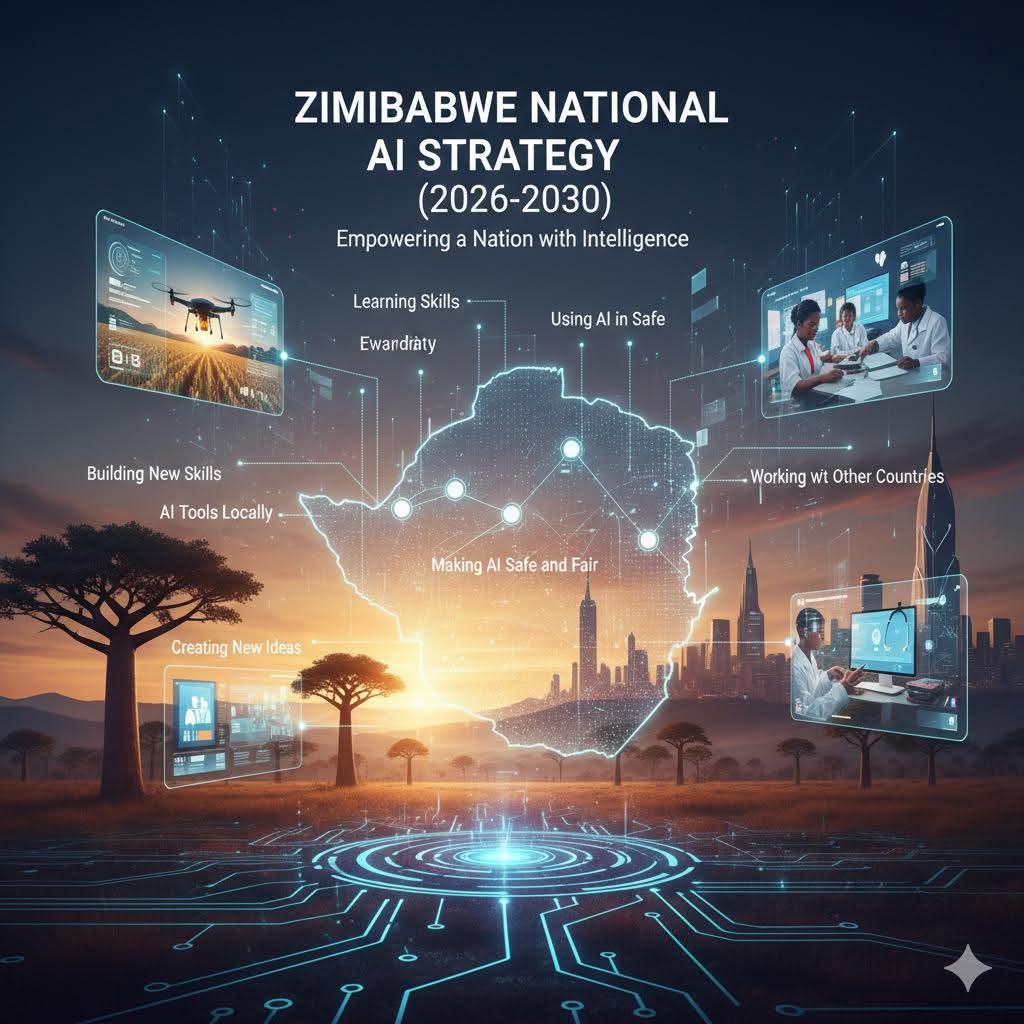
There are few Zimbabweans better placed to comment on technological disruption than Trevor Ncube. So when he speaks about the sweeping impact artificial intelligence will have across economic sectors, it is worth listening. He witnessed, in real time and in public, how the digital revolution dismantled the traditional news business model that had sustained media houses for decades. Classifieds migrated online. Advertising fragmented. Attention atomised. News became instant, abundant and algorithmically distributed. If anyone understands how swiftly technology can erode once-stable professions, it is him. And on one central point, he is absolutely correct: knowledge-work is exposed, and denial is fatal.
But Zimbabwe’s larger story goes even deeper. Artificial intelligence will not simply disrupt services; it will reorganise the real economy itself. It will not stop at lawyers, bankers, accountants or property agents. It will reach creatives, coders, farmers, miners, logistics operators and even the AI industry itself. This is not a sectoral tremor. It is a structural shift.
More …

Zimbabwe recently rejected a proposed US$350 million health funding agreement with the United States after President Emmerson Mnangagwa directed his government to halt negotiations. The deal, presented under Washington’s America First Global Health Strategy, was intended to shape future US health support to Zimbabwe. However, Harare concluded that its conditions were incompatible with national sovereignty.
Two elements reportedly raised serious concern. First, the agreement sought direct access to Zimbabwe’s health data for a defined period – something officials viewed as excessive and potentially intrusive. Second, the US reportedly pushed for access to Zimbabwe’s critical mineral resources within the broader framework of the arrangement. In addition, Zimbabwe objected on principle to entering a bilateral health architecture with a country that had withdrawn from the World Health Organisation, arguing that such a move would weaken multilateral global health governance. More …
Feb 22, 2026

I recently read Munyaradzi Hoto’s analysis on X about the demise of Tongaat Hulett. It sent me down a rabbit hole of court filings, business reports, creditor positioning, and the kind of corporate manoeuvring that could easily produce a blockbuster documentary. Yet for all the South Africa-centred drama, the most sobering realisation came later: Tongaat Hulett’s Zimbabwe operation in the Lowveld is not a minor subsidiary caught in someone else’s storm. It is a major node in the entire matrix. And once you see that, it becomes difficult to avoid the obvious conclusion – our government must ensure this asset becomes Zimbabwean-controlled going forward, through a lawful, market-based transaction anchored by Mutapa Investment Fund. More …
Feb 22, 2026

No, Cdes and foes alike – I will not budge on this. Not an inch. Not ever.
The issue is simple: when a citizen – in this case Blessed Mhlanga – goes abroad and appears to advocate external punitive pressure against his own country, the state should and will respond. That is not repression. That is sovereignty.
Let us stop hiding behind euphemisms. “International engagement” that results in sanctions is not diplomacy – it is punishment by proxy. Zimbabwe has already endured that punishment. Sanctions were not academic concepts. They were empty hospitals, broken industries, unpaid salaries and families driven into exile. The burden was carried by ordinary citizens, not by those performing outrage abroad. More …
Feb 21, 2026

The debate around Constitutional Amendment No. 3 is often clouded by familiar political slogans rather than careful thought. Yet when examined through the lenses of institutional development, economic planning and constitutional procedure, extending President Emmerson Mnangagwa’s tenure to 2030 can be understood not as mere political convenience, but as a strategic decision aimed at long-term national consolidation.
1. Constitutional change within the law
A constitution is not a museum piece; it is a working document designed to respond to changing national realities. If an amendment follows the procedures set out in the Constitution – through Parliament and other lawful processes – then it is an exercise in democracy, not a violation of it. The power to amend is built into the constitutional design precisely to keep it relevant and functional. More …

About Me
Hi, I’m Dereck Goto. I use this space to think out loud about ideas, systems, power, and the quieter details that shape how we live and communicate. This blog isn’t about chasing trends or offering comfortable conclusions. It’s about asking better questions, challenging lazy narratives, and exploring issues with honesty and intellectual independence. Some posts are analytical, some reflective, and some deliberately provocative - but all are written with intention.