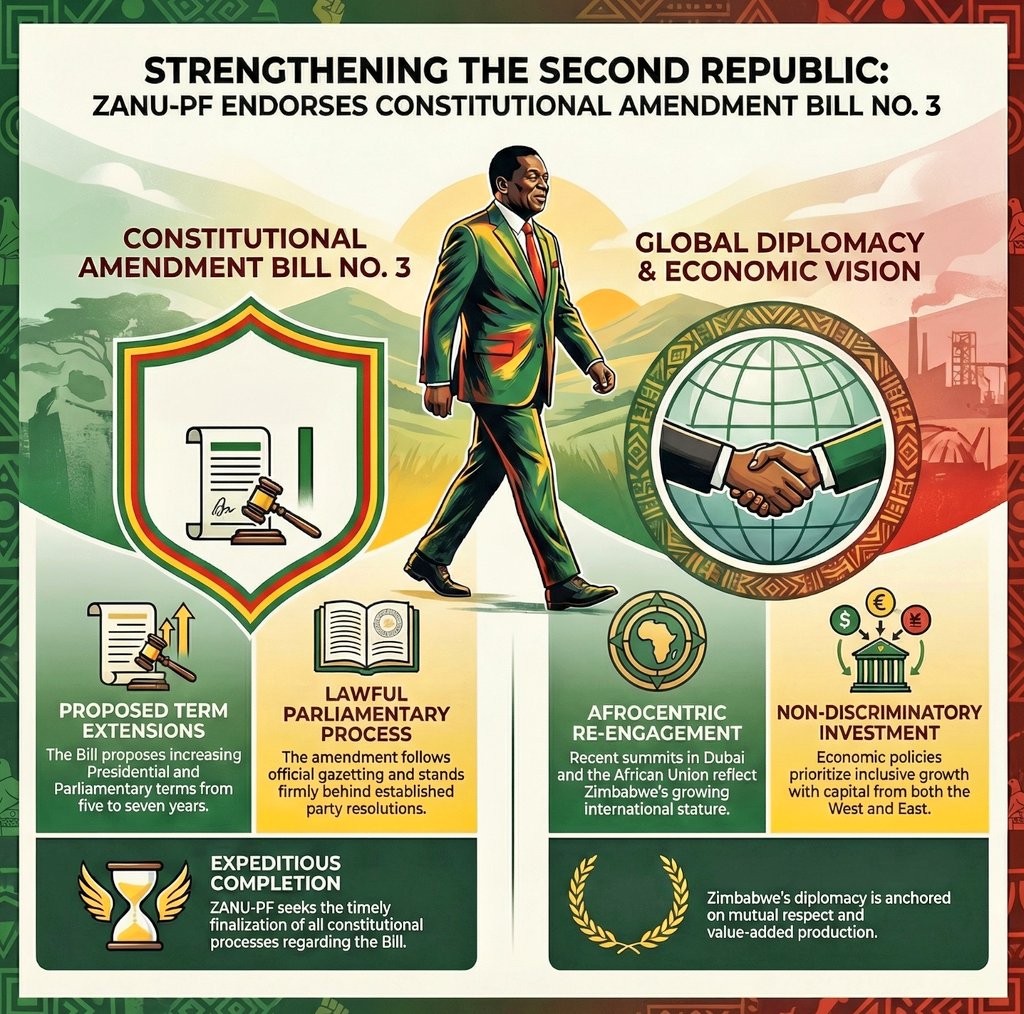
Amendment Bill No. 3 advances structured governance, Afrocentric re-engagement, and inclusive investment – reinforcing institutional stability while positioning Zimbabwe confidently within global economic diplomacy.
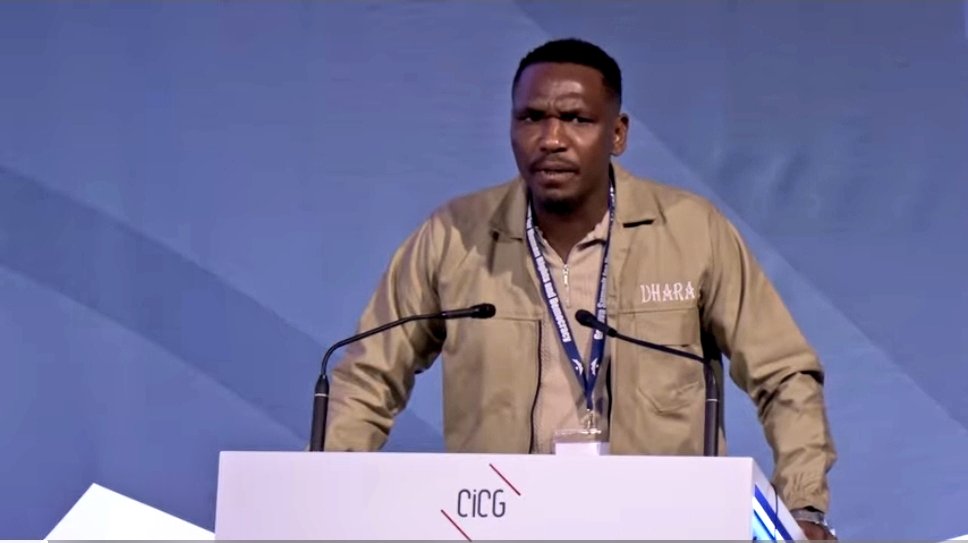
I listened carefully to Blessed Mhlanga’s address in Geneva yesterday. As he spoke, one thought would not leave me: does he understand that words uttered in Geneva do not remain in Geneva? They travel. They are recorded. They are cited. They become material for policy briefs, risk assessments and diplomatic memoranda. They may also carry legal consequences back home.
There is an old proverb that says, “The coward lives long enough to point out the grave of the brave man to his children.” Properly understood, it is not a celebration of cowardice. It is a warning against reckless heroics. It reminds us that foolish bravery often ends in ruin, while caution and judgement preserve both life and purpose. In politics, as in war, uncalibrated boldness can destroy the very cause it claims to advance. More …
The escalating hysteria over Constitutional Amendment No. 3 of 2026, particularly within opposition circles, exposes not a crisis in the Constitution, but a crisis in collective political maturity and constitutional literacy. A constitution is not a relic preserved behind glass; it is a governing instrument built to operate in the present. It exists to organise power, correct defects and respond to changing realities. Amendment, in itself, is neither betrayal nor taboo – it is part of constitutional design.
What is troubling is not opposition, but the drift toward confrontation. Incitement to violence is not democratic engagement; it is a crime. Citizens have every right to reject a proposal. But when political actors begin invoking “physical action” and mass mobilisation in tones that hint at disruption, the conversation shifts from reasoned disagreement to calculated instability. More …
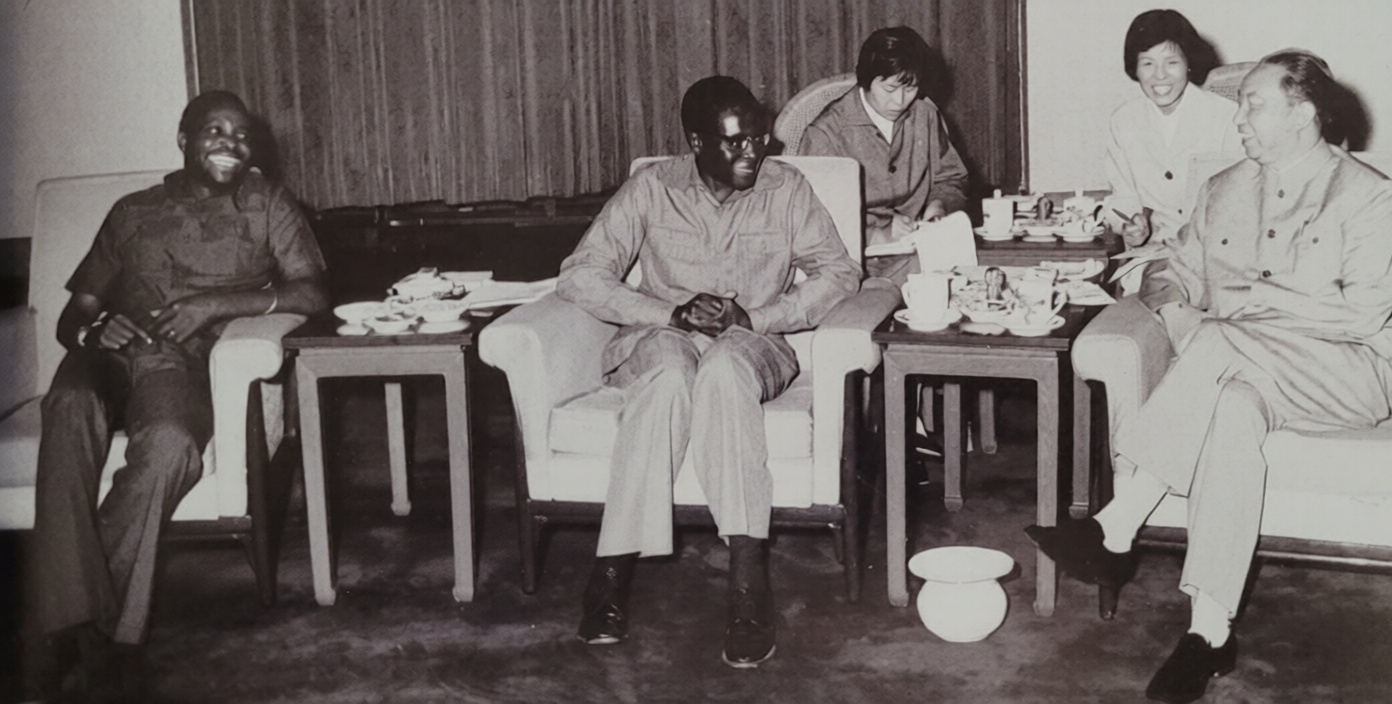
1977 – Beijing.
In the hard season of liberation, Robert Mugabe arrived with Josiah Tongogara to meet Hua Guofeng.
One carried the mandate of a nation not yet born.
The other carried the map of a war not yet won.
Across the table stood a country that chose principle over pause. More …
[RE-POST (Xinhua)]
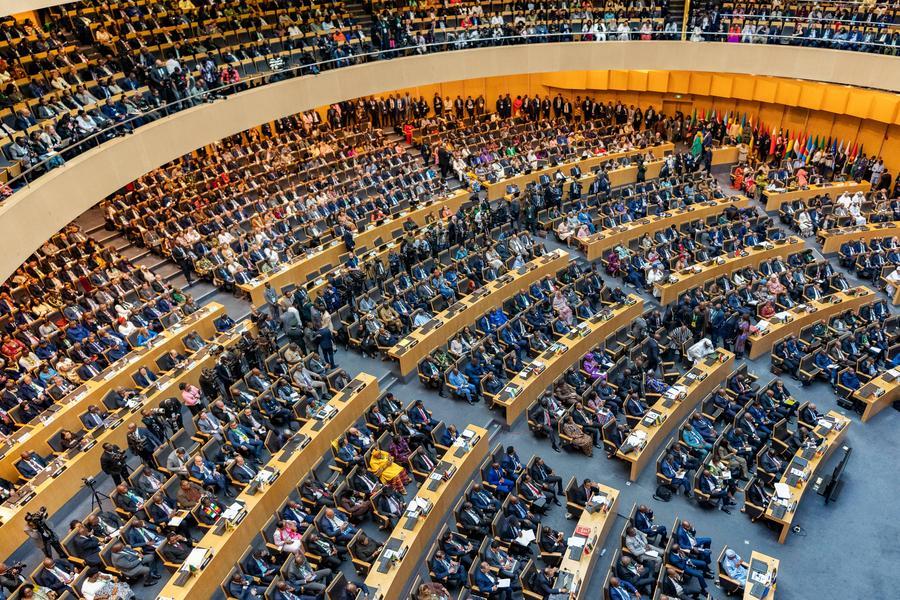
Chinese President Xi Jinping’s congratulatory message to the 39th African Union (AU) Summit held in Ethiopia is believed to demonstrate China’s firm support for Africa’s independent development.
In his message, Xi announced that China will fully implement zero-tariff treatment for 53 African countries having diplomatic relations with China starting from May 1, 2026. He also highlighted efforts to upgrade the “green channel” for African exports. More …
Reports that Gift Ostalos Siziba is being lined up as Vice President in Nelson Chamisa’s yet-to-be-announced political outfit have not projected “readiness” so much as revealed the familiar disorder that opposition rebrands routinely struggle to conceal.
What was meant to communicate structure ahead of an expected April launch has instead triggered resistance – particularly in Matabeleland and the Midlands – where complaints are said to centre less on the individual and more on process: weak consultation, thin internal buy-in, and decisions allegedly driven by a tight inner circle. In regions historically sensitive to representation and political balance, perception quickly becomes substance. More …
Childhood is not a beta test. Yet we have allowed it to become one – at scale, in public, and for profit.
In Britain, Sir Keir Starmer’s government has now drawn a line, insisting that “no platform gets a free pass” as it moves to close loopholes that allow illegal and harmful material – including AI-generated content – to circulate and target children. The direction of travel is unmistakable: the era of self-regulation, polite warnings, and parent-blaming is ending. More …
Zimbabwe’s current electoral system may be imposing a self-induced instability tax the nation can ill-afford.
What if recurring five-year electoral cycles – combined with high-stakes presidential contests – quietly embed structural volatility into a country that most needs continuity?
What if the greatest obstacle to development in young nations is not corruption, ideology, or capacity – but time?
Elections are treated as sacred rituals. Yet should democracy be measured by the frequency of political combat – or by the durability of national progress? More …
There are moments in a nation’s life when the argument is not chiefly about personalities, slogans, or the theatre of the day – but about time itself: how it is organised, how it is protected, and how it is converted into national capability. Constitutional Amendment No. 3 of 2026 belongs in that register. It is best read not as a narrow political adjustment, but as an attempt to redefine how Zimbabwe structures constitutional time in pursuit of stability, coherence, and developmental momentum.
Modern constitutional democracies often treat elections as sacred civic rituals – an unquestioned rhythm that promises renewal, accountability, and legitimacy. The five-year cycle, in particular, has become an inherited orthodoxy, largely drawn from Western parliamentary traditions, and carried across borders as though it were a universal formula. Yet a sobering question lingers beneath the ceremony: does the tempo of frequent elections reliably deepen development, or can it – in certain institutional environments – fracture it into permanent motion without durable progress? More …
Today, I attended NetOne’s Online Media Engagement Session at Manna Resort with a simple conviction: in today’s Zimbabwe, whoever understands digital influence understands the direction of the nation.
What unfolded was not a routine corporate breakfast. It was a strategic convergence of infrastructure and influence.
Standing in for NetOne’s Chief Executive Officer, Cde Raphael Mushanawani, the event convener and NetOne Head of Public Relations, Cde Richard Mahomva, framed the conversation with refreshing clarity. He described data as “the fuel and commodity we possess” – a resource not merely to be sold, but to be deployed intelligently. It was a subtle but powerful shift in tone. Telecoms are no longer passive carriers of information; they are architects of possibility. More …