Constitutional Evolution in a Season of Stability

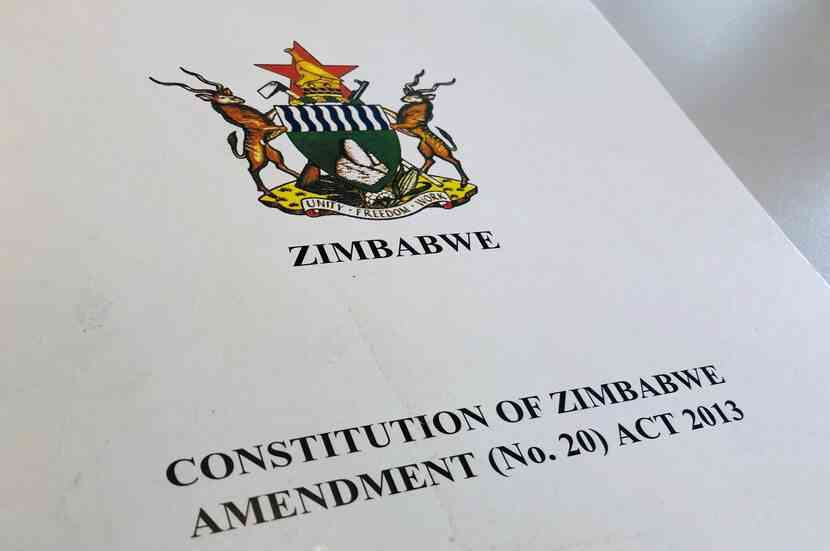
Zimbabwe is not discussing constitutional change in a vacuum. It is doing so at a moment when inflation has receded into single digits, when macroeconomic stability – fragile yet tangible – has returned, and when the country faces a question older than any amendment: how does a nation convert recovery into permanence?

The proposed Constitutional Amendment No. 3 – adopted by Cabinet as the latest refinement of the 2013 Constitution – seeks to recalibrate key aspects of executive selection, electoral administration and institutional design in pursuit of that permanence. It is neither a rupture with the constitutional order nor a symbolic gesture. It is an attempt to adjust the machinery of governance to the lived realities of a maturing State. More …

History as Ledger, Not Shrine – The Full Measure of Blessed Geza

Zimbabweans were first confronted not with solemn news, but with a grotesque political fabrication: a politically charged statement issued in the name of Blessed Geza on his X account, as if he were still alive, when by then he had been dead for at least three hours. That act was not an error of timing; it was cheap, cynical politics. It bears the unmistakable fingerprints of account handlers suspected to be aligned with Saviour Kasukuwere and his cohorts, who chose manipulation over decency. To weaponise a corpse for factional messaging is not activism. It is moral bankruptcy.

Only thereafter did the country receive confirmation of the passing of Blessed Geza, a liberation war veteran whose life intersected with Zimbabwe’s most consequential struggles and whose final years exposed the unresolved tension between revolutionary history and present-day responsibility. More …

Trial by Headline Is Not Justice

Zimbabwe is not a lawless frontier where rumours are laundered into verdicts through repetition. It is a constitutional republic governed by institutions, procedures, and due process. Any attempt to suggest otherwise is not merely careless – it is reckless, destabilising, and dangerous.

This must be stated plainly at the outset. This is not an argument against investigation. Allegations of corruption, wherever they arise, must be examined thoroughly, independently, and without fear or favour by legally mandated authorities. If wrongdoing is established, the law must act decisively. No individual, no company, and no institution is immune. That principle is settled and non-negotiable. More …

TheNewsHawks: Who Audits the Auditors in Zimbabwe’s Media?

Moral exhibitionism has become a fashionable currency in Zimbabwe’s media ecosystem. TheNewsHawks trades heavily in it – deploying accusatory headlines, prosecutorial prose, and a tone that presumes verdict before evidence. It presents itself as a sentinel of probity, an incorruptible auditor of national life. But any institution that appoints itself prosecutor, judge, and jury must itself submit to examination. Scrutiny cannot be a one-way instrument.

For an outlet fixated on financial hygiene, TheNewsHawks has been conspicuously vague about its own genesis. Its sudden appearance as a fully resourced newsroom invites reasonable questions: who underwrote its establishment, and on what terms, before formal donor funding materialised? These are not idle speculations. They are precisely the lines of inquiry TheNewsHawks routinely applies to others. Transparency that flows only outward is not transparency; it is theatre.
More …

The End of Dollar Absolutism: Why the Renminbi Is the Future

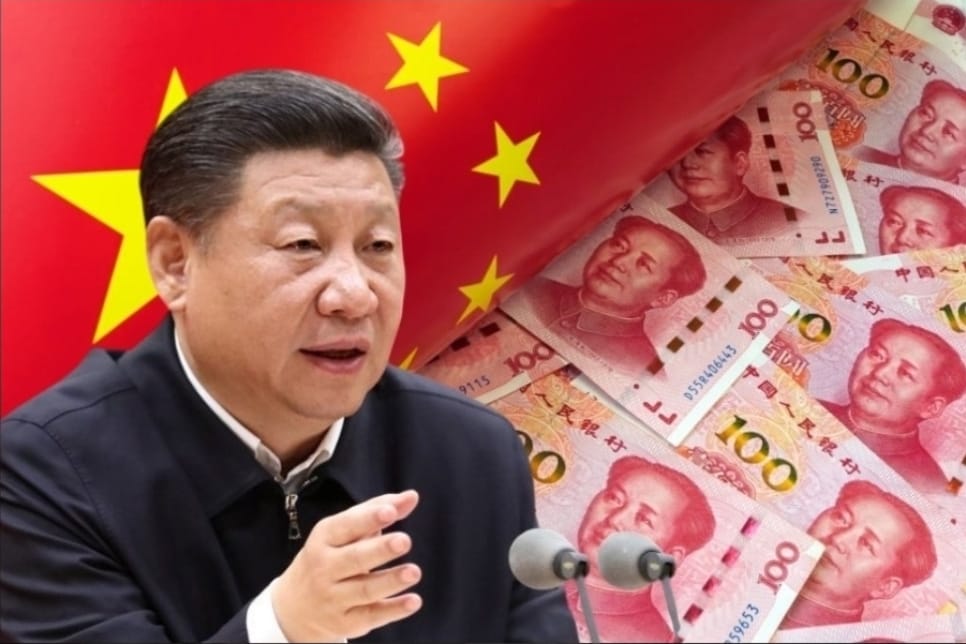
In excerpts published on January 31, 2026, in Qiushi (the official theoretical journal and news magazine of the Central Committee of the Communist Party of China), President Xi Jinping articulated with clarity a long-gestating ambition: transforming the renminbi (RMB) into a strong currency capable of functioning as a global reserve. It constituted a deliberate policy signal rather than a symbolic gesture, a disciplined declaration aligned with the realities of a fragmenting international financial order.

China has pursued RMB internationalisation for more than a decade. What has changed is coherence. Xi’s framework defines a financial powerhouse through mutually reinforcing pillars: a strong currency, a strong central bank in the form of the People’s Bank of China, resilient financial institutions, international financial centres, rigorous supervision, and elite financial talent. This is institutional design, not improvisation. More …

What Does “US$15 Billion” at Mutapa Actually Represent?

The oft-repeated claim that Mutapa Investment Fund is a “US$15 billion fund” cab be deeply misinterpreted and risks manufacturing fiscal myths where none should exist.

That figure reflects the valuation of underlying investee companies – approximately US$16 billion gross and about US$15 billion at fair value as of 31 December 2024. It does not represent US$15 billion in cash, nor does it denote a liquid pool of capital available for deployment. There is no war chest, no discretionary balance waiting to be “bet.” More …

Why Copper Queen Matters Again

Growing up in areas bordering Midlands and Mashonaland West, one name always stood out to me in Gokwe North – Copper Queen. To my young mind, it felt like an oddity. An unmistakably English name sitting in a landscape rich with powerful Shona place names – Nembudziya, Gandavaroyi, Gandavacheche, Mudzongwe, Tiki, Madzivazvido, Chinyenyetu, Kuwirirana. These names carried texture, history, and meaning. Copper Queen felt different – foreign, curious, intriguing.

What I did not understand then was that Copper Queen was already more than a mine. It had crossed an invisible line – from extraction point to lived geography. The name did not remain confined to a shaft or a claim. It became a reference point, a farming area, a way people located themselves. Nearby, there was also Copper King, another copper site in the same mineralised zone. But Copper King never made that transition. It remained a technical marker – present in records and reports, but largely absent from everyday belonging. More …

Chamisa’s Ritual of Failure – ZANUPF’s Enduring Insurance Policy

Nelson Chamisa’s latest re-emergence is not a comeback but a ritual repetition. His interview with the South African Broadcasting Corporation merely reaffirmed what has long been evident to serious observers of Zimbabwean politics. He speaks fluently of “structures, systems, and institutions” while embodying their negation. Across every political formation he has led, Chamisa has governed by personal decree rather than constitutional process. These movements did not collapse solely due to external pressure; they disintegrated because authority was never delegated, never contested, and never renewed.

The consequence has been a lost decade of opposition development. This is not because Zimbabwe lacks intellectual or organisational talent, but because that talent has been systematically expelled, discouraged, or rendered redundant. After each electoral cycle, the same choreography unfolds – purges, abrupt dissolutions, and ideological resets marketed as “renewal.” In practice, these episodes function as rolling institutional amnesia. Lawyers, economists, organisers, diplomats, and administrators – those capable of building durable political machinery – are either marginalised or pushed out entirely. Chamisa does not merely inherit institutional weakness; he reproduces it, ensuring that every cycle begins poorer in experience than the last.
More …

Disinformation by Design – Targeting the CIO’s Institutional Stability

The online article by ZimEye attacking the Director-General of the Central Intelligence Organisation, Dr Fulton Mangwanya, is better understood not as journalism but as narrative construction presented in the guise of reporting. While rich in conjecture, it is devoid of empirically verifiable content. Its internal qualifiers are revealing: reliance on unnamed sources, unsubstantiated allegations, and explicit acknowledgements that claims cannot be independently verified. In analytical terms, such material does not constitute evidence; it functions as an influence artifact – a text designed to shape perception rather than establish fact.

The choice of target is instructive. Effective intelligence institutions are seldom challenged through demonstrable facts; they are more often subjected to insinuation. Anonymous allegations are a standard instrument when adversaries lack access, proof, or operational leverage. The objective is not exposure but attrition – the gradual erosion of public confidence through repetition and manufactured doubt. This method is well documented within information warfare, particularly against states that have consolidated their security architectures. More …