Liberation-Era Bonds Still Shape China–Zimbabwe Cooperation, Says Zhou Ding

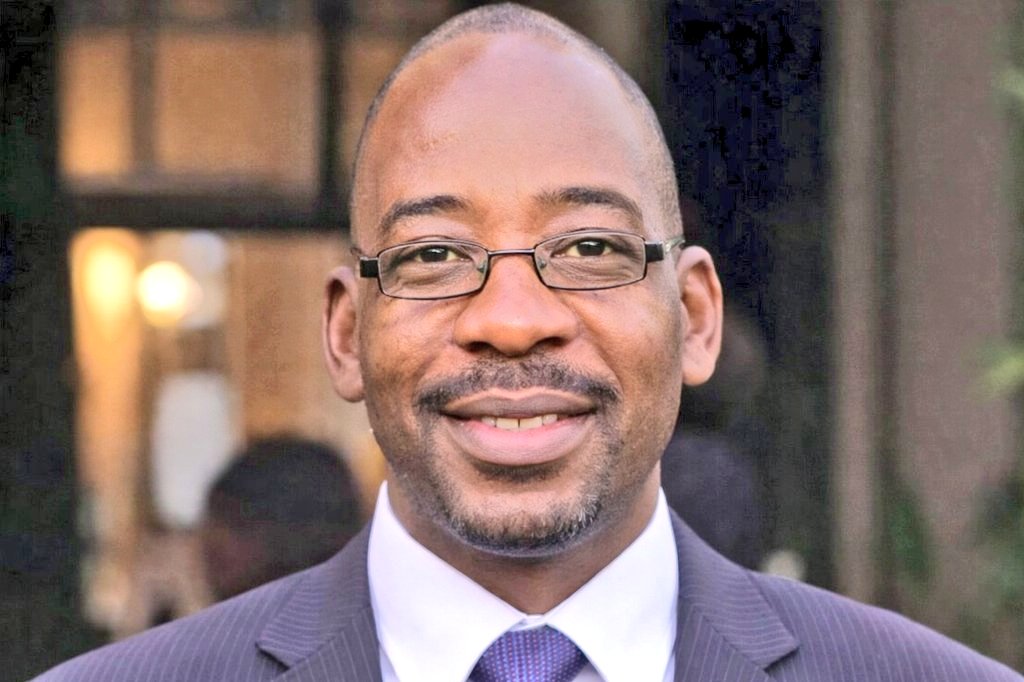
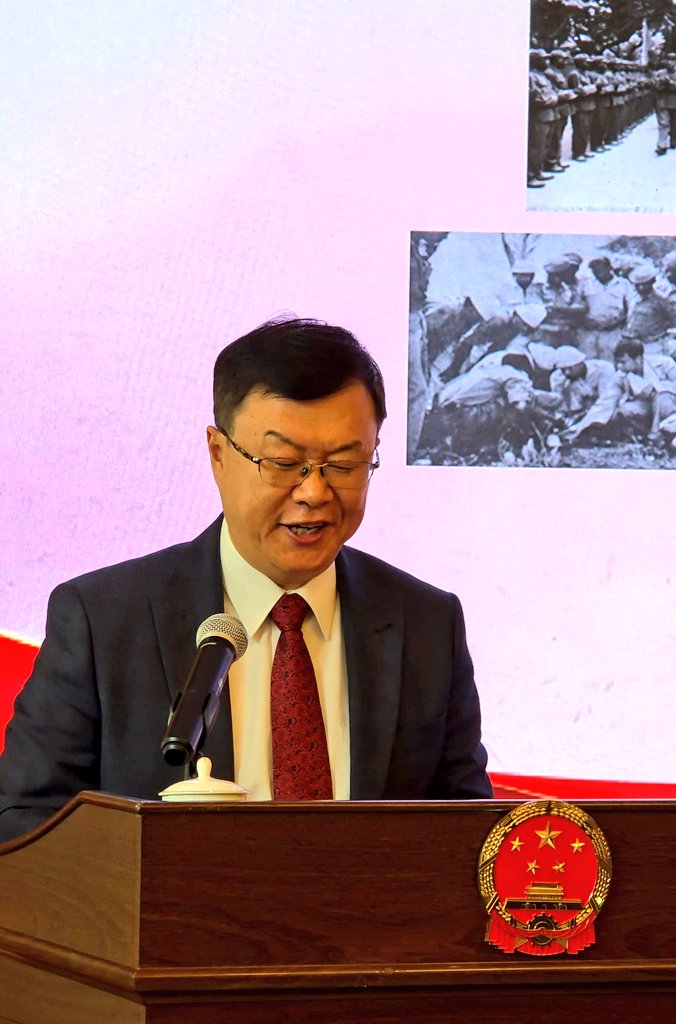
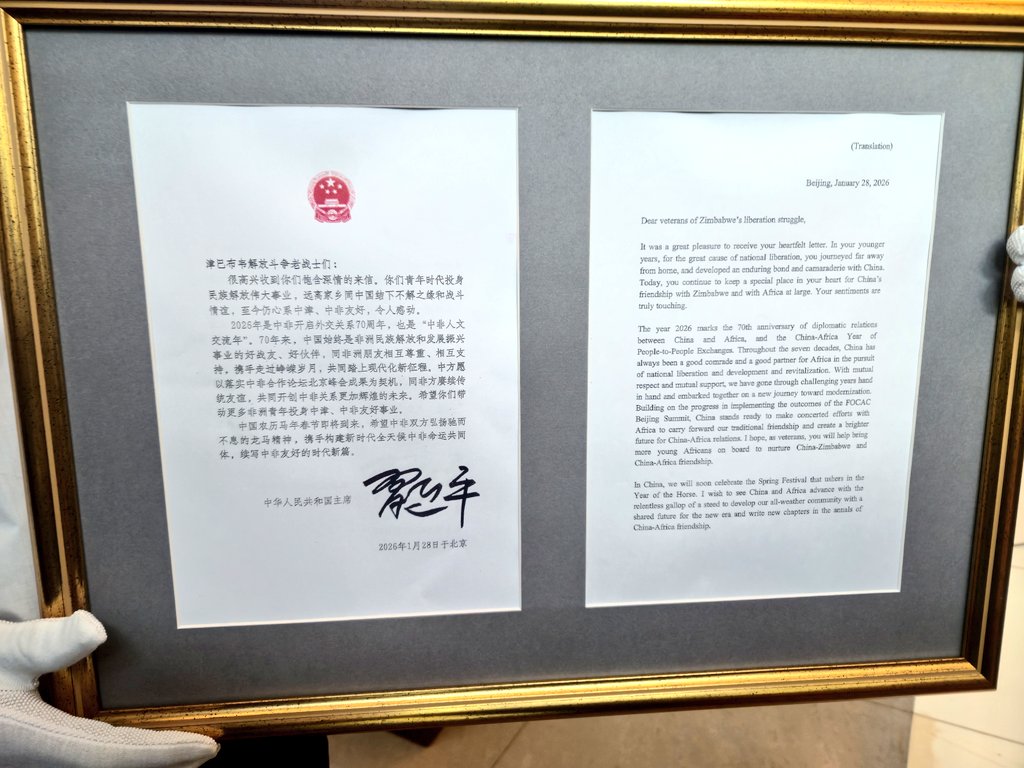
Chinese Ambassador to Zimbabwe, Zhou Ding, on Tuesday handed over a reply letter from Chinese President Xi Jinping to Zimbabwean liberation war veterans, reaffirming the long-standing friendship between the two countries that dates back to the liberation struggle.

Speaking at the Chinese Embassy in Harare, Ambassador Zhou said the letter followed a joint message written by 17 Zimbabwean war veterans who had received military training in China or in Chinese-supported camps in Tanzania during the liberation war. The veterans had written to President Xi recalling their training experiences, thanking China for its support during Zimbabwe’s struggle for independence, and expressing commitment to strengthening China–Zimbabwe relations. More …

Letter from President Xi Jinping to Zimbabwe’s Liberation War Veterans

(TRANSLATION)

Beijing, January 28, 2026

Dear veterans of Zimbabwe’s liberation struggle,

It was a great pleasure to receive your heartfelt letter. In your younger years, for the great cause of national liberation, you journeyed far away from home, and developed an enduring bond and comradeship with China. Today, you continue to keep a special place in your heart for China’s friendship with Zimbabwe and with Africa at large. Your sentiments are truly touching. More …

Chamisa: An Opposition Engineered to Lose

Let us be candid, without false modesty: somewhere in the quieter corners of power, Chamisa is spoken of with a mix of amusement and appreciation because he reliably relieves pressure off the state. For a ruling party focused on execution, continuity, and long-term planning, his style of politics has become an unexpected advantage – a gift that renews itself every electoral cycle.

While President Mnangagwa’s administration is absorbed in the hard work of dam construction, road rehabilitation, power generation, agricultural recovery, and industrial revival, Chamisa is busy running what can only be described as a longform psychological experiment. He has elevated “strategic ambiguity” into an art form, mistaking the absence of policy for flexibility, and confusion for depth. In practice, it amounts to having no plan at all, delivered with confidence. More …

The “Madhuku Strategy” 2.0: Nelson Chamisa and the Art of Perpetual Becoming

The comparison between Nelson Chamisa and Lovemore Madhuku has shifted from a basic analogy to an analytical necessity. What the late President Robert Mugabe once derisively labelled the “Madhuku strategy” – a pattern of opportunistic activism designed to trigger international headlines and donor funding – has found a contemporary heir. Both figures embody a political model defined less by institution-building than by episodic mobilisation and the systematic monetisation of hope.

Chamisa’s political trajectory has descended into a repetitive cycle of strategic ambiguity that looks less like a path to political victory and more like a sophisticated fundraising circuit. By abandoning established structures for a series of ephemeral brands – moving from the MDC-Alliance to the Citizens Coalition for Change (CCC), and now to a nebulous, structureless movement – Chamisa has perfected the art of the political “rebrand” as a means of bypassing accountability. Much like Madhuku, who morphed the National Constitutional Assembly from a civic platform into a personal political vehicle, Chamisa’s solo-preneurship treats the Zimbabwean electorate as a captive market rather than a constituency.
More …

Performance Legitimacy and the 2030 Mandate

Performance legitimacy – the validation of political authority through tangible socio-economic outcomes – offers a clear framework for understanding the growing momentum within ZANUPF provinces to extend President Emmerson Mnangagwa’s tenure to 2030. Rather than a procedural manoeuvre, this push reflects a judgement that continuity best serves Zimbabwe’s current developmental trajectory. More …

ZANU PF Suspends Distribution of Presidential Economic Empowerment Revolving Fund

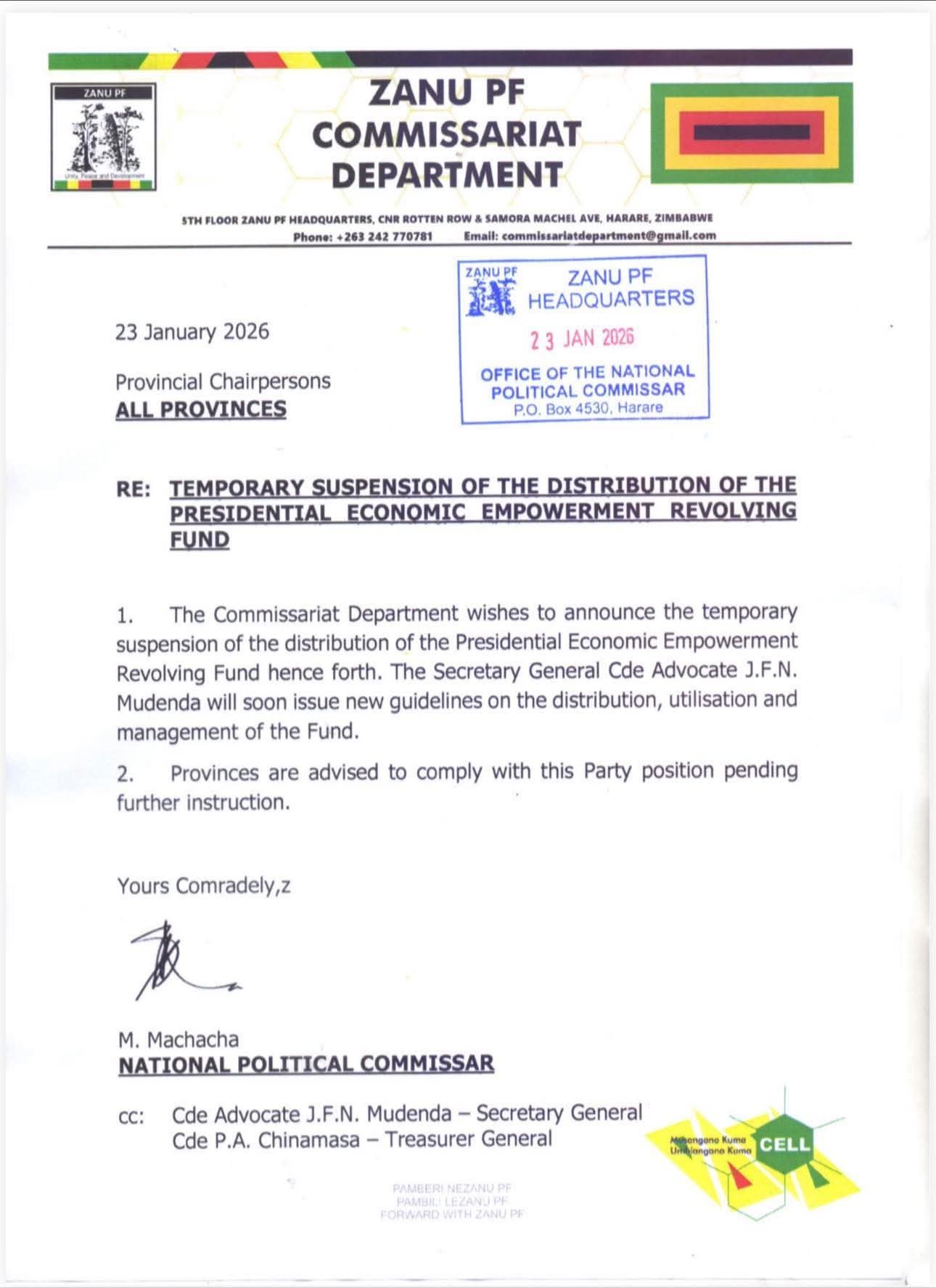
The ZANU PF Commissariat Department has announced the temporary suspension of the distribution of the Presidential Economic Empowerment Revolving Fund, with immediate effect.

In a circular dated January 23, 2026, addressed to provincial chairpersons across all provinces, the party said the suspension will remain in force pending the issuance of new guidelines governing the fund’s distribution, utilisation, and management.
More …

ZANUPF Youth Demand A Return to Gwara Remusangano

The ZANU PF Youth League’s latest statement, delivered under the stewardship of Tinoda Machakaire, is less a ceremonial New Year greeting than a calibrated intervention into a moment of visible internal strain. Against the backdrop of public spats, social media outbursts, and factional signalling, the communiqué reads as a corrective memo to cadres who have mistaken visibility for authority and noise for influence. More …

Chivayo Beyond the Spectacle

I was prompted to write this piece after reading Wicknell Chivayo’s recent response to concerns raised by a Manicaland legislator regarding the 30MW Gairezi Hydro Power Project. The response was striking not for what it contained, but for how it was delivered: clean, logical, and clinical.

It was devoid of the evasion one might expect from a figure so frequently in the public crosshairs. Instead, it was structured, technically grounded, and unmistakably clear. More …

Hon. Min. Matuke Warns: Public Infighting Can Disembowel ZanuPF

ZanuPF, a revolutionary political party built through sacrifice and sustained by discipline, cannot afford to turn internal disagreements into public combat. That was the sober warning issued by Cde Lovemore Matuke, the party’s Secretary for Security in the Politburo, as he addressed rising concern over how differences are being handled within the movement.

Cde Matuke urged members to “desist from having a go at each other in public” and to “learn to resolve their differences amicably,” cautioning that unchecked public quarrels carry a far more serious consequence. When internal disputes are performed in the open, he warned, they risk disembowelling the party from within – stripping it of cohesion, authority, and moral centre. More …

Is the Era of Crisis Over?

Six hundred megawatts added to the national grid. A record-breaking 46.7 tonnes of gold delivered to the state coffers. 560 000 tonnes of wheat harvested, securing national self-sufficiency. Three hundred million dollars poured into modernising the Beitbridge border corridor. A month-on-month inflation rate tamed to just 0.2 per cent. Over two billion dollars in annual diaspora capital flowing directly into the economy.

These are not campaign slogans. They are the cold, hard integers of a Zimbabwe that has stopped waiting for permission to succeed. For two decades, the global narrative on Zimbabwe has been a single, catastrophic script: crisis, collapse, and the inevitable end. But if you put down the newspaper and look at the concrete being poured, a different, inconvenient truth emerges. While critics predict the funeral, the Second Republic under President Emmerson Mnangagwa has been quietly engaged in the unglamorous, gritty business of statecraft. We are witnessing a calculated retreat from the theatre of politics into the engine room of economics – a shift that prioritises control over applause. More …