
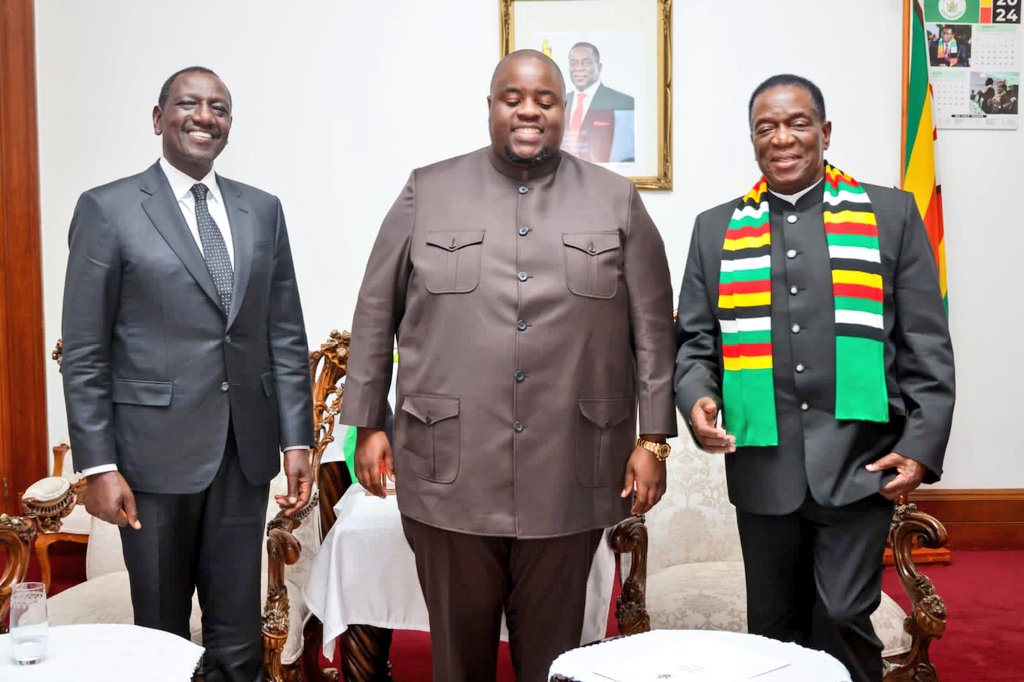
I was prompted to write this piece after reading Wicknell Chivayo’s recent response to concerns raised by a Manicaland legislator regarding the 30MW Gairezi Hydro Power Project. The response was striking not for what it contained, but for how it was delivered: clean, logical, and clinical.
It was devoid of the evasion one might expect from a figure so frequently in the public crosshairs. Instead, it was structured, technically grounded, and unmistakably clear.
That clarity triggered a broader reflection. I found myself recalling other instances where Chivayo has issued similarly disciplined responses, particularly when pointing out legal or procedural realities to his detractors. Each time, the pattern is identical: coherence over noise, logic over theatrics.
This contrast compelled me to pause and interrogate the complexity of his public character. The sharpness of his written and verbal technical arguments often sits uneasily alongside the flamboyant, highly visible persona that dominates social media. At face value, the two seem incompatible.
However, reducing Wicknell Chivayo to a caricature of wealth and spectacle is a mistake. When you strip away the deliberate theatrics, a much more complex, intellectually grounded operator comes into focus – one who understands procurement law, project finance, and the mechanics of large-scale infrastructure far better than his loudest critics are willing to admit.
His business engagements consistently reveal a high-level fluency in how serious projects function. He speaks the language of consortium structures, OEM (Original Equipment Manufacturer) credibility, bankability thresholds, and financial closure. This is not street-level dealmaking; it is institutional-grade commerce.
This competence was perhaps most visibly tested during the Gwanda Solar Project saga. While accusations of fraud were made loudly in the court of public opinion, the outcome in the actual courts told a different story. He prevailed because courts deal in evidence, not sentiment.
A similar discipline emerged in his past exchanges with figures like Fadzayi Mahere. His responses were never improvised; they were technically coherent and legally structured. Whether one agrees with his politics or not, the calibre of his argument was undeniable.
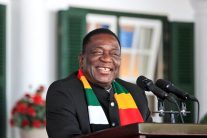
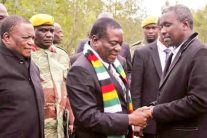
Beyond technical acumen, there is the undeniable question of access. You do not meaningfully engage with sitting Heads of State – figures such as President Emmerson Dambudzo Mnangagwa, President Bola Ahmed Tinubu, President Samia Suluhu Hassan, or President William Ruto – by accident. These are unforgiving spaces that reward utility, competence, and trust. An “average joe” does not survive there, let alone thrive. The fact that Chivayo navigates these corridors suggests a utility that his critics often overlook.
His consistent alignment with ZANUPF appears less ideological posturing than a calculated reading of power, policy continuity, and where long-horizon national projects are realistically conceived and executed. Indeed, identifying and aligning with the true center of gravity in national politics is perhaps the sharpest indicator of his pragmatic intelligence.
And yet, the confusion persists. The flashiness of his private life distracts from the precision of his business thinking. Journalists, lawyers, and associates who know him personally consistently caution against mistaking the persona for the person. Off-camera, they describe someone who is patient, courteous, deeply religious, and measured.
This brings us to the final irony. The boisterous public image appears to be intentional – a form of personal entertainment, or perhaps even strategic noise designed to keep observers looking at the show rather than the substance. The real Wicknell Chivayo is revealed less in the drama and more in the court outcomes, the structured arguments, and the quietly sophisticated business decisions.
The mask is loud. The mind behind it is not.
































Post a comment