Inner-Circle Politics Returns – This Time Before Day One

Reports that Gift Ostalos Siziba is being lined up as Vice President in Nelson Chamisa’s yet-to-be-announced political outfit have not projected “readiness” so much as revealed the familiar disorder that opposition rebrands routinely struggle to conceal.

What was meant to communicate structure ahead of an expected April launch has instead triggered resistance – particularly in Matabeleland and the Midlands – where complaints are said to centre less on the individual and more on process: weak consultation, thin internal buy-in, and decisions allegedly driven by a tight inner circle. In regions historically sensitive to representation and political balance, perception quickly becomes substance. More …

Are Young Nations Paying an Invisible Instability Tax?

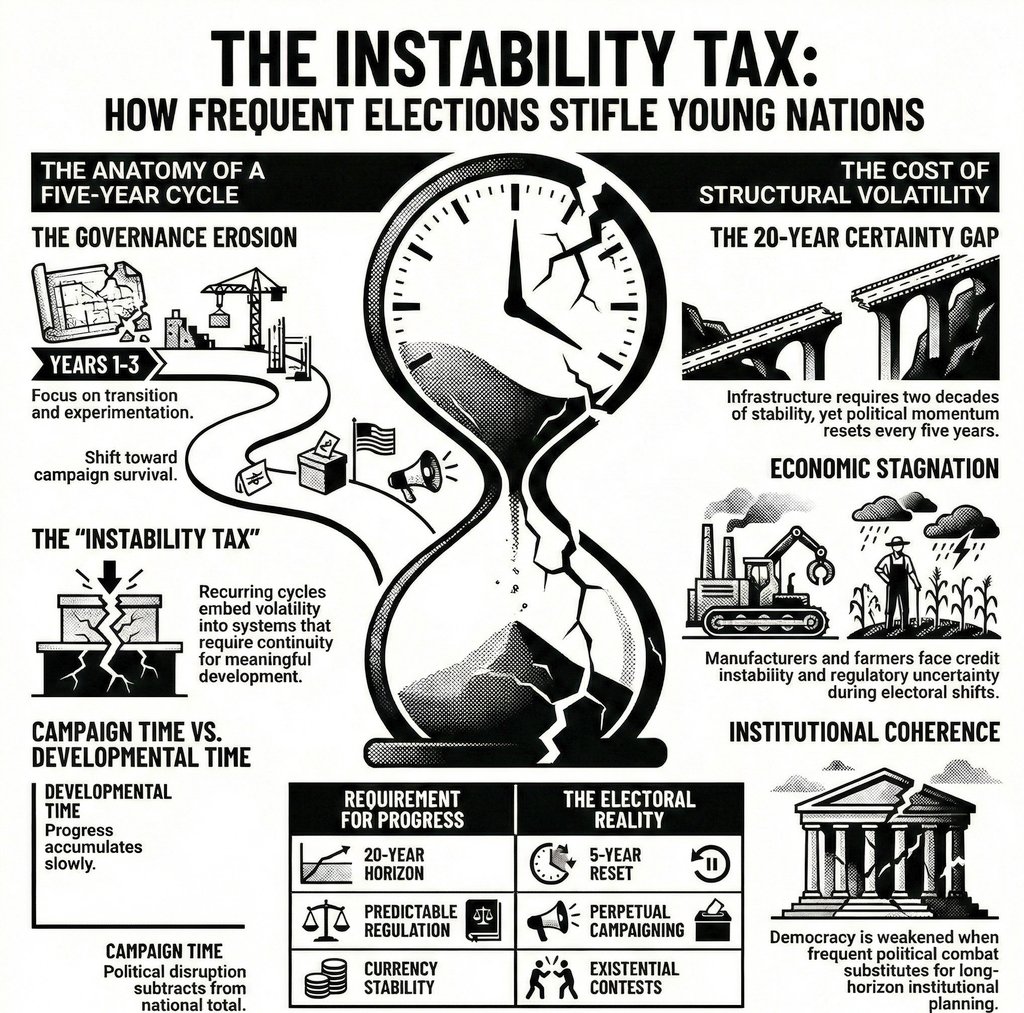
Zimbabwe’s current electoral system may be imposing a self-induced instability tax the nation can ill-afford.

What if recurring five-year electoral cycles – combined with high-stakes presidential contests – quietly embed structural volatility into a country that most needs continuity?
What if the greatest obstacle to development in young nations is not corruption, ideology, or capacity – but time?

Elections are treated as sacred rituals. Yet should democracy be measured by the frequency of political combat – or by the durability of national progress? More …

Constitution, Time, Development: Zimbabwe’s Defining Equation

There are moments in a nation’s life when the argument is not chiefly about personalities, slogans, or the theatre of the day – but about time itself: how it is organised, how it is protected, and how it is converted into national capability. Constitutional Amendment No. 3 of 2026 belongs in that register. It is best read not as a narrow political adjustment, but as an attempt to redefine how Zimbabwe structures constitutional time in pursuit of stability, coherence, and developmental momentum.

Modern constitutional democracies often treat elections as sacred civic rituals – an unquestioned rhythm that promises renewal, accountability, and legitimacy. The five-year cycle, in particular, has become an inherited orthodoxy, largely drawn from Western parliamentary traditions, and carried across borders as though it were a universal formula. Yet a sobering question lingers beneath the ceremony: does the tempo of frequent elections reliably deepen development, or can it – in certain institutional environments – fracture it into permanent motion without durable progress? More …

Constitutional Evolution in a Season of Stability

Zimbabwe is not discussing constitutional change in a vacuum. It is doing so at a moment when inflation has receded into single digits, when macroeconomic stability – fragile yet tangible – has returned, and when the country faces a question older than any amendment: how does a nation convert recovery into permanence?

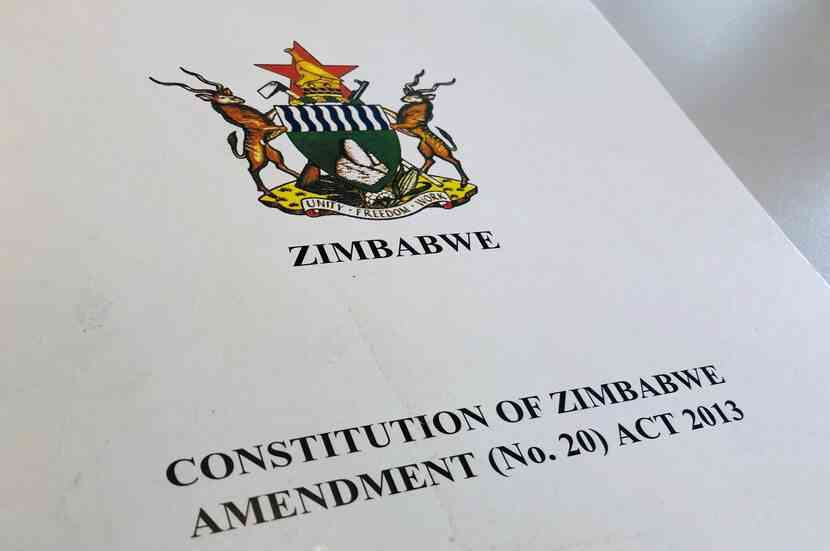
The proposed Constitutional Amendment No. 3 – adopted by Cabinet as the latest refinement of the 2013 Constitution – seeks to recalibrate key aspects of executive selection, electoral administration and institutional design in pursuit of that permanence. It is neither a rupture with the constitutional order nor a symbolic gesture. It is an attempt to adjust the machinery of governance to the lived realities of a maturing State. More …

History as Ledger, Not Shrine – The Full Measure of Blessed Geza

Zimbabweans were first confronted not with solemn news, but with a grotesque political fabrication: a politically charged statement issued in the name of Blessed Geza on his X account, as if he were still alive, when by then he had been dead for at least three hours. That act was not an error of timing; it was cheap, cynical politics. It bears the unmistakable fingerprints of account handlers suspected to be aligned with Saviour Kasukuwere and his cohorts, who chose manipulation over decency. To weaponise a corpse for factional messaging is not activism. It is moral bankruptcy.

Only thereafter did the country receive confirmation of the passing of Blessed Geza, a liberation war veteran whose life intersected with Zimbabwe’s most consequential struggles and whose final years exposed the unresolved tension between revolutionary history and present-day responsibility. More …

Chamisa’s Ritual of Failure – ZANUPF’s Enduring Insurance Policy

Nelson Chamisa’s latest re-emergence is not a comeback but a ritual repetition. His interview with the South African Broadcasting Corporation merely reaffirmed what has long been evident to serious observers of Zimbabwean politics. He speaks fluently of “structures, systems, and institutions” while embodying their negation. Across every political formation he has led, Chamisa has governed by personal decree rather than constitutional process. These movements did not collapse solely due to external pressure; they disintegrated because authority was never delegated, never contested, and never renewed.

The consequence has been a lost decade of opposition development. This is not because Zimbabwe lacks intellectual or organisational talent, but because that talent has been systematically expelled, discouraged, or rendered redundant. After each electoral cycle, the same choreography unfolds – purges, abrupt dissolutions, and ideological resets marketed as “renewal.” In practice, these episodes function as rolling institutional amnesia. Lawyers, economists, organisers, diplomats, and administrators – those capable of building durable political machinery – are either marginalised or pushed out entirely. Chamisa does not merely inherit institutional weakness; he reproduces it, ensuring that every cycle begins poorer in experience than the last.
More …

Liberation-Era Bonds Still Shape China–Zimbabwe Cooperation, Says Zhou Ding

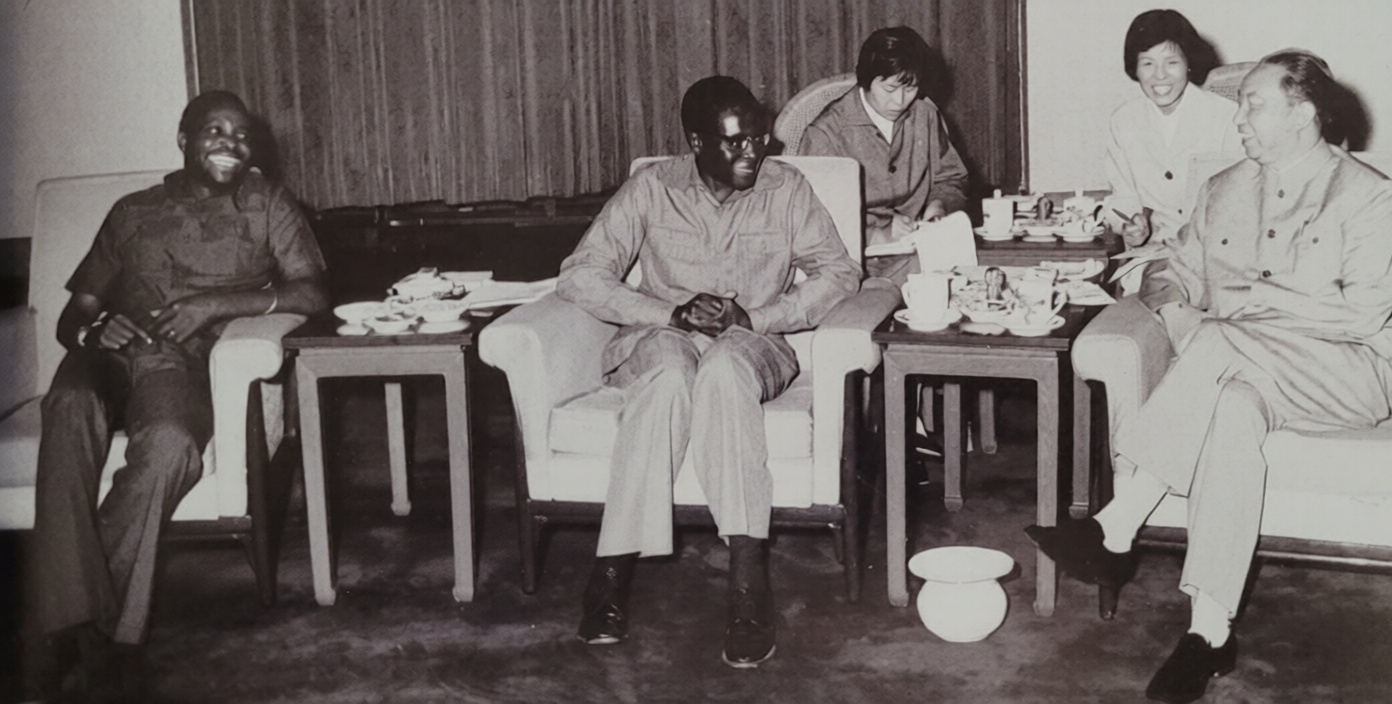
Chinese Ambassador to Zimbabwe, Zhou Ding, on Tuesday handed over a reply letter from Chinese President Xi Jinping to Zimbabwean liberation war veterans, reaffirming the long-standing friendship between the two countries that dates back to the liberation struggle.

Speaking at the Chinese Embassy in Harare, Ambassador Zhou said the letter followed a joint message written by 17 Zimbabwean war veterans who had received military training in China or in Chinese-supported camps in Tanzania during the liberation war. The veterans had written to President Xi recalling their training experiences, thanking China for its support during Zimbabwe’s struggle for independence, and expressing commitment to strengthening China–Zimbabwe relations. More …

Letter from President Xi Jinping to Zimbabwe’s Liberation War Veterans

(TRANSLATION)

Beijing, January 28, 2026

Dear veterans of Zimbabwe’s liberation struggle,

It was a great pleasure to receive your heartfelt letter. In your younger years, for the great cause of national liberation, you journeyed far away from home, and developed an enduring bond and comradeship with China. Today, you continue to keep a special place in your heart for China’s friendship with Zimbabwe and with Africa at large. Your sentiments are truly touching. More …

Chamisa: An Opposition Engineered to Lose

Let us be candid, without false modesty: somewhere in the quieter corners of power, Chamisa is spoken of with a mix of amusement and appreciation because he reliably relieves pressure off the state. For a ruling party focused on execution, continuity, and long-term planning, his style of politics has become an unexpected advantage – a gift that renews itself every electoral cycle.

While President Mnangagwa’s administration is absorbed in the hard work of dam construction, road rehabilitation, power generation, agricultural recovery, and industrial revival, Chamisa is busy running what can only be described as a longform psychological experiment. He has elevated “strategic ambiguity” into an art form, mistaking the absence of policy for flexibility, and confusion for depth. In practice, it amounts to having no plan at all, delivered with confidence. More …