

From Silk to Steel: Sino-Zimbabwean Solidarity

The archaeological silence of the Great Zimbabwe monument has long been broken by a profound discovery: fragments of Chinese porcelain embedded within its ancient stone walls. This ceramic record is not merely a relic of antiquity but a material archive of a sophisticated maritime interchange that predates modern diplomacy by centuries. Today, this historical synergy has evolved into a robust strategic partnership that defines the vanguard of South-South cooperation.

A Civilisational Dialogue

The presence of these artefacts serves as a definitive rebuttal to historical narratives of African isolation. Instead, they position the Great Zimbabwe Empire as a pivotal node in a global network of commerce and culture. Reflecting on this enduring legacy, the Chinese Ambassador to Zimbabwe, Zhou Ding, recently underscored the depth of this connection:

“The discovery of Chinese porcelain at Great Zimbabwe also serves as significant archaeological evidence of deep historical ties between China and Africa. These artefacts highlight Great Zimbabwe’s role as a sophisticated African civilization engaged in long-distance trade and offer a concrete record of the dynamic interactions between China and Zimbabwe centuries ago.” More …

How 2025 Broke Zimbabwe’s “Twitter Economics”

When historians eventually analyse the structural evolution of Zimbabwe, 2025 will likely be recorded as the definitive point of inflection. It was the year the specific gravity of reality finally crushed the buoyancy of digital hysteria. It was the year the economic debate did not merely break down, but was rendered obsolete by a government that simply performed beyond the capacity of its detractors to comprehend. For the better part of a decade, we have suffered a plague of “Twitter Economics” – a phenomenon where political sentiment masquerades as financial literacy. But in 2025, the Second Republic didn’t just govern; it outpaced the rhetoric, executing its mandate with such granular focus that attacking the economy as a proxy for political warfare became a futile, intellectually bankrupt exercise.

Throughout the year, we witnessed the peak of undisciplined commentary: a landscape where Zimbabwe was plagued by a surplus of opinions and a deficit of data. On social media, every movement of the exchange rate was weaponised: treated not as a standard market variable but as a portent of Armageddon. The digital opposition complex operated on a simple, flawed heuristic: if the government does it, it must be failing. They painted a picture of a nation in freefall, predicting a return to 2008 with repetitive monotony. However, economics is a science of measurement, not a contest of feelings. When one stripped away the vitriol and looked at the ZIMSTAT ledgers, the collapse narrative disintegrated against a wall of hard data. More …

Unity Is a Discipline, Not a Slogan – December 22, Our Annual Reminder

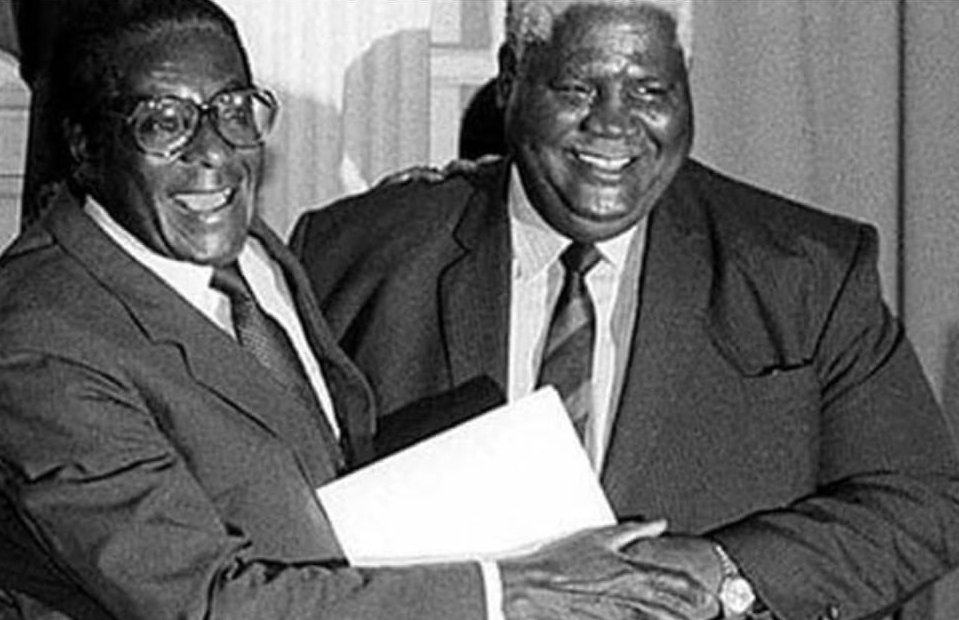
Every year, the 22nd of December arrives quietly, almost like a pause in the national calendar as we are all preparing for the December 25 and 26th holidays – a moment when Zimbabwe is invited to remember that the most difficult victories are not won on the battlefield, but in the heart of a nation learning to live as one. National Unity Day exists because we once discovered, painfully, that political independence is not the same thing as national cohesion. Every patriot across the length and breadth of our Great Zimbabwe honours a sacred covenant. The signing of the 1987 Unity Accord was not merely a political handshake; it was a deliberate act to end a season of internal conflict and to pull the country back from the edge. It was a miraculous stitching together of the very soul of our nation.

To speak honestly about the Unity Accord is to admit what made it necessary. The early years after Independence were marked by deep mistrust, insecurity, dissident violence, and heavy-handed responses. It was a period whose scars did not follow neat political boundaries, and whose pain still sits in family stories, unmarked graves, and silences passed down like inheritance. For seven long years, brothers who had shared the trenches of the Second Chimurenga found themselves on opposing sides of a tragic divide. The risk was total – the disintegration of the state and the reversal of our revolutionary gains. More …

Zimbabwe, Belarus Move to Deepen Defence and Technical Ties

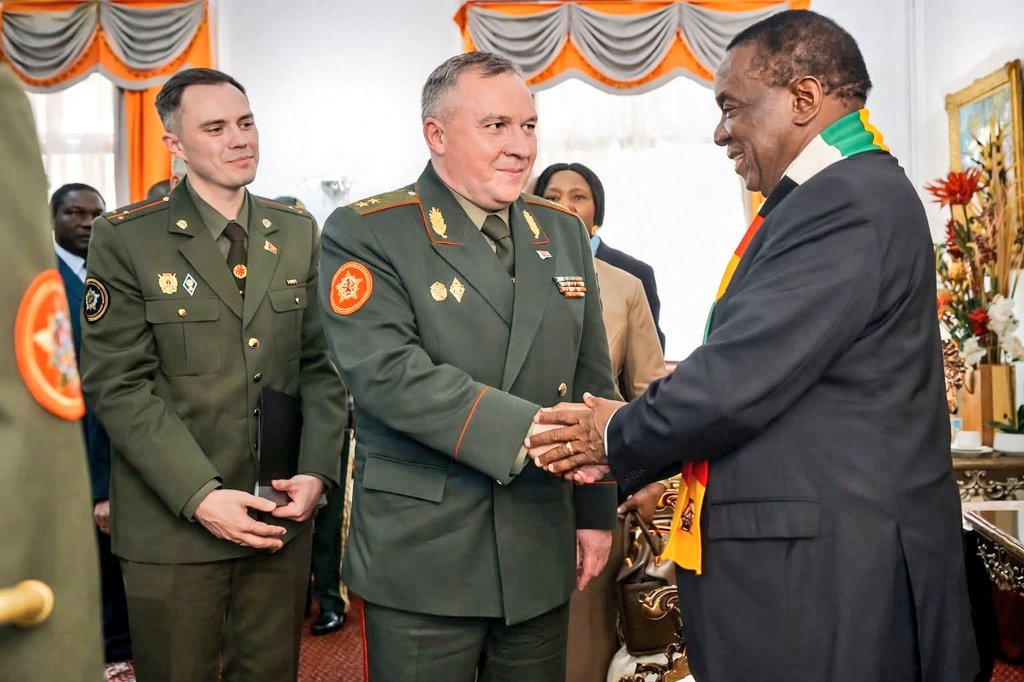
President Emmerson Dambudzo Mnangagwa on Tuesday welcomed a senior military delegation from the Republic of Belarus to State House in Harare. The delegation was headed by Belarus’s Minister of Defence, Lieutenant General Victor Khrenin, and included high-ranking military officials.

Following the engagement, President Mnangagwa said the discussions centred on enhancing bilateral cooperation in defence and technical fields, while also exploring opportunities to broaden collaboration in agriculture and industrial development. He noted that the talks underscored Zimbabwe’s continued pursuit of strong, mutually advantageous partnerships with Belarus.

Relations between Zimbabwe and Belarus have strengthened in recent years, with growing collaboration in areas such as agricultural mechanisation and industrial development, as Zimbabwe works to diversify and expand its global diplomatic and economic engagements.

ZANUPF: Wealth Isn’t a Shortcut to Leadership

ZANUPF has cautioned against equating wealth, religious influence, or any other form of personal power with qualification for top leadership positions within the party.

Speaking to the media at the party’s headquarters in Harare yesterday, spokesperson Ambassador Christopher Mutsvangwa emphasised that advancement in the liberation movement is grounded in political maturity, ideological commitment, personal sacrifice, and a proven record of serving the people, rather than financial standing.

ZiFM’s “Zimbabwean of the Year” – By What Standard?

It is difficult to comprehend how a national broadcaster of ZiFM’s stature, on a programme hosted by the equally high-profile MisRed, could designate Fadzayi Mahere as Zimbabwean of the Year. In 2025, her public profile has been defined less by constructive national contribution and more by a sustained pattern of antagonism towards, and disparagement of, the country’s leadership.

This raises serious questions about the standards applied in reaching such a determination. What objective criteria were employed? On what empirical basis was the selection made? And to whom, exactly, does this outcome purport to speak? It is far from clear that the decision reflects the views, priorities, or lived realities of Zimbabwe as a whole.

Stop Blaming “the Chinese” – Enforce the Law

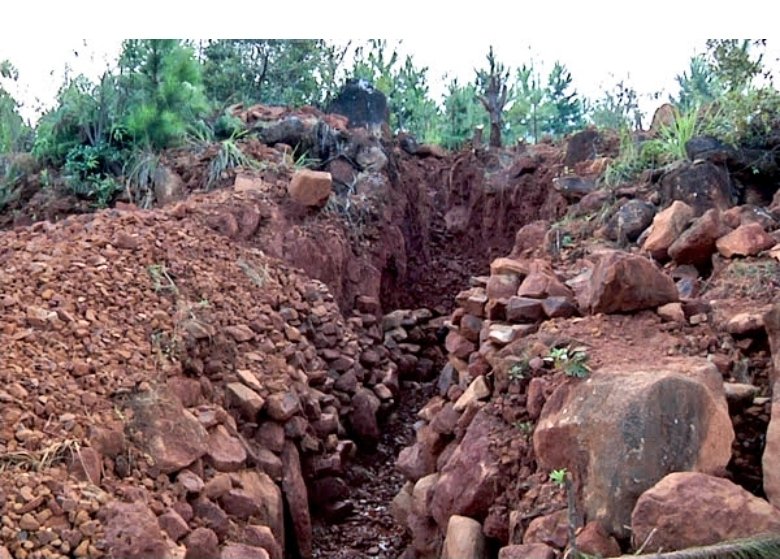
Zimbabweans have every right to be angry about silted rivers, destroyed wetlands, deforestation, noise pollution and contaminated water. But blaming “the Chinese” as a default response is intellectual laziness. Nationality is not the problem. Weak enforcement, corruption and our own willingness to tolerate wrongdoing are the problem.

Let’s tell the truth: we damage our own environment too. Sand poaching, illegal brick-making, riverbank cultivation and reckless artisanal mining – including practices that pollute water systems – are not foreign imports. They are local choices. The river doesn’t care who did it. Communities suffer either way. More …

Trading on Parole – ZIMRA’s 30-Day Leash on the Economy

ZIMRA’s proposal to introduce a monthly renewable Tax Clearance Certificate (ITF 263) from January 2026 is being sold as modern, dynamic compliance. In reality, it is regulatory overreach that confuses bureaucratic control with sound fiscal policy and risks choking the very economy it seeks to tax.

From an economic perspective, the flaw is clear. Development economics warns of the compliance cost hypothesis: when the cost of obeying the law rises too high, rational actors exit the formal system. Shifting clearance from an annual or quarterly cycle to a monthly one is not a marginal tweak; it hyper-inflates compliance costs. Large corporates absorb this through compliance teams. Micro and small enterprises, which dominate Zimbabwe’s economy, cannot. Time spent navigating TaRMS, reconciling filings, and chasing monthly clearances is time stolen from production and trade – a deadweight loss to GDP.
More …

The “Nandos Guy” Visits VP Chiwenga and Col. Baloyi

Colonel Minnie Baloyi and her husband, VP Rtd. General Chiwenga, were delighted to welcome Edwin Brisco Chisango, the “Nandos Guy,” and his wonderful wife to their home this past Sunday.

Edwin proved true to his kind word, bringing the promised funds budgeted for their Nandos meal, although he humorously declined the suggestion from some well-wishers to increase the contribution to $50. The couple were thoroughly pleased with the outcome.

He shared entertaining anecdotes of the public reaction to his initial offer, including the jesting messages and even temporary security concerns that led him to briefly block his social media account. Despite the lively commotion, the meeting was a great success and a pleasure for everyone involved.

Unity Day Reality Check: ZANUPF Is Not Divided.

As Zimbabwe marks Unity Day on 22 December, detractors are once again recycling the tired claim that ZANUPF is divided and unstable. The claim collapses on contact with reality. ZANUPF stands united, disciplined, and resolute – anchored in shared values, institutional strength, and an unwavering commitment to national development.

The Party’s cohesion is visible in its orderly programmes, mature leadership, and well-coordinated structures. Attempts by opposition figures and online commentators to manufacture internal divisions have failed completely, exposing not cracks within ZANUPF, but the political bankruptcy of its critics. Social-media noise has not translated into real influence, and it never will. More …