Zimbabwe Institutionalises Its Skills Capital with New National Databases

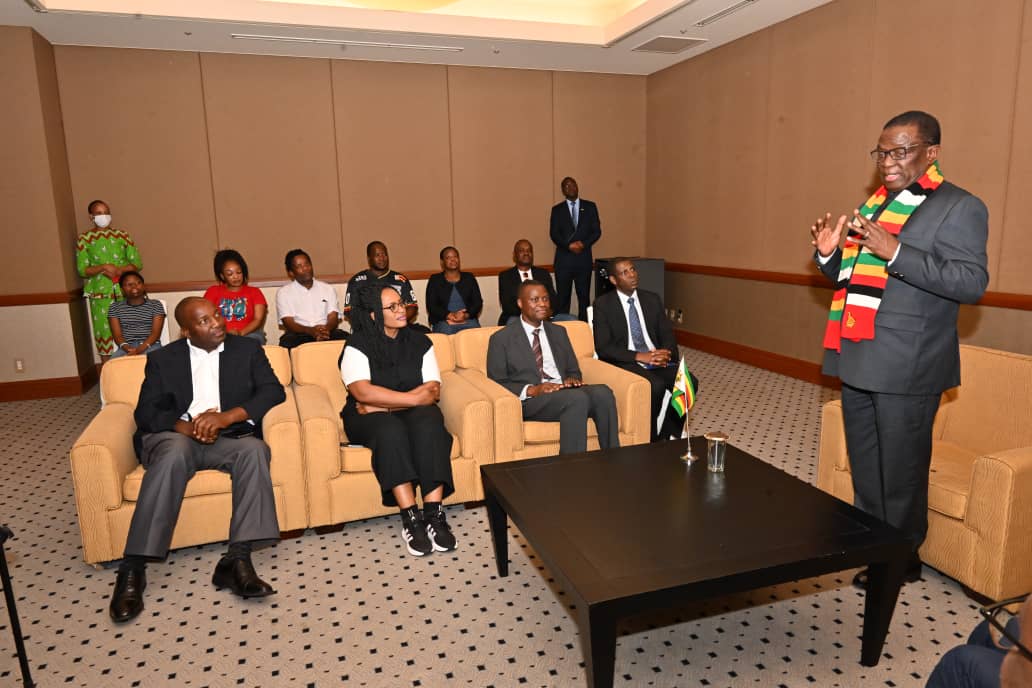
Professor Paul Mavima, Minister of Skills Audit and Development, on 30 December 2025 launched the Retired Expert Skills Database and the Diaspora Skills Database – a calibrated policy intervention correcting a long-standing structural gap in Zimbabwe’s development framework: the absence of a central mechanism to identify, organise, and deploy national expertise at scale.

For decades, Zimbabwe has produced professionals of international calibre across government, industry, academia, and multilateral institutions. Yet this capability remained fragmented and underutilised. The new databases convert dispersed skills from latent potential into a strategic national asset, enabling evidence-based deployment to priority sectors, strengthening service delivery, accelerating innovation, and lifting national productivity. More …

Gold and FX Reserves Anchor ZiG Stability

A combination of firming gold prices and a rise in foreign-currency holdings has bolstered confidence in the ZiG, reinforcing its exchange value.

Data published by the central bank shows the unit trading at US$25.98, its strongest level since early January.

Introduced in April 2024, the ZiG has shown notable resilience. Over the course of 2025, it has weakened by just 0.7 percent against the United States dollar, a performance that contrasts sharply with past episodes of currency volatility.

This relative stability is underpinned by hard backing. The ZiG is anchored by physical reserves of about 2.5 tonnes of gold, complemented by roughly US$100 million in foreign-exchange assets, a structure that has helped sustain market confidence in Zimbabwe’s evolving monetary framework.

Taken together, these indicators signal renewed national confidence and a cautiously optimistic promise as the country positions itself for 2026, with currency stability increasingly viewed as a platform for broader economic planning and growth.

Mocking the Rebuild, Forgetting the Fire

There is a peculiar ritual in Zimbabwe’s digital space – predictable; almost mechanical. You post a rebuilt road, a new clinic wing, a dam wall rising, or power units being restored – and someone arrives, right on cue, with the same sneer disguised as a question: “Where were you when the infrastructure you’re rebuilding today was collapsing?” It is not asked to understand, but to score points.

That question only sounds clever if we pretend infrastructure collapses for entertainment – as if highways, waterworks, hospitals, rail, and power stations simply wake up one morning and decide to die. A serious answer requires adult economics, not comment-section theatrics on Facebook and X. More …

If We Named Years Like We Used To, 2025 Would Be Gore rekuSimukira

There was a time when Zimbabwe did not merely pass through years – it named them.

A year carried intent. Direction. Instruction.

1978 was not just another page on the calendar; it was Gore reVanhu, the year the liberation struggle placed its faith squarely in the masses. 1980 was not simply Independence; it was Gore reMasimba kuVanhu, the year power returned to its rightful owners. 1982 became Gore reShanduko, the year of people-driven transformation. These names were not decorative poetry. They were historical assignments. They told the nation what the moment demanded of it.

Somewhere along the way, that tradition faded. We replaced meaning with matrices, resolve with reports, poetry with policy frameworks. Time became technical. Neutral. Unnamed. More …

Festive Season Road Carnage Claims 100 Lives as Accidents Surge – ZRP

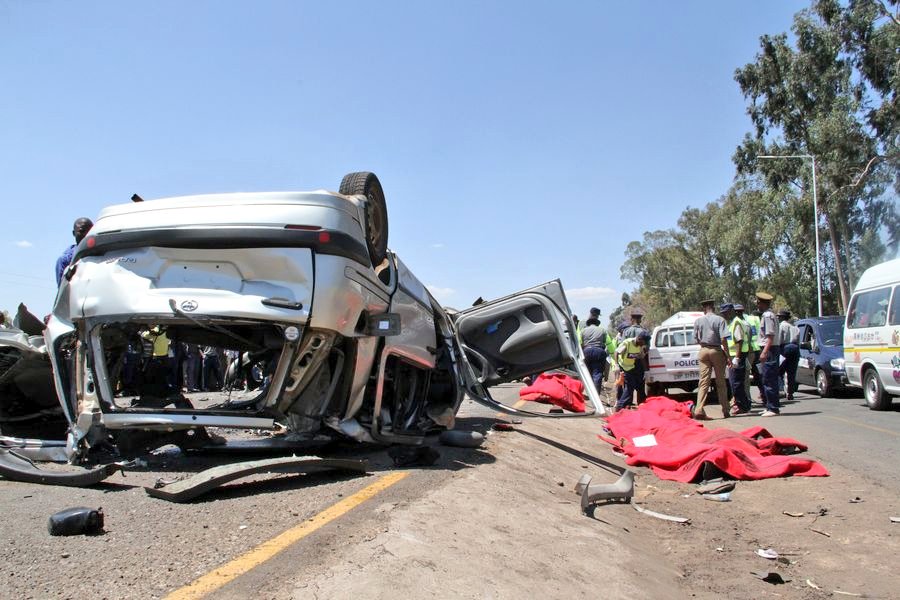
The Zimbabwe Republic Police has reported a sharp rise in road traffic accidents and fatalities during the 2025 festive season, with 100 people losing their lives between 15 and 26 December 2025.

According to the police, a total of 2 412 road traffic accidents were recorded during the period, almost double the 1 211 accidents reported over the same dates in 2024. Fatal accidents rose from 65 in 2024 to 87 in 2025, while the number of people injured increased from 401 to 471.

Among the fatalities, passengers accounted for the highest number of deaths (44), followed by pedestrians (37). Drivers (10), riders (4), cyclists (3), and scotch-cart operators (2) also lost their lives, underscoring the widespread impact of the accidents across all road user groups. More …

Zimbabwean Diaspora’s Role in National Growth

As 2025 draws to a close, President Emmerson Dambudzo Mnangagwa has delivered his Christmas and New Year message. In it, I noticed something subtle yet unmistakable. He spoke directly to Zimbabweans at home and in the diaspora. That single choice of words, directed at the diaspora, mattered. It was not a ceremonial flourish or a seasonal courtesy, but a clear signal that the Zimbabwean diaspora is no longer a distant audience observing events from afar. It is a central actor in the country’s economic story.

For too long, the diaspora has been described – and at times has described itself – in emotional terms: distance, longing, displacement, the hope of eventual return. That narrative is tired. More importantly, it is incomplete. The real story is economic, measurable, and already unfolding. In just the first nine months of 2025, remittances rose by more than 12 percent to US$2.1 billion, with annual inflows projected to exceed US$2.7 billion. At that scale, diaspora inflows are not supplementary. They stabilise households, support foreign-currency availability, and quietly keep the wheels of the economy turning.
More …

Remembering Cde Tongo

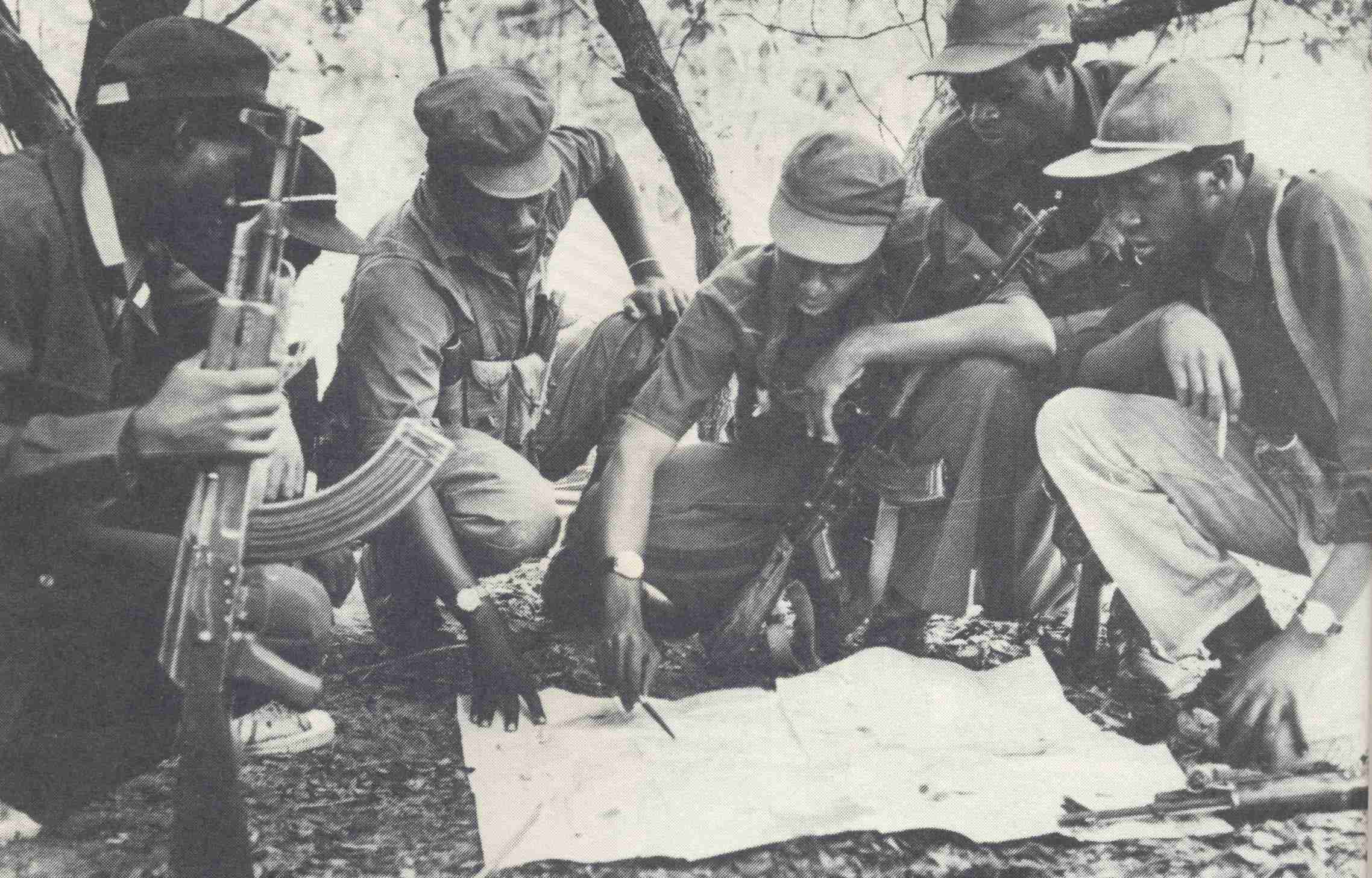
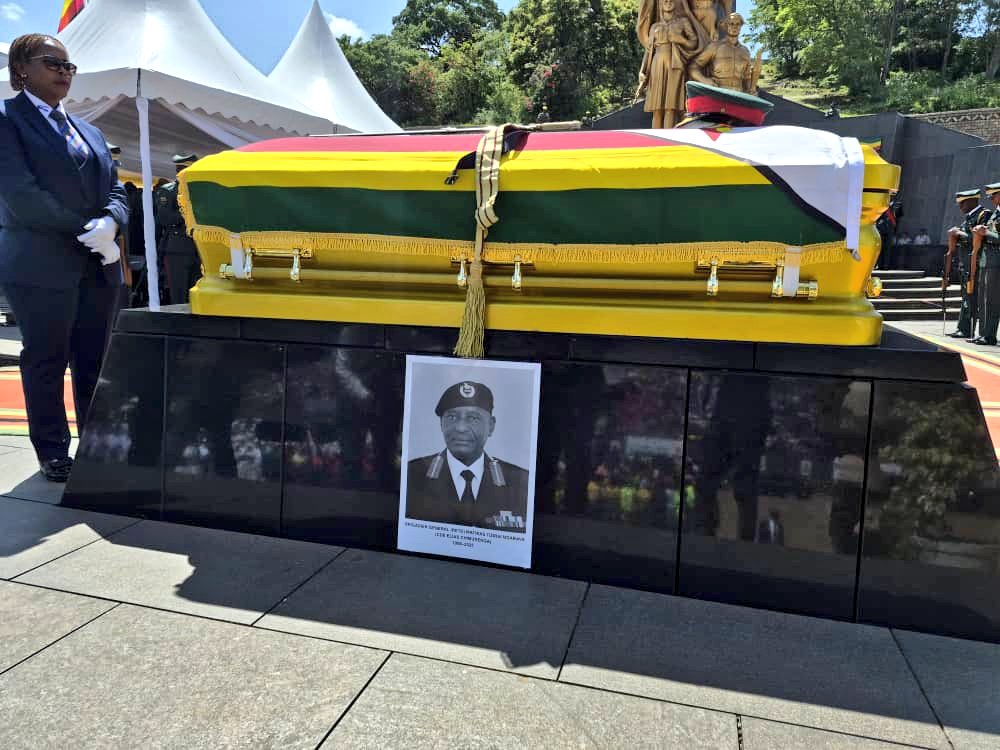
Today we remember Josiah Magama Tongogara, who died on 26 December 1979 at just 41 years old, yet left behind a legacy far greater than his years.

As Commander of ZANLA, Tongogara was a fearless strategist and disciplined organiser who helped transform a liberation movement into a formidable fighting force. By his early forties, he had already shaped the military direction of the struggle and positioned Zimbabwe firmly on the road to independence.

He died only days after the Lancaster House Agreement, at the very moment when the freedom he fought for had been secured on paper. Tongogara did not live to see Independence Day, but his sacrifice ensured it would come. His life proves that history is often changed not by long lives, but by decisive ones.

The Alpha Media Holdings US$50 Salary Reckoning and the Zimpapers Digital Pivot Signal the End of Industrial Journalism in Zimbabwe

I have followed, with keen interest rather than shock, the public discussion around the disclosure that Alpha Media Holdings (AMH) Zimbabwe paid only US$50 of a January 2025 salary in December 2025. To me, this was not a scandal in the narrow sense. It was a long-delayed signal finally becoming visible. The warning lights have been flashing for years. What collapsed here is not journalism as a public good, but the industrial revenue architecture that once sustained it.

Traditional journalism was built on scarcity. Printing presses were capital-intensive. Distribution was controlled. Advertising channels were few. Newsrooms were unquestioned gatekeepers. That entire ecosystem has been dismantled, not by ideology, but by technology. Today, anyone with a smartphone and a modest laptop has access to production capacity that once belonged only to institutions. Productivity has been compressed into pocket-sized devices. Distribution is no longer owned by publishers but by platforms. Attention, not circulation, has become the currency – and attention obeys algorithmic logic, not editorial tradition. More …

2025: The Year Africa Read the Balance of Power Clearly

As 2025 draws to a close, one conclusion stands with increasing clarity: the global centre of gravity has shifted, not through rupture or spectacle, but through the steady accumulation of deliberate choices made across the Global South. Africa, in particular, has spent this year doing something both quiet and consequential – comparing partners by outcomes rather than promises. In that comparison, the contrast between U.S. and Chinese foreign policy has hardened into a practical judgment about relevance.

This was the year multipolarity ceased to be theoretical. It became operational.

For much of the post-Cold War era, U.S. engagement with Africa rested on a familiar architecture: aid conditionality; security cooperation; values-driven diplomacy. In 2025, that architecture showed unmistakable strain. Policy remained episodic, filtered through domestic political cycles, and increasingly securitised. Engagement was reactive – responding to instability, coups, or geopolitical anxiety – rather than anchored in long-term economic transformation. Trade initiatives lacked scale. Infrastructure financing remained tentative. Sanctions continued to substitute for strategy. More …

Zimbabwe’s 2025 Year-End Audit: Receipts, Not Noise

At the close of 2025, Zimbabweans find themselves at a vantage point that demands a moment of quiet, honest reflection. To truly understand the state of the nation, one must ignore the transient noise of social media and instead look at the receipts – the tangible, measurable evidence of a country in transition. These are not the kind of receipts that fade; they are the kind you can drive on, harvest from, and calculate in the hard language of macroeconomics. This is the year-end audit of a nation that, despite immense external pressure, has chosen the revolutionary act of building over the convenient act of complaining. The story of 2025 is a narrative that holds even when you remove party colors and demand evidence, because the strongest defense of the Second Republic is found in independent corroboration. More …