What the West Won’t Admit About Zimbabwe’s Land Reform

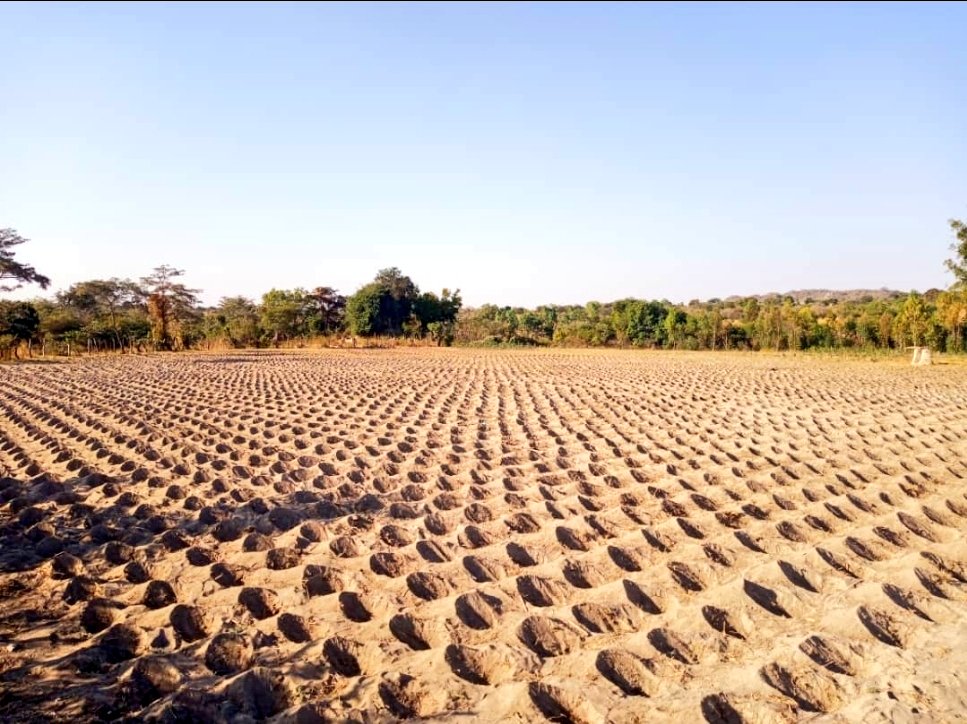
There is a reason why the narrative in Western capitals has gone quiet. For twenty-five years, the “experts” in London and Washington have been waiting for us to starve. They looked at the Fast Track Land Reform Programme and saw only the destruction of colonial property rights. They obsessed over the tractor count of 1998 while ignoring the human revolution of 2000. But while they were busy drafting sanctions and writing obituaries for our economy, Zimbabwe was quietly building something they never anticipated: the world’s first decentralised, climate-resilient agrarian model. The “breadbasket” didn’t burn. It evolved.

The myth of the Rhodesian “golden age” is finally dead, buried by data they can no longer suppress. When the blistering El Niño droughts of the last decade hit Southern Africa, the corporate farming giants of our neighbours – heavily leveraged and reliant on energy-intensive overhead irrigation – buckled under the dual weight of debt and power deficits. But in Zimbabwe? The newly resettled A1 and A2 farmers held the line. More …

Facts Are Not a Political Faction

The reaction to Professor Gift Mugano is neither an economic disagreement nor a serious political debate; it is a textbook case of cognitive dissonance masquerading as outrage. For years, opposition figures, including Fadzayi Mahere and LynnStacia, elevated Professor Mugano to near-canonical status, not because scholarship was sacred, but because his views confirmed their priors. His authority was celebrated, circulated, and weaponised. More …

The Sodomy Provocation at Beitbridge Exposed as Bait

To stand at the Beitbridge border – the sovereign gate of our Republic – and wave a pride flag is not an act of bravery. It is an act of calculated arrogance and a deliberate insult to the collective conscience of the Zimbabwean people. While the individual in the photograph reportedly walked away without being arrested, this failure to prosecute should not be mistaken for innocence. It represents a missed opportunity to enforce the rule of law. The fact that he was not immediately apprehended does not make his actions legal; it merely means he got lucky. It is justifiable, and indeed necessary, for law enforcement to revisit this incident and apply the statutes of our land, lest we set a precedent that our borders are open playgrounds for cultural vandalism. More …

When Curiosity Outruns Reality

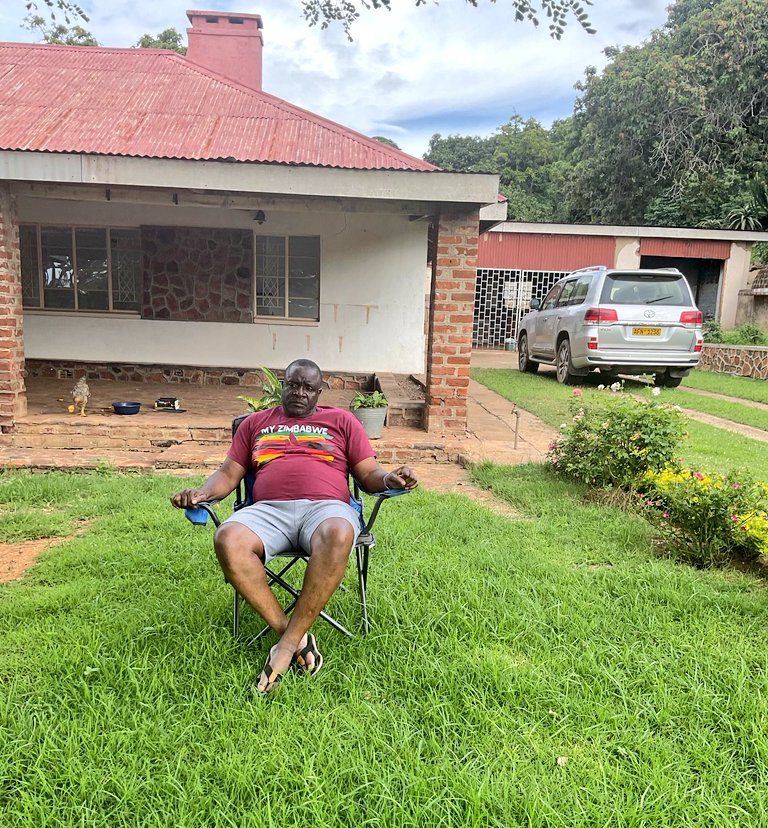
As someone deeply interested in mass communication and how public thinking is shaped, I found the reaction to Cde George Charamba’s attached photo fascinating. I know the place well. I have visited the site in Mashonaland West, near its border with Mashonaland Central – a beautiful setting with a perennial stream running through it and a mountain at one end – and I am familiar with how the property was acquired, its intended purpose, and the wider context of the surrounding properties.

With that background, the comment section was both hilarious and revealing. A simple image quickly triggered speculation, assumptions, and elaborate stories, most of them imagined. What should have remained ordinary was transformed into drama, driven by the urge to fill informational gaps with confident conclusions. More …

Making Land Bankable

Zimbabwe’s decision to decentralise land title deed processing to the provinces is a long-overdue reform with the potential to fundamentally reset the country’s agricultural economy. By bringing land administration closer to farmers, the Government is not only reducing bureaucracy and delays, but also addressing the central constraint that has limited post-land reform productivity: insecure and non-bankable tenure. This is devolution with substance, not slogans. More …

The Delusions of a Defector

The latest attempt by American interests to smear Zimbabwe’s sovereignty relies on a particularly weak vessel: Kelvin Muchineripi. This self-styled “whistleblower” – now conveniently drawing a paycheck from the US Army National Guard – has surfaced with absurd, evidentiary-free allegations that the Zimbabwe Defence Forces rigged recent elections. However, these claims crumble under the slightest logical scrutiny. More …

The Youth Engine Behind China’s Rise – And the Lessons We Should Not Miss

There are moments when a nation’s grand strategy reveals itself in an ordinary room, through ordinary competence. I recently attended a seminar that brought together heads of key media from Belt and Road countries. The agenda was serious, the participants were senior, and the expectations were high. Yet what stood out was not protocol, microphones, or banners. It was the coordination.

The event was run by multiple young Chinese nationals – highly educated, openly aspirational, and strikingly composed. They handled logistics, sequencing, time discipline, and stakeholder management with an efficiency that required minimal supervision. The confidence was not loud. It was structured. The competence was not performative. It was practical. In that small, human scene, one could glimpse a larger truth: China’s international stature is not sustained only by policy documents and speeches. It is sustained by a deep pipeline of capable young people who execute.
More …

Zimbabwe Is No Longer Guessing

As the sun rises on 2026, Zimbabwe stands at a vantage point that few observers predicted a decade ago. The country is no longer merely recovering, no longer suspended in a narrative of exception or apology. What is emerging instead is a state learning in public, adjusting in motion, and ascending with an unusual mix of restraint and confidence. The launch of the National Development Strategy 2 is not a bureaucratic sequel to NDS1, but the codification of a distinct model of statecraft and economic resilience that future scholars may well describe as a Zimbabwean or Harare-centred consensus.

To understand where Zimbabwe is going, one must first appreciate the architectural feat of the last five years. NDS1 was never designed to inspire romance. It was the era of the hard hat rather than the headline, a stabilisation phase defined by concrete, discipline, and endurance. It was a period of fixing fiscal leaks, rebuilding arterial roads, restoring agricultural self-sufficiency, and proving to a sceptical world that the Zimbabwean state could still plan, execute, and feed its people under pressure. In political terms, it was a defensive masterclass – holding the line against sanctions, pandemic shocks, and capital starvation while quietly reconstructing domestic capacity. NDS1 functioned less as a development manifesto than as a stabilisation engine disguised as one. More …

Brigadier General (Rtd) Mathias Tizirai Ngarava Buried

Born on 27 March 1959 in Mhokore Village under Chief Gororo in Chivi District, Masvingo Province, Brigadier General (Rtd) Mathias Tizirai Ngarava – known during the liberation struggle as Cde Elias Chimurenga – began his formal education at Shindi Primary School in 1967, completing it in 1974, before proceeding to Berejena Mission for his secondary studies in 1975.

His commitment to the liberation cause took a decisive turn in December 1976 when he left Rhodesia for Mozambique as part of a group tasked with securing ammunition. The journey was fraught with danger, cutting through the hostile terrain of Gonarezhou Game Park under constant surveillance and the ever-present threat of wild animals. Moving mainly at night and on foot, the group endured hunger, exhaustion, and the risk of detection. After reaching Mozambique, he was placed at Chibawawa Refugee Camp, where, in 1977, rigorous discipline, political orientation, and ideological training deepened his resolve to fully participate in the armed struggle. More …