
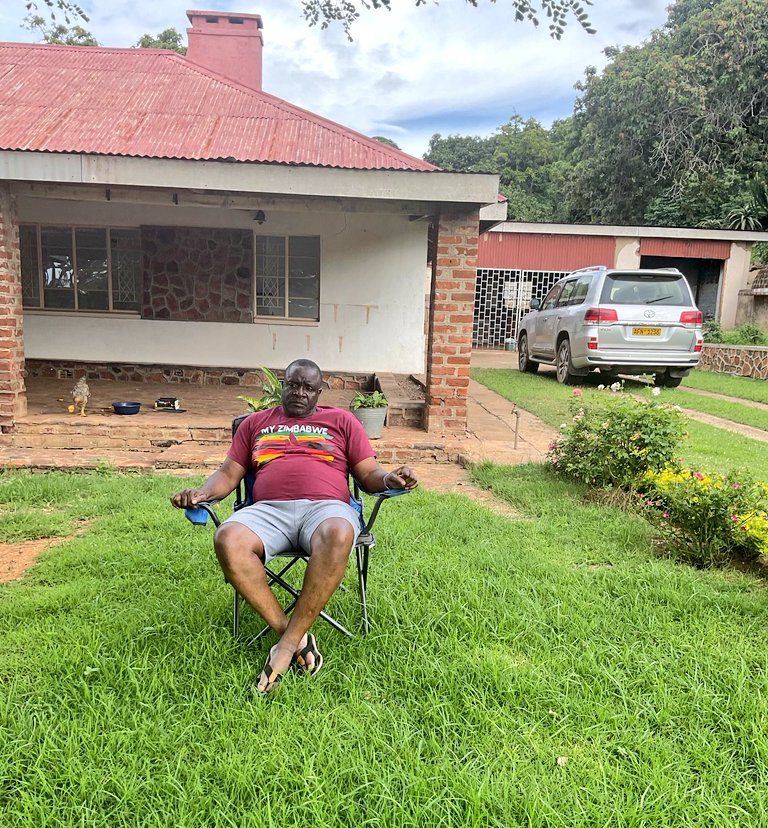
As someone deeply interested in mass communication and how public thinking is shaped, I found the reaction to Cde George Charamba’s attached photo fascinating. I know the place well. I have visited the site in Mashonaland West, near its border with Mashonaland Central – a beautiful setting with a perennial stream running through it and a mountain at one end – and I am familiar with how the property was acquired, its intended purpose, and the wider context of the surrounding properties.
With that background, the comment section was both hilarious and revealing. A simple image quickly triggered speculation, assumptions, and elaborate stories, most of them imagined. What should have remained ordinary was transformed into drama, driven by the urge to fill informational gaps with confident conclusions.
That said, some level of public curiosity was hardly surprising. Cde Charamba is not an ordinary private citizen. With dual roles as Deputy Chief Secretary and the President’s Spokesperson, he occupies a prominent space in the nation’s body politic, and public figures inevitably attract attention, scrutiny, and interpretation – even in moments that are entirely personal and uneventful.
The humour and creativity displayed by nearly a quarter of a million Zimbabweans were impressive. Yet the episode also exposed something more serious: how easily narratives are formed, amplified, and accepted with little evidence. It helps explain why politicians across the political divide often find it effortless to shape public opinion. We are highly impressionable, and even the thinnest storylines can travel far.
People, it seems, are wired to search for hidden meaning, even where none exists. When information is scarce, the mind inevitably rushes to fill the void. Social media accelerates this process, turning assumptions into collective “truths” within minutes.
In substance, the image itself carried no extraordinary message. It simply showed the President’s Spokesperson enjoying the final days of his break, in a location designed for quiet, peace, and tranquillity. Yet this ordinary moment became a national conversation – a quiet reminder of how easily perception is manufactured when curiosity recklessly outruns reality.













































Post a comment