
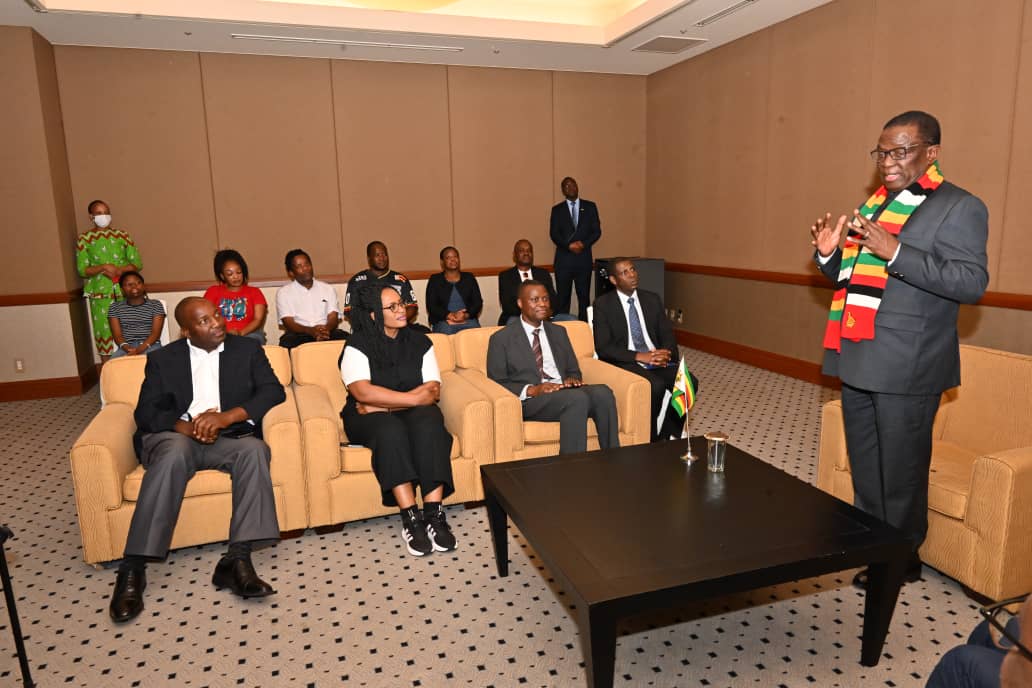
As 2025 draws to a close, President Emmerson Dambudzo Mnangagwa has delivered his Christmas and New Year message. In it, I noticed something subtle yet unmistakable. He spoke directly to Zimbabweans at home and in the diaspora. That single choice of words, directed at the diaspora, mattered. It was not a ceremonial flourish or a seasonal courtesy, but a clear signal that the Zimbabwean diaspora is no longer a distant audience observing events from afar. It is a central actor in the country’s economic story.
For too long, the diaspora has been described – and at times has described itself – in emotional terms: distance, longing, displacement, the hope of eventual return. That narrative is tired. More importantly, it is incomplete. The real story is economic, measurable, and already unfolding. In just the first nine months of 2025, remittances rose by more than 12 percent to US$2.1 billion, with annual inflows projected to exceed US$2.7 billion. At that scale, diaspora inflows are not supplementary. They stabilise households, support foreign-currency availability, and quietly keep the wheels of the economy turning.
But if you are part of the diaspora, you already know this story is bigger than remittances.
At the household level, diaspora support pays school fees, medical bills, rent, mortgages, groceries, and transport. Those dollars do not sit idle. They circulate. They sustain teachers, nurses, builders, kombi drivers, shop owners, and informal traders. This is economic resilience built from the ground up – one family at a time, one transaction at a time.
In agriculture, diaspora capital has financed boreholes, irrigation systems, livestock projects, mechanisation, and horticulture ventures. This is patient capital. It understands land, seasons, and risk. It does not panic at the first drought or delay. It strengthens food security, raises rural incomes, and anchors productivity in communities often overlooked by conventional finance.
In mining and manufacturing, the contribution runs deeper than money. Diaspora participation increasingly brings exposure to international standards – safety practices, efficiency benchmarks, compliance culture, and management discipline. When capital arrives together with skills and experience, value chains deepen. Production expands. Value is retained locally instead of ending at raw extraction.
Tourism tells a story every Zimbabwean abroad knows well. Every festive-season returnee fills hotels, hires vehicles, visits attractions, eats at local restaurants, and spends locally. Beyond that, you market Zimbabwe through lived experience rather than glossy brochures. Few tourism campaigns can match the credibility of citizens who return home and speak from experience.
Perhaps the most underestimated contribution lies in skills. Zimbabwe’s diaspora includes doctors, engineers, ICT specialists, academics, artisans, and entrepreneurs. When policies allow that expertise to plug easily into local systems, the country imports knowledge without shipping containers, tariffs, or foreign-exchange queues. Few investments are cheaper or more transformative.
Other nations have already shown what deliberate diaspora engagement can achieve. India leveraged its diaspora to build a globally competitive ICT sector. Israel transformed diaspora networks into a thriving innovation ecosystem. China used returnee entrepreneurs to seed industrial clusters. The Philippines structured labour migration and remittance flows into a national growth strategy. None of this happened by accident. It followed intentional policy.
Zimbabwe is now signalling similar seriousness. Extending National Development Strategy 2 to Zimbabweans abroad, advancing a National Diaspora Policy, and simplifying investment processes through the Zimbabwe Investment and Development Agency all point to a shift from sentiment to structure, from rhetoric to design.
This is where the diaspora’s moment becomes a choice. Commitment has already been demonstrated through years of sustained support. The opportunity now is to go further – to move from informal contribution to structured partnership, from individual effort to coordinated impact, from goodwill to growth.
That is why the President’s year-end message matters. It frames the diaspora not as visitors who occasionally come home, but as partners in national development. When clear pathways, predictable rules, and genuine inclusion meet diaspora capital, skills, and confidence, the results are not incremental. They are transformative.
The Zimbabwean diaspora is no longer potential waiting to be unlocked. It is already an extension of the national economy – operating across borders, shaping outcomes, and proving, year after year, that distance has never meant disconnection.
























































Post a comment