
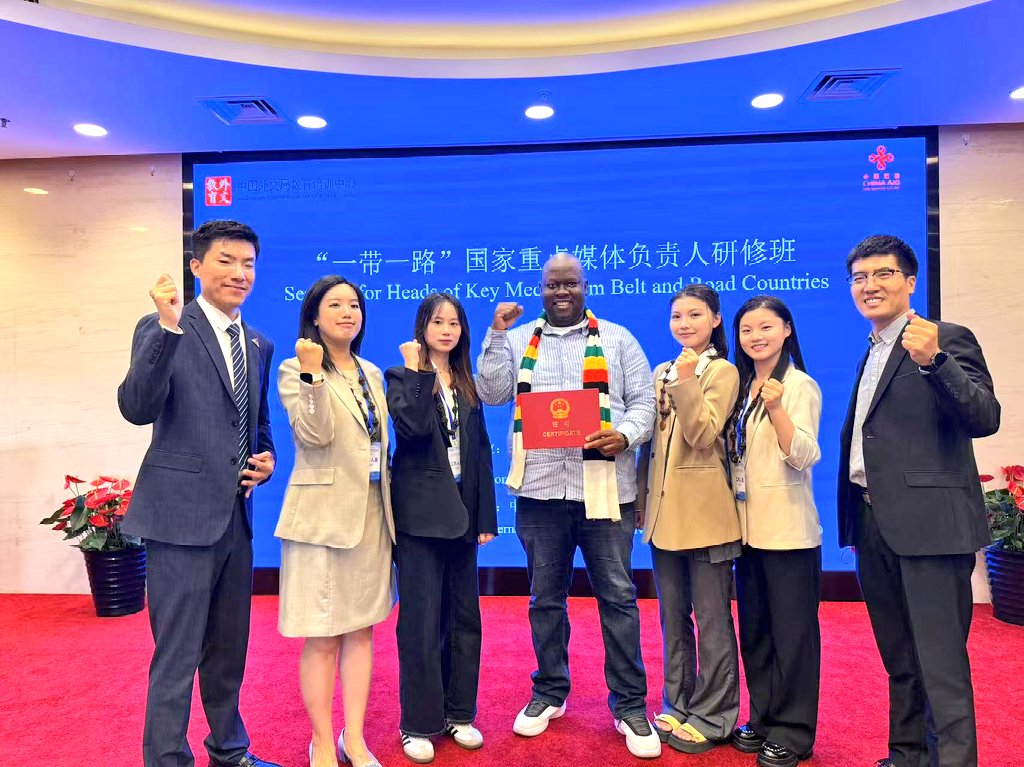
There are moments when a nation’s grand strategy reveals itself in an ordinary room, through ordinary competence. I recently attended a seminar that brought together heads of key media from Belt and Road countries. The agenda was serious, the participants were senior, and the expectations were high. Yet what stood out was not protocol, microphones, or banners. It was the coordination.
The event was run by multiple young Chinese nationals – highly educated, openly aspirational, and strikingly composed. They handled logistics, sequencing, time discipline, and stakeholder management with an efficiency that required minimal supervision. The confidence was not loud. It was structured. The competence was not performative. It was practical. In that small, human scene, one could glimpse a larger truth: China’s international stature is not sustained only by policy documents and speeches. It is sustained by a deep pipeline of capable young people who execute.
This is the part of China’s story that many outsiders underestimate. We analyse China through leaders, summits, and mega-projects, but we often miss the “middle layer” – the young engineers, researchers, programme managers, entrepreneurs, and civil servants who translate national ambition into daily outcomes. China’s rise is not magic. It is systems plus discipline, renewed each generation. And the youth are not spectators in that story; they are the machinery.
Consider the architecture of China’s human capital. A defining feature of China’s development model has been its insistence that education is not merely social policy; it is industrial policy. When education systems are designed to feed national goals, a country gains an advantage that compounds over decades: a workforce that can absorb complex technology, improve it, and export it. That is how you move from manufacturing to innovation – not by wishing, but by training.
China’s most visible achievements – high-speed rail, modern logistics, digital platforms, electric mobility, renewable energy scaling – are often discussed as if they emerged from capital alone. But capital, by itself, buys equipment. It does not buy competence. Competence must be grown. China’s advantage has been the construction of a learning society that treats technical skill as national wealth.
The same logic extends to innovation. In China’s leading cities and technology corridors, young people are not simply “talented.” They are surrounded by ecosystems that turn talent into output. Incubators provide more than desks; they provide capital networks, legal advisory, mentorship, procurement access, and pathways to scale. Universities increasingly operate as feeders into industry, not as isolated islands of theory. Research is expected to solve real-world problems, not merely accumulate citations.
This is why China can field youthful teams in serious, high-stakes sectors. When you see young people leading in aerospace, telecommunications, robotics, advanced manufacturing, and AI, it is tempting to reduce the phenomenon to cultural stereotypes about discipline. But the more useful explanation is structural: China has built channels through which ability is identified, trained, pressured, refined, and deployed. A nation that does this consistently will eventually look “inevitable” on the global stage.
And global stage is the right phrase. China’s international influence is not only a function of trade or diplomacy. It is also a function of credibility – the sense that China can deliver at scale. Credibility is what makes partners listen. Credibility is what allows a country to shape standards, propose initiatives, and establish itself as a central player in supply chains and emerging technologies. That credibility is produced domestically first, and it is produced by people.
The seminar I attended offered a microcosm of this. It was not a factory, a lab, or a construction site – yet the same developmental signature was there: planning, punctuality, accountability, and the expectation that young professionals can carry weight. When a country normalises competence at the level of everyday administration, it creates an engine that can drive bigger ambitions – including international engagement.
This raises an uncomfortable but necessary question for many developing nations: why do we often treat youth as a political constituency to be mobilised rather than a capability to be built? Youth policy is frequently framed as slogans, grants, and short-term programmes. But a youth strategy worthy of the name is an economic strategy. It should answer three hard questions: What skills do we need at scale? What systems produce those skills reliably? And how do we ensure those skills are deployed into national priorities rather than wasted?
China’s approach suggests several lessons.
First, treat human capital as a long-term investment, not a budget line to be trimmed when times are hard. China’s development story is inseparable from sustained, deliberate investment in education and training, coupled with a culture that prizes proficiency.
Second, build ecosystems, not heroes. A few brilliant entrepreneurs cannot transform a national economy if the environment is hostile. China’s innovation model shows the value of structured support: incubators, research-commercialisation channels, access to financing, and clear routes from prototype to market.
Third, link education to production. The gap between learning and earning is where youth frustration grows. When universities and colleges are aligned with industry needs – and when industry has incentives to absorb trainees and graduates – the economy becomes a training ground rather than a waiting room.
Fourth, make discipline normal. This is not about harshness; it is about standards. Systems that reward competence and punish negligence gradually produce a culture where excellence is expected. That expectation is a competitive advantage.
Fifth, build people who can represent the nation internationally. China’s youth are not only building domestically; they increasingly serve as bridges across borders, carrying technical expertise, administrative capacity, and cultural confidence into global engagements. Soft power is not only art and media; it is also the ability to organise, execute, and collaborate.
For a Zimbabwean reader, the key point is not to romanticise China. No country is without flaws or contradictions. The point is to recognise what has clearly worked: China has made youth a central instrument of national development, and that choice has amplified its international status. A nation that can produce millions of skilled graduates, surround them with functioning ecosystems, and deploy them into priority sectors will not only grow wealth; it will grow influence.
Ultimately, the most valuable takeaway from watching young Chinese professionals operate is simple: development is not an event. It is a habit – repeated daily, institution by institution, generation by generation. And when a country succeeds in passing that habit to its youth, it does not merely build projects. It builds momentum.
That momentum is what the world is responding to. The question for us is whether we are willing to learn the deeper lesson: not the aesthetics of modernity, but the discipline of building it.

























































Post a comment