
Zimbabwe is not discussing constitutional change in a vacuum. It is doing so at a moment when inflation has receded into single digits, when macroeconomic stability – fragile yet tangible – has returned, and when the country faces a question older than any amendment: how does a nation convert recovery into permanence?
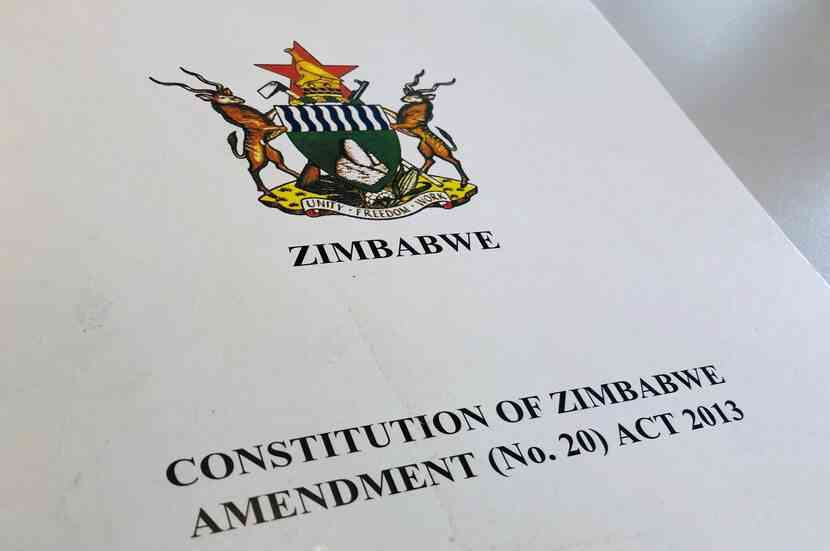
The proposed Constitutional Amendment No. 3 – adopted by Cabinet as the latest refinement of the 2013 Constitution – seeks to recalibrate key aspects of executive selection, electoral administration and institutional design in pursuit of that permanence. It is neither a rupture with the constitutional order nor a symbolic gesture. It is an attempt to adjust the machinery of governance to the lived realities of a maturing State.
A constitution is not a museum exhibit. It is an operating manual for power. When governance reveals friction – policy reversals, electoral fatigue, administrative overlap, institutional duplication – reform becomes not indulgence but necessity. Amendment No. 3 must therefore be assessed not as a partisan instrument, but as an architectural proposal. It asks whether the current design of the State best serves a country attempting to consolidate stability and accelerate development.
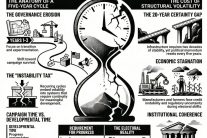
At the centre of discussion lies time itself. Five-year electoral cycles were designed to ensure accountability through regular public judgment. That principle remains sound. Yet development rarely moves at electoral speed. Infrastructure corridors, energy expansion, industrialisation strategies and curriculum reform seldom mature within the narrow window between assuming office and preparing for the next campaign. A State perpetually bracing for elections risks prioritising optics over outcomes.
The proposal to extend presidential and parliamentary terms to seven years invites a recalibration of constitutional time. Longer tenure does not erase accountability; term limits remain intact, judicial review persists, parliamentary scrutiny endures, and removal mechanisms continue to exist. What a longer cycle may reduce is volatility – the constant pivot from governing to campaigning. Stability, when paired with oversight, becomes not stagnation but continuity. The question is not whether elections matter, but whether their frequency optimally serves long-term national planning.
More contentious is the proposed shift from direct presidential election to election by Parliament. Direct elections are often equated with democratic purity, and that sentiment must be respected. However, constitutional theory reminds us that democratic legitimacy flows through multiple channels. Members of Parliament derive their authority from the electorate. A requirement that the President secure an absolute parliamentary majority embeds executive authority within representative consensus. It encourages coalition-building, negotiation and programmatic politics over personality-driven mobilisation.
This model does not inherently diminish democracy; it redistributes how legitimacy is aggregated. Whether it deepens accountability or distances citizens will depend on the strength, independence and vibrancy of Parliament itself. A robust legislature enhances the model. A compliant one weakens it. Institutional design alone cannot manufacture democratic culture; it must be animated by political maturity.
Institutional refinement extends beyond electoral mechanics. Elevating the qualification requirements of the Attorney-General to match those of a Supreme Court judge signals a commitment to professionalisation at the highest legal levels. Offices that interpret, defend and operationalise the Constitution must command unimpeachable competence and integrity. Strengthening entry thresholds is not elitism; it is recognition that constitutional guardianship demands the highest calibre.
Clarifying the constitutional role of the Defence Forces within well-defined boundaries reinforces civilian supremacy – a cornerstone of modern republican governance. Stability is secured not merely by economic indicators but by predictable, lawful institutional conduct. When roles are clear, suspicion diminishes and confidence grows.
The proposal to establish a specialised Delimitation Commission and rationalise voter registration functions reflects a principle often overlooked in constitutional design: functional differentiation. When a single institution carries overlapping responsibilities, even absent misconduct, perceptions of conflict may arise. Separating technical boundary demarcation from broader electoral administration sharpens focus and enhances institutional clarity. Centralising civil registration data under a coherent administrative framework may further improve efficiency and integrity, provided transparency remains paramount.
Critics caution – not without reason – that stability can become a pretext for entrenchment. That warning deserves serious engagement. Constitutional reform must never become a vehicle for insulating power from scrutiny. The equilibrium between enabling governance and limiting authority is delicate. Stability without accountability calcifies into control. Accountability without stability fragments into paralysis. The enduring challenge of constitutional design is balancing these competing imperatives without sacrificing either.
For the ordinary citizen, this debate is not abstract theory. It determines whether hospitals are completed or abandoned midway, whether roads reach their destinations or stall at ceremonial launch, whether energy projects achieve generation targets, whether policy remains predictable enough to attract investment and sustain employment. Electoral turbulence has historically disrupted service delivery and long-term planning. If recalibration reduces that disruption while preserving oversight, the public stands to benefit.
Zimbabwe’s constitutional history demonstrates that evolution is not anomaly but norm. The 2013 Constitution itself was the product of national negotiation and reflection. Amendments, when responsibly crafted, reflect lessons learned in practice. They signal adaptation, not abandonment. The legitimacy of reform lies not merely in its passage but in its faithful implementation within the rule of law.
Ultimately, the merit of Amendment No. 3 will be judged less by its theoretical elegance than by its lived consequences. Laws create frameworks; institutions give them life. If judicial independence remains protected, parliamentary scrutiny remains meaningful, opposition participation remains genuine, and political competition remains real, then structural refinement may translate economic stabilisation into durable progress.
History rarely announces its inflection points in dramatic language. Sometimes they arrive quietly, in seasons of relative calm, when a nation has the space to reflect and redesign. In such moments, sobriety is essential. Constitutions are neither sacred relics immune from revision nor disposable tools of convenience. They are living instruments meant to serve a people across generations.
In a season of stability, the architecture chosen today will determine whether recovery matures into renewal – or dissipates into another cycle of uncertainty. The question before Zimbabwe is not whether change is comfortable. It is whether the structure of the State is optimally aligned with the aspirations of its citizens and the demands of sustained national development.























































Post a comment