

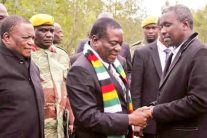
Zimbabwe recently rejected a proposed US$350 million health funding agreement with the United States after President Emmerson Mnangagwa directed his government to halt negotiations. The deal, presented under Washington’s America First Global Health Strategy, was intended to shape future US health support to Zimbabwe. However, Harare concluded that its conditions were incompatible with national sovereignty.
Two elements reportedly raised serious concern. First, the agreement sought direct access to Zimbabwe’s health data for a defined period – something officials viewed as excessive and potentially intrusive. Second, the US reportedly pushed for access to Zimbabwe’s critical mineral resources within the broader framework of the arrangement. In addition, Zimbabwe objected on principle to entering a bilateral health architecture with a country that had withdrawn from the World Health Organisation, arguing that such a move would weaken multilateral global health governance.
From a political science perspective, the decision reflects a broader structural tension in North-South relations – when financial assistance is bundled with strategic concessions, it ceases to be purely developmental and begins to resemble leverage. If a partner state seeks mineral access or strategic privileges, it should frame them transparently as commercial or strategic agreements – not embed them within public health financing. Blurred lines between aid and resource negotiation risk distorting sovereignty.
President Mnangagwa’s stance can therefore be read not as anti-cooperation, but as a demand for clarity and parity. Development partnerships are legitimate. Conditionality tied to strategic assets, without full transparency and reciprocal benefit, is not.
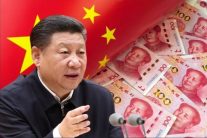
This is partly why Chinese engagements are often politically welcomed across the Global South. Whatever debates exist about outcomes, many Chinese agreements are presented explicitly as infrastructure, credit, or investment transactions rather than moralised aid frameworks. When terms are openly commercial, governments can negotiate them, scrutinise them, and defend them domestically. Transparency – when present – reduces perceptions of hidden leverage.
Zimbabwe’s position also signals an important shift – leveraging its own mineral wealth to finance national priorities. As a country rich in critical minerals, Zimbabwe is increasingly capable of using mining revenues to strengthen its own healthcare system and diversify its economy. If mineral wealth is strategically valuable globally, it must first translate into domestic capability – modern hospitals, reliable medicine supply chains, trained health professionals, and resilient public systems.
For other Global South nations, the lesson is straightforward. Co-operation should be pursued, but on terms that respect sovereignty, multilateralism, and institutional integrity. Aid should not quietly evolve into resource bargaining. If minerals are part of the discussion, let them be negotiated openly as business – priced, debated, and agreed in the public interest.
In rejecting the MoU, Zimbabwe is asserting a principle – development partnerships must be transparent, reciprocal, and sovereign. In an era of intensifying geopolitical competition over data, minerals, and influence, that principle is not isolationist – it is strategic.














































Post a comment