

Reports that Western governments – notably Canada, Sweden, and Switzerland – are covertly midwifing an opposition coalition against Constitutional Amendment No. 3 (2026) should surprise no serious student of Zimbabwe’s post-2000 political economy. The architecture is familiar: finance proxy platforms, elevate “civil society” fronts such as the Constitution Defenders Forum and the Defend the Constitution Platform, deploy seasoned intermediaries, and repackage regime-change ambitions as constitutional guardianship. It is intervention by indirection.
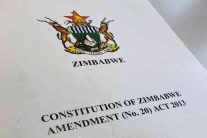
Zimbabwe’s Constitution is not an annex to Western foreign policy. It is a domestic covenant, amendable through lawful, sovereign procedures. Constitutional reform is neither aberrant nor authoritarian; it is the ordinary grammar of statecraft. From Paris to Ottawa, constitutions have been revised to meet evolving national imperatives. Zimbabwe’s review is no different. What is different is the reflexive Western impulse to internationalise our internal processes while sanctimoniously preaching sovereign equality. States that sustained two decades of sanctions – measures that crippled hospitals, industry, and currency stability – cannot plausibly claim moral trusteeship over Zimbabwe’s constitutional trajectory.
The alignment of certain embassies with figures historically embedded in Western-funded political formations is not incidental. It reflects a continuity of strategy: when one opposition vehicle fractures, assemble another; when electoral arithmetic fails, litigate legitimacy in foreign capitals. This is not solidarity – it is geopolitical engineering. No republic worthy of the name tolerates external financing of domestic political contestation under the camouflage of “advocacy.”
ZANU-PF’s position is neither defensive nor reactionary; it is sovereign. Amendment No. 3 must be debated, supported, or opposed by Zimbabweans – not choreographed by distant chancelleries. Our legal institutions apply uniformly, irrespective of foreign patronage. The constitutional order will not be subcontracted.
The principle is elementary: Zimbabwe amends Zimbabwe’s Constitution. External actors should desist from clandestine choreography and respect the settled doctrine of non-interference. The future of this republic will be determined in Harare, not in Geneva, Ottawa, or Stockholm.






















































Post a comment