Making Land Bankable

Zimbabwe’s decision to decentralise land title deed processing to the provinces is a long-overdue reform with the potential to fundamentally reset the country’s agricultural economy. By bringing land administration closer to farmers, the Government is not only reducing bureaucracy and delays, but also addressing the central constraint that has limited post-land reform productivity: insecure and non-bankable tenure. This is devolution with substance, not slogans. More …


The Delusions of a Defector

The latest attempt by American interests to smear Zimbabwe’s sovereignty relies on a particularly weak vessel: Kelvin Muchineripi. This self-styled “whistleblower” – now conveniently drawing a paycheck from the US Army National Guard – has surfaced with absurd, evidentiary-free allegations that the Zimbabwe Defence Forces rigged recent elections. However, these claims crumble under the slightest logical scrutiny. More …

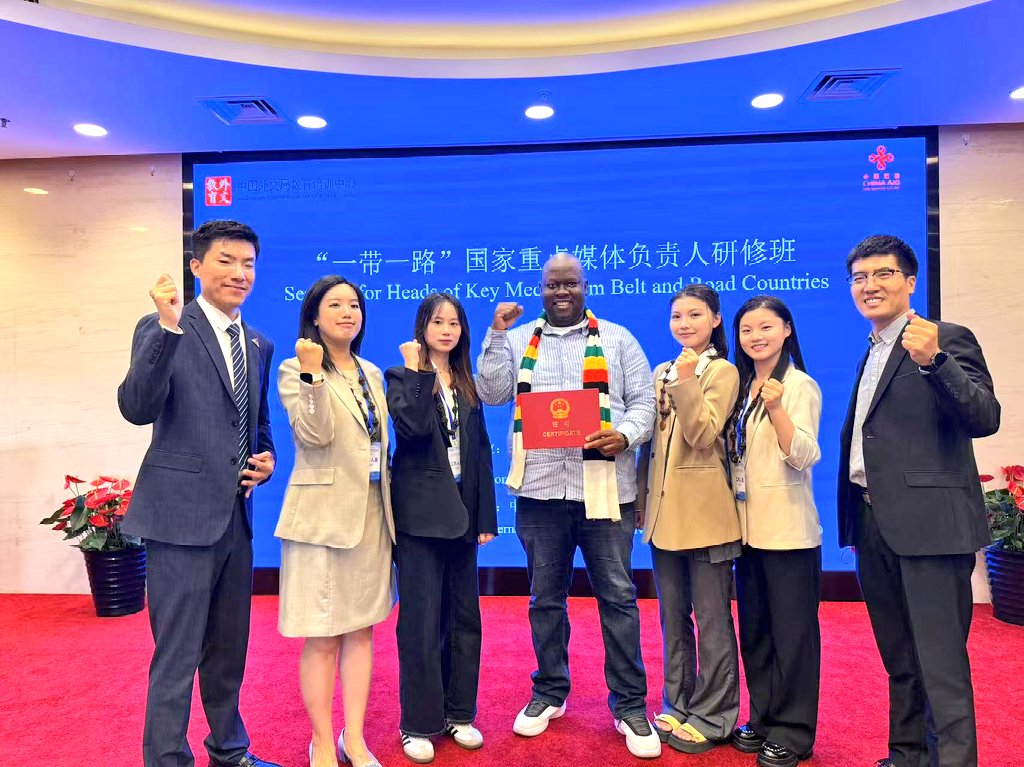
The Youth Engine Behind China’s Rise – And the Lessons We Should Not Miss

There are moments when a nation’s grand strategy reveals itself in an ordinary room, through ordinary competence. I recently attended a seminar that brought together heads of key media from Belt and Road countries. The agenda was serious, the participants were senior, and the expectations were high. Yet what stood out was not protocol, microphones, or banners. It was the coordination.

The event was run by multiple young Chinese nationals – highly educated, openly aspirational, and strikingly composed. They handled logistics, sequencing, time discipline, and stakeholder management with an efficiency that required minimal supervision. The confidence was not loud. It was structured. The competence was not performative. It was practical. In that small, human scene, one could glimpse a larger truth: China’s international stature is not sustained only by policy documents and speeches. It is sustained by a deep pipeline of capable young people who execute.
More …

Zimbabwe Is No Longer Guessing

As the sun rises on 2026, Zimbabwe stands at a vantage point that few observers predicted a decade ago. The country is no longer merely recovering, no longer suspended in a narrative of exception or apology. What is emerging instead is a state learning in public, adjusting in motion, and ascending with an unusual mix of restraint and confidence. The launch of the National Development Strategy 2 is not a bureaucratic sequel to NDS1, but the codification of a distinct model of statecraft and economic resilience that future scholars may well describe as a Zimbabwean or Harare-centred consensus.

To understand where Zimbabwe is going, one must first appreciate the architectural feat of the last five years. NDS1 was never designed to inspire romance. It was the era of the hard hat rather than the headline, a stabilisation phase defined by concrete, discipline, and endurance. It was a period of fixing fiscal leaks, rebuilding arterial roads, restoring agricultural self-sufficiency, and proving to a sceptical world that the Zimbabwean state could still plan, execute, and feed its people under pressure. In political terms, it was a defensive masterclass – holding the line against sanctions, pandemic shocks, and capital starvation while quietly reconstructing domestic capacity. NDS1 functioned less as a development manifesto than as a stabilisation engine disguised as one. More …

The Rules Are for You, Not for the USA

The mask has finally fallen. Yesterday’s brazen kidnapping of the Venezuelan President by the USA is not merely a violation of law; it is the resurrection of the colonial mandate. In seizing a sitting Head of State and declaring, as President Trump did yesterday, that the US will now “run the country” to ensure “American dominance in the Western Hemisphere,” Washington has stripped away the polite fiction of “democracy promotion.” This is 19th-century imperialism with 21st-century technology. It is, as Venezuelan Foreign Minister Yvan Gil correctly identified, a “colonial war” designed not to liberate a people, but to seize “strategic resources, particularly vast oil reserves.”

The Global South has been disciplined for generations to believe in a neutral order – one where law restrains power. That belief now collapses under the weight of evidence. More …