America’s Imperial Decline in Real Time

America’s action against Venezuela is being sold as strength, resolve, and leadership. In truth, it is something far less flattering. It is fear, stripped of discipline and dressed up as authority. Fear of a world that no longer waits for Washington’s permission. Fear of systems that function beyond the dollar. Fear of governments that refuse to be disciplined by sanctions or intimidated by threats. Fear, above all, of irrelevance.

Empires at ease do not behave this way. Confident powers do not lurch from economic strangulation to open coercion. They do not normalise the language of seizure and removal when persuasion fails. They do not need to turn a sovereign state into a public spectacle to remind others who is in charge. These are the reflexes of a hegemon sensing that the ground beneath it is shifting. More …

The Fault Lines of Zimbabwe’s Liberation Struggle

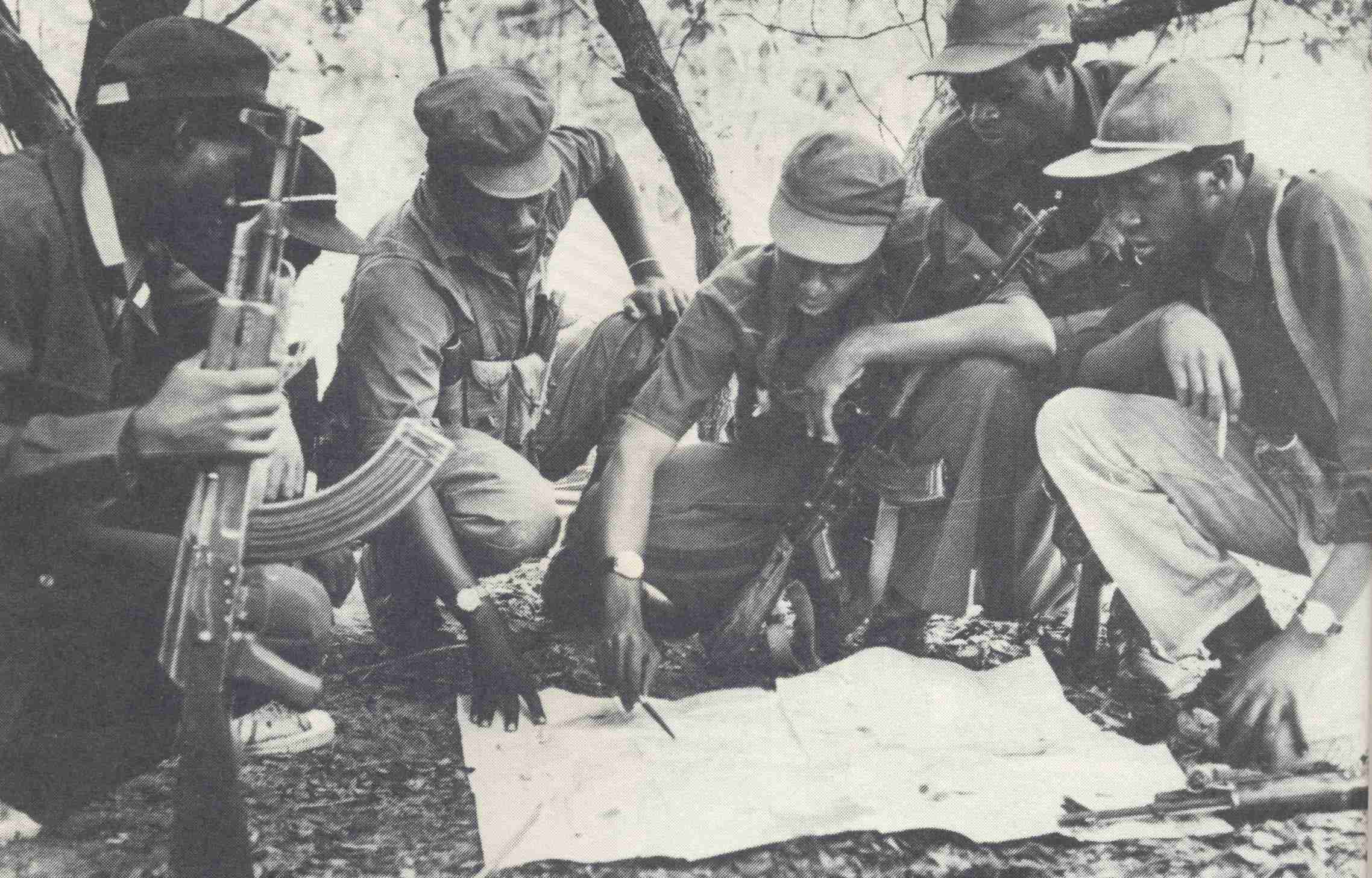
I have been closely following a compelling oral-history series on Zimbabwe’s War of Liberation (the Second Chimurenga), hosted by Robert Tapfumaneyi on ZimNews Beat TV’s YouTube channel ( https://youtube.com/playlist?list=PLBQumZCiCU8r2TUrcCvY3jBuw8xuMnYJY ). What initially appears to be a collection of veteran testimonies gradually unfolds into something far more unsettling and intellectually demanding: a mirror held up not only to the liberation struggle itself, but to how the nation has chosen to remember, narrate, and politically curate that struggle.

A striking and recurring theme in these interviews is the sharp distinction veterans draw between the nationalists – the political leadership – and the fighters – the men and women who carried the war on their backs, in forests, camps, and battlefields. Interview after interview reveals a persistent sense of dislocation: a gulf between what was imagined, promised, or morally implied by the liberation struggle and the lived realities many war veterans inhabit today. Hardly an episode goes by without an interviewee breaking down in tears on camera. This raises a difficult but unavoidable question: when a liberation war ends, whose victory is it meant to be? And how long can a revolutionary promise survive if those who bore its greatest cost feel estranged from its outcomes? More …

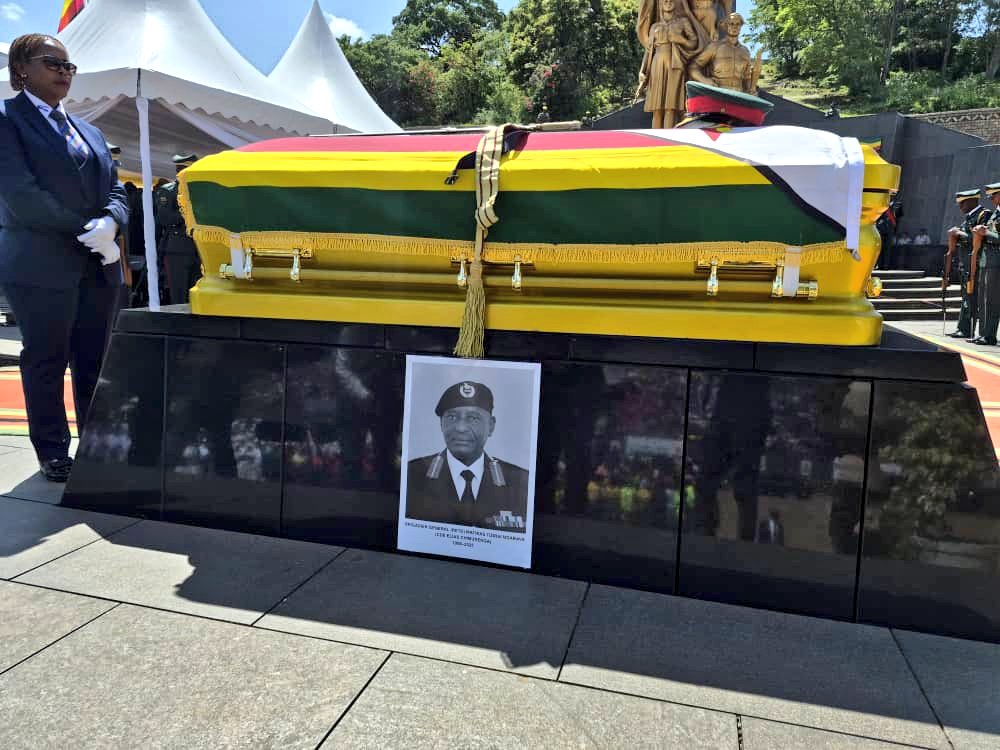
Brigadier General (Rtd) Mathias Tizirai Ngarava Buried

Born on 27 March 1959 in Mhokore Village under Chief Gororo in Chivi District, Masvingo Province, Brigadier General (Rtd) Mathias Tizirai Ngarava – known during the liberation struggle as Cde Elias Chimurenga – began his formal education at Shindi Primary School in 1967, completing it in 1974, before proceeding to Berejena Mission for his secondary studies in 1975.

His commitment to the liberation cause took a decisive turn in December 1976 when he left Rhodesia for Mozambique as part of a group tasked with securing ammunition. The journey was fraught with danger, cutting through the hostile terrain of Gonarezhou Game Park under constant surveillance and the ever-present threat of wild animals. Moving mainly at night and on foot, the group endured hunger, exhaustion, and the risk of detection. After reaching Mozambique, he was placed at Chibawawa Refugee Camp, where, in 1977, rigorous discipline, political orientation, and ideological training deepened his resolve to fully participate in the armed struggle. More …

Zimbabwe Institutionalises Its Skills Capital with New National Databases

Professor Paul Mavima, Minister of Skills Audit and Development, on 30 December 2025 launched the Retired Expert Skills Database and the Diaspora Skills Database – a calibrated policy intervention correcting a long-standing structural gap in Zimbabwe’s development framework: the absence of a central mechanism to identify, organise, and deploy national expertise at scale.

For decades, Zimbabwe has produced professionals of international calibre across government, industry, academia, and multilateral institutions. Yet this capability remained fragmented and underutilised. The new databases convert dispersed skills from latent potential into a strategic national asset, enabling evidence-based deployment to priority sectors, strengthening service delivery, accelerating innovation, and lifting national productivity. More …