
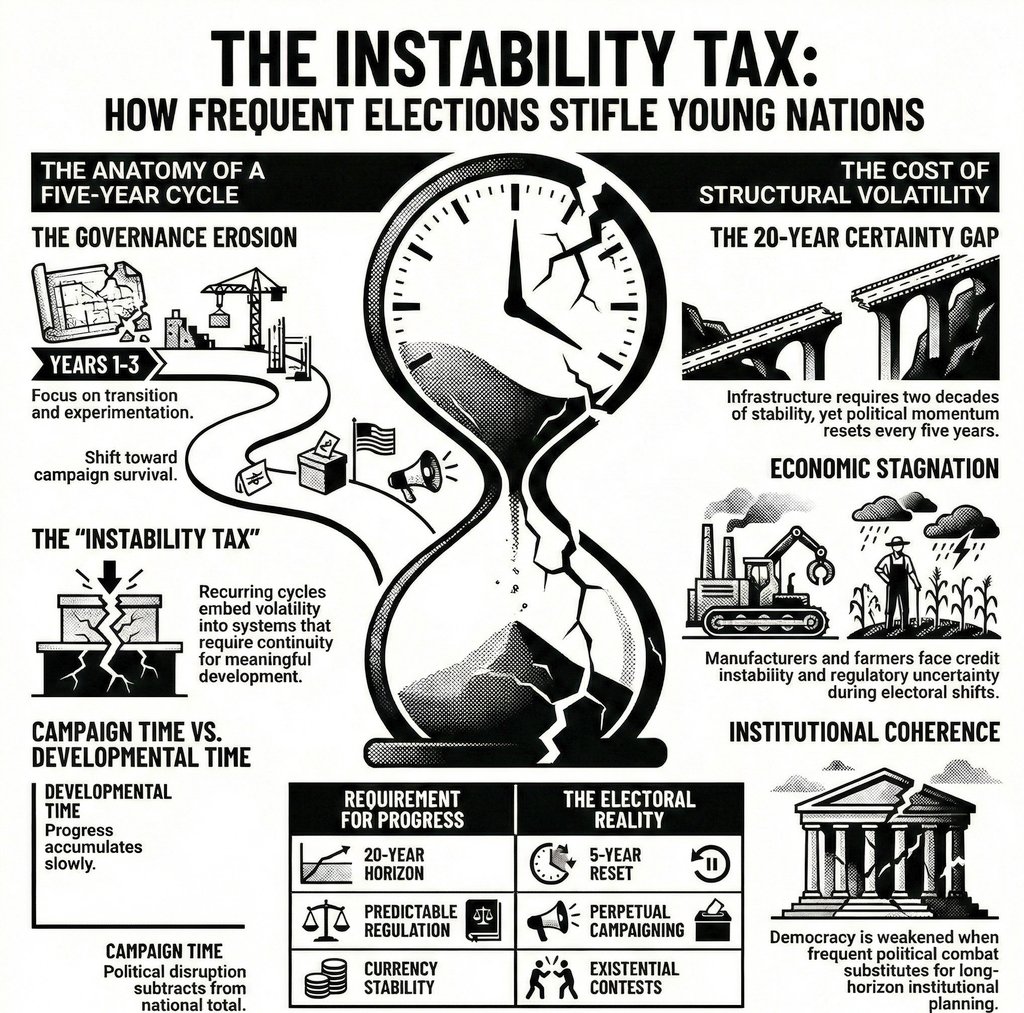
Zimbabwe’s current electoral system may be imposing a self-induced instability tax the nation can ill-afford.
What if recurring five-year electoral cycles – combined with high-stakes presidential contests – quietly embed structural volatility into a country that most needs continuity?
What if the greatest obstacle to development in young nations is not corruption, ideology, or capacity – but time?
Elections are treated as sacred rituals. Yet should democracy be measured by the frequency of political combat – or by the durability of national progress?
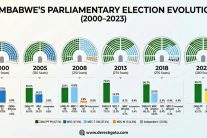
Observe the rhythm. A government is elected. The first year dissolves in transition. The second and third experiment. By the fourth, campaigns begin to cast shadows. By the fifth, governance yields to survival. Long-horizon development struggles to breathe.
Infrastructure requires twenty-year certainty. Industrialisation depends on predictable regulation. Currency stability rests on sustained credibility. Can developmental time truly coexist with perpetual campaign time?
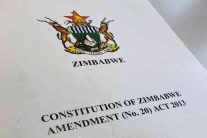
In many young democracies, each electoral cycle resembles an existential contest. The presidency becomes a prize to be seized, defended, or extended. Constitutions turn into battlegrounds just as long-cycle projects begin to mature.
Development accumulates. Political disruption subtracts. When every cycle delays reform, pauses investment, and polarises society, citizens – not elites – pay the price. Manufacturers await credit stability. Youth enter volatile labour markets. Farmers plan under regulatory uncertainty.
This is the instability tax.
Democracy is not weakened when it matures structurally. It is weakened when electoral frequency substitutes for institutional coherence. A constitution disciplines power – but must it also discipline time?
For nations racing against poverty, demographic pressure, and global competition, can they afford to reset political momentum every five years?
The essential question is not whether a president is elected directly or indirectly. It is whether the system incentivises stability, accountability, and long-horizon planning – or perpetual campaign warfare.





































Post a comment