
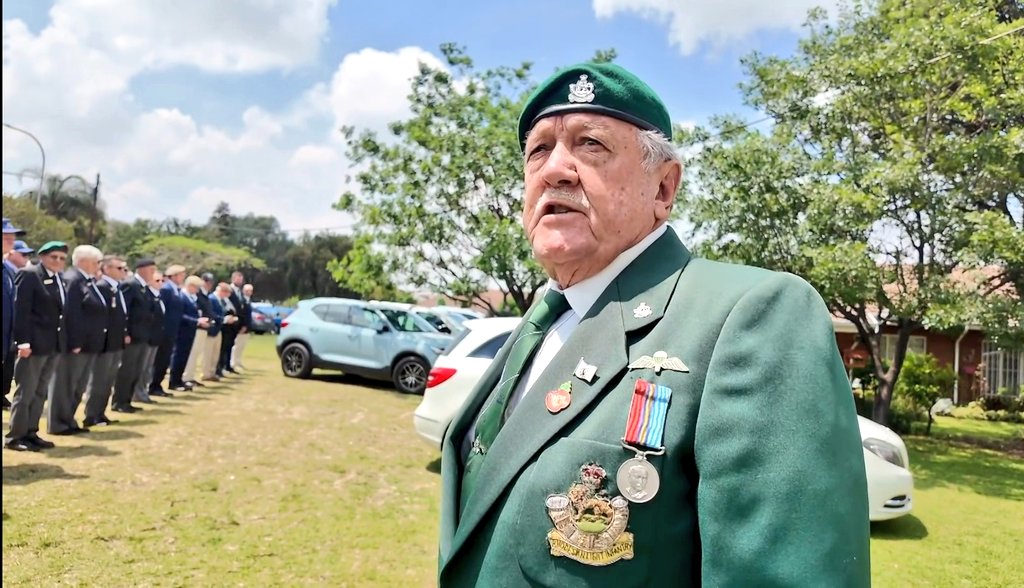
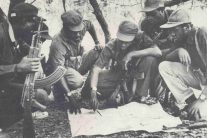
This morning, I came across a YouTube video titled “Rhodesian Armed Forces Memorial 2025.” At first glance, I dismissed it as the harmless nostalgia of ageing men gathered in South Africa, men trying, perhaps desperately, to resuscitate the fading ghost of a long-defeated order: an exploitative, authoritarian, racist colonial state called Rhodesia. I found myself wondering why such a commemoration even exists, let alone why it begins with a parade and a full-throated rendition of the Rhodesian anthem, as if time had not marched inexorably forward.
But several minutes in, the tone changed. The seriousness of the ritual, the symbolism woven into every gesture, the carefully curated language, all made it clear that this is not some sentimental reunion. It is an assertion of memory, identity and unresolved grievance. It is proof, undeniable, that diehard Rhodesians do not merely remember; they still believe. They inhabit an ideological echo chamber where Rhodesia lives on, not as history, but as an imagined lost paradise.
One detail fascinated me: the reading and invocation of the Bible as part of the ceremony. Here lies a profound contradiction that political scientists, theologians and historians cannot ignore. How is it that today our liberation heroes, whose anti-colonial struggle was rooted in justice and equality, and the former Rhodesian forces who upheld a racial oligarchy, both lay claim to the same God, the same scriptures, the same religious vocabulary? What does it mean when oppressor and oppressed both call upon divine authority? Does scripture lose its moral clarity when both sides claim it for opposing purposes? What does this say about the political appropriation of religion? And how should a postcolonial society navigate a space where the Bible is simultaneously a tool of liberation and a relic of settler self-justification?
I must confess that I struggle to conceive of any God, Biblical or otherwise, who would side with Rhodesia, given what that state represented and the machinery of oppression it deployed. Yet the confidence with which the Rhodesian veterans drape themselves in Christian imagery demands a level of intellectual scrutiny.
Then comes Wing Commander Bruce Harrison, declaring Zimbabwe a “disaster” with a straight face. His casual contempt raises questions far deeper than the insult itself. For if Zimbabwe is a tragedy, what then was Rhodesia? A nation founded on racial exceptionalism? A military apparatus designed to entrench white minority rule by force?
And crucially, who defines disaster, the former oppressor or the liberated citizen? Who owns the narrative of a nation, the nostalgic remnants of colonial power or the millions who fought to reclaim their humanity? What moral authority do veterans of a racist state possess to pass judgment on a sovereign republic they once sought to prevent from existing?
The irony is staggering. Those who once fought to keep Zimbabweans disenfranchised now stand on foreign soil, Bibles in hand, lamenting the supposed decline of a country they never wanted to see born. Their grief is not about Zimbabwe’s failures; it is about Zimbabwe’s existence.
This memorial is not merely remembrance. It is a window into a persistent ideological undercurrent, a refusal to accept African self-determination, a clinging to colonial mythology and a veiled resentment toward a Zimbabwe that, despite its challenges, stands as a repudiation of everything Rhodesia represented.
The question for us, as citizens and as inheritors of the liberation legacy, is this: what does it mean for a defeated ideology to continue performing itself in the present? Is this harmless nostalgia, or is it a reminder that the struggle over memory, identity and sovereignty is never truly over?
And perhaps the most important question of all is why some former Rhodesians mourn Rhodesia more passionately than they celebrate their liberation from moral responsibility.
YouTube – https://youtu.be/RvvpCJyG4yY



























Post a comment